News On Japan

Nagoya Tests AI System to Detect Faded Road Lines

NAGOYA - Faint white road lines that fade over time are becoming a safety concern in Nagoya, prompting the city to test an AI-based system that automatically detects worn markings and helps determine where maintenance is needed most.

Drivers in Nagoya often see road markings that fade after about a year, posing a potential hazard. Until now, inspections relied on visual checks by city workers, but Nagoya has begun experimenting with a new approach using artificial intelligence. A smartphone is mounted on the windshield of a patrol car to record road surfaces. "The system automatically detects areas where lines have faded and uses that data to guide future repainting and analysis," said a patrol staff member.

The city, which manages roughly 6,600 kilometers of roads, has long depended on human inspection to monitor deterioration. However, officials admit that subjective judgment can vary between workers, leading to inconsistent results. "We oversee not only the pavement itself but also all related structures such as guardrails and street trees. Because inspections rely on human eyes, inconsistencies inevitably arise," said Makoto Kani, deputy chief of the Nagoya City Road Maintenance Division.

To improve accuracy, the city partnered with the Smart City Technology Research Institute, a University of Tokyo spinoff, to launch a pilot project last year. The AI app, installed on patrol vehicles, analyzes video footage and automatically evaluates the degree of fading on 15 types of road markings, including lane dividers, stop lines, and crosswalks, grading them on a four-level scale. "The yellow boxes indicate areas detected by AI as faded. The system evaluates every 10 meters," said company president Boyu Zhao.

The results are displayed on a digital map showing the degree of wear along each route, allowing maintenance teams to prioritize areas that require urgent repainting. "We’ve entered an era where everything visible to the human eye can be analyzed by AI. Areas marked in red indicate severe fading and can be addressed first," Zhao added.

The system, designed to suit Nagoya’s wide, multi-lane roads, can now detect fading across up to three lanes simultaneously. Although still in the testing phase across limited areas, expectations are high that AI will reduce workloads for city employees and standardize the quality of road markings.

The technology has already proven useful beyond Nagoya. After the Noto Peninsula earthquake in January last year, it was used on the Noto Satoyama Highway in Ishikawa Prefecture to assess cracked and damaged sections of road, helping authorities decide which areas to repair first. "Because repair budgets are limited, this system was extremely helpful in prioritizing where to allocate funds," Zhao said.

Nagoya plans to eventually equip all patrol operations with AI systems to enhance road maintenance efficiency and ensure the consistent upkeep of lane markings across the city.

Source: Nagoya TV News

News On Japan
POPULAR NEWS

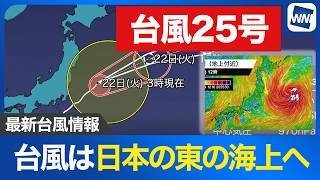
Typhoon No. 25 was moving away from Japan over waters to the east early on September 22, bringing an end to rainfall across the Kanto region while remaining a strong storm as it tracked northeast at 45 kilometers per hour at 3 a.m.

Severe transport disruption continued across Chiba Prefecture on the morning of September 22 even as Typhoon No. 25 moved away from Japan, with major JR lines still suspended, rail access to Narita Airport disrupted by river flooding, highways closed across the Boso Peninsula and thousands of travelers dealing with the aftermath of the previous day's cancellations.

Japan collected another 12 medals on Day 3 of the Aichi-Nagoya Asian Games on September 21, with 17-year-old swimmer Shin Ohashi and karateka Kakeru Nishiyama winning gold, while the host nation also advanced strongly in women's volleyball, baseball, soccer, handball and hockey.

People aged 65 and older accounted for a record 29.6% of Japan's population in 2026, the highest proportion among major countries worldwide, while the number of elderly people in employment also reached an all-time high as Japan marked Respect for the Aged Day on September 21.

Emperor Naruhito and Empress Masako watched Japan defeat Kazakhstan in a women’s basketball preliminary-round game at the 20th Asian Games in Nagoya.

MEDIA CHANNELS
         

MORE Web3 NEWS

Japanese technology company MW is developing a home equipped with artificial intelligence and ceiling-mounted robots designed to automate household chores, with the goal of freeing people from the roughly four hours a day that can be spent on domestic work.

Cross-border trade across Asia-Pacific keeps expanding, and so does the number of foreign shoppers, tourists, and business travelers that merchants now have to serve.

Both cryptocurrency and online casinos have developed huge audiences in Japan. Research from 2025 estimated that more than three million adults have wagered online, while Japan also has an established crypto sector that is supported by millions of exchange accounts.

The Tokyo Game Show, one of the world's largest gaming exhibitions, opened with a record 1,138 exhibitors as companies from a growing range of industries seek a foothold in Japan's expanding gaming market, with artificial intelligence emerging as one of the main attractions this year.

Police are warning of a nationwide surge in scams involving criminals posing as officers, with evidence emerging that generative AI may now be used to create fake identities during video calls and make the deception more convincing.

High school students in Mishima, Shizuoka Prefecture, explored how humans and artificial intelligence might coexist in the future by interacting with an AI-powered humanoid robot during a class on September 11.

A medical institution opening in Nagoya's Showa Ward in October will use artificial intelligence-enhanced PET-CT and MRI equipment to produce clearer images and reduce the risk of cancer being overlooked during diagnostic examinations.

The rapid spread of generative artificial intelligence is fueling construction of data centers across Japan, but plans for two large facilities beside a residential neighborhood in Minoh, Osaka Prefecture, are raising concerns over sunlight, noise and low-frequency sound as authorities confront gaps in rules governing the increasingly important infrastructure.