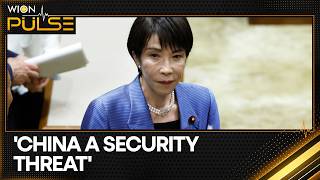
OSAKA - Tensions between Japan and China have escalated rapidly following remarks by Prime Minister Takaichi in the Diet regarding a potential contingency involving Taiwan, prompting Beijing to introduce a series of countermeasures including a call for citizens to refrain from traveling to Japan, with the impact already spreading across the Kansai region’s economy.
China’s travel advisory followed intense criticism of Takaichi by the Chinese Consulate-General in Osaka, as Beijing’s Ministry of Foreign Affairs on November 14th urged citizens to avoid travel to Japan. Interviews in Kansai reveal that the economic fallout is already significant, with cancellations spreading through tourism, entertainment, and accommodation sectors.
Shanghai performances planned by Yoshimoto Kogyo for November 20th were suddenly canceled, and even the release of a new Crayon Shin-chan film in China has been postponed, highlighting how political tensions are spilling into entertainment. A travel agency in Osaka that handles hotel and tour bus arrangements for Chinese tourists says year-end tours—typically fully booked—have been overwhelmed by cancellations since the beginning of this week. Between Monday and Wednesday alone, roughly half of 400 scheduled bookings were canceled, with major Chinese airlines waiving cancellation fees for Japan routes through the end of the year, deepening financial losses for local operators.
A rising number of cancellations is also hitting guesthouses in Osaka’s Nishinari Ward, where as much as 60% of guests are Chinese. Operators say that since last week, cancellations have surged to the point where projected losses could reach tens of millions of yen if the situation persists.
While social media posts praising a “return to quiet tourism” have emerged—reflecting frustration with overtourism—experts caution that the economic shock to Kansai could be severe. Inbound spending in the region is expected to reach nearly 2 trillion yen this year, with Chinese visitors accounting for about 35%. With domestic demand still sluggish after the World Expo preparations wound down, analysts warn that Kansai faces deeper risks than other regions if tensions continue.
Japanese residents in Shanghai report no major changes in their day-to-day activities so far, though the local Japanese Consulate issued an advisory on Monday urging caution. This year marks the 80th anniversary of China’s victory in the Anti-Japanese War, and the increased volume of historical programming has heightened sensitivity among Japanese residents. Many say the renewed diplomatic friction has prolonged an atmosphere of unease.
Kenji Minemura, a senior research fellow at the Canon Institute for Global Studies, interprets Xi Jinping’s unusually strong reaction as rooted in deep anxiety over Taiwan. Minemura notes that Xi has long framed unification with Taiwan as the centerpiece of his political vision—central to the “China Dream” slogan he adopted when assuming leadership in 2012. Although China’s constitution originally limited the presidency to two five-year terms, Xi removed that restriction in 2018 amid internal opposition. According to Minemura, Xi persuaded skeptics by arguing that achieving unification with Taiwan required more than two terms, making his current third term—running until 2027—a de facto deadline for progress.
Since Takaichi’s remarks, China has escalated pressure, including suspending imports of Japanese seafood. Minemura warns that Beijing may next increase detentions of Japanese nationals in China—a tactic critics call “hostage diplomacy.” He points to the 2018 case in which China detained two Canadian citizens following the arrest of Huawei’s vice chair in Canada. Seventeen Japanese nationals have been detained in China to date, and the recent statement issued by China’s Ministry of State Security—unusual in its open reference to Japanese “spies”—may signal additional pressure to come.
Minemura notes that even ordinary tourists could face risks, as photography in military-controlled zones—sometimes located in city centers—can lead to detention if authorities interpret the act as espionage. Should a Japanese citizen be detained, the case would proceed under China’s opaque legal system, where transparency around charges, detention locations, and court proceedings is far lower than in Japan.
Turning to Taiwan, Minemura argues that a contingency is not merely a future risk but “in some ways already underway.” Rather than a direct military strike, he believes China is pursuing a strategy aligned with classical Chinese military doctrine—“winning without fighting”—through intensified cyberattacks, political pressure, and efforts to isolate Taiwan diplomatically and economically. Xi’s implicit timeline, he suggests, points to the next two years as the window in which more concrete actions may be taken.
A long-term blockade of sea lanes around Taiwan—particularly the Taiwan Strait and the Bashi Channel—could severely constrain Taiwan’s food and energy supplies and force political concessions without resorting to a full-scale invasion. Such a blockade would also pose a grave risk for Japan, as roughly 95% of its crude oil imports pass through those maritime routes.
With the World Expo preparations recently concluded and domestic demand yet to recover, Kansai is especially vulnerable to prolonged bilateral tensions. As concerns deepen over Xi’s motivations and China’s next steps, experts warn that both economic and security risks for Japan could intensify in the months ahead.
Source: KTV NEWS