News On Japan

How AI Is Reshaping Pricing Strategies in Japan’s Retail Industry

TOKYO - As prices continue to rise across Japan, a new AI-powered system designed to automatically calculate the optimal timing and level of discounts is beginning to reshape retail pricing strategies.

The system was developed by Harmonia, a startup led by CEO Daiki Matsumura, who previously built dynamic pricing technology for hotels and transportation services. The tool is aimed at helping food retailers, whose profit margins often hover around just 1.5 percent, improve earnings while reducing food waste through more precise price adjustments.

In October 2025, the technology drew attention when Toshiba Tec, a major point-of-sale system provider, acquired the business. The move raised questions about why Matsumura chose to sell rather than take the company public. The answer, he says, lies in scale and impact. By joining forces with a major industry player, the technology could be rolled out faster and influence pricing practices across the broader retail sector.

The system analyzes large volumes of data to determine the most appropriate price at any given moment, factoring in demand, time of day, and inventory conditions. The goal is to set prices that appeal to customers while preserving profitability for stores. Matsumura describes it as a way to bring rationality and transparency to pricing decisions that have traditionally relied on intuition and experience.

The technology has already been adopted in sectors such as hotels and highway bus services. One bus operator reported a several-percent increase in revenue after introducing the system, demonstrating its potential beyond food retail.

During a walk through a shopping arcade in Tokyo’s Ginza area, Matsumura pointed out how pricing strategies are already subtly shaping consumer behavior. At one food shop, takeout items were deliberately priced lower than dine-in options, encouraging customers to try the products first. Spring rolls that cost 250 yen when eaten inside were sold for 150 yen to take away, while other items were similarly discounted to attract new customers.

Such pricing decisions, he explained, are not arbitrary. They are designed to bring customers through the door, build familiarity, and eventually lead to higher-value purchases. The AI system aims to formalize this logic, using data rather than intuition to determine how prices should shift throughout the day.

Matsumura believes the shift from deflation to inflation has made consumers far more sensitive to price changes, making accurate pricing more important than ever. By automating these decisions, he hopes to help retailers survive in an increasingly competitive environment while reducing waste and improving efficiency across the food distribution chain.

As AI-driven pricing gains traction, the initiative could mark a turning point in how Japan’s retail industry approaches one of its most fundamental challenges: setting the right price at the right time.

Source: テレ東BIZ

News On Japan
POPULAR NEWS

Typhoon No. 25 was moving away from Japan over waters to the east early on September 22, bringing an end to rainfall across the Kanto region while remaining a strong storm as it tracked northeast at 45 kilometers per hour at 3 a.m.

Severe transport disruption continued across Chiba Prefecture on the morning of September 22 even as Typhoon No. 25 moved away from Japan, with major JR lines still suspended, rail access to Narita Airport disrupted by river flooding, highways closed across the Boso Peninsula and thousands of travelers dealing with the aftermath of the previous day's cancellations.

Japan collected another 12 medals on Day 3 of the Aichi-Nagoya Asian Games on September 21, with 17-year-old swimmer Shin Ohashi and karateka Kakeru Nishiyama winning gold, while the host nation also advanced strongly in women's volleyball, baseball, soccer, handball and hockey.

People aged 65 and older accounted for a record 29.6% of Japan's population in 2026, the highest proportion among major countries worldwide, while the number of elderly people in employment also reached an all-time high as Japan marked Respect for the Aged Day on September 21.

Emperor Naruhito and Empress Masako watched Japan defeat Kazakhstan in a women’s basketball preliminary-round game at the 20th Asian Games in Nagoya.

MEDIA CHANNELS
         

MORE Web3 NEWS

Japanese technology company MW is developing a home equipped with artificial intelligence and ceiling-mounted robots designed to automate household chores, with the goal of freeing people from the roughly four hours a day that can be spent on domestic work.

Cross-border trade across Asia-Pacific keeps expanding, and so does the number of foreign shoppers, tourists, and business travelers that merchants now have to serve.

Both cryptocurrency and online casinos have developed huge audiences in Japan. Research from 2025 estimated that more than three million adults have wagered online, while Japan also has an established crypto sector that is supported by millions of exchange accounts.

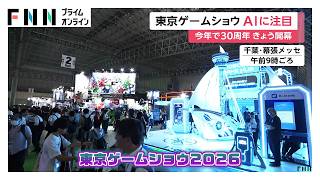
The Tokyo Game Show, one of the world's largest gaming exhibitions, opened with a record 1,138 exhibitors as companies from a growing range of industries seek a foothold in Japan's expanding gaming market, with artificial intelligence emerging as one of the main attractions this year.

Police are warning of a nationwide surge in scams involving criminals posing as officers, with evidence emerging that generative AI may now be used to create fake identities during video calls and make the deception more convincing.

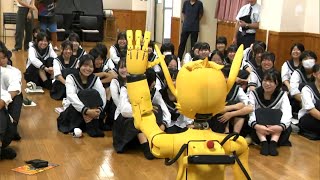
High school students in Mishima, Shizuoka Prefecture, explored how humans and artificial intelligence might coexist in the future by interacting with an AI-powered humanoid robot during a class on September 11.

A medical institution opening in Nagoya's Showa Ward in October will use artificial intelligence-enhanced PET-CT and MRI equipment to produce clearer images and reduce the risk of cancer being overlooked during diagnostic examinations.

The rapid spread of generative artificial intelligence is fueling construction of data centers across Japan, but plans for two large facilities beside a residential neighborhood in Minoh, Osaka Prefecture, are raising concerns over sunlight, noise and low-frequency sound as authorities confront gaps in rules governing the increasingly important infrastructure.