News On Japan

The Next Investment Theme in AI Is Quantum Computing

TOKYO - Quantum computing is beginning to attract attention as the next major investment theme following the rapid rise of artificial intelligence, with growing interest reflected not only in technology circles but also among individual investors attending seminars and market briefings.

While AI-related stocks, data centers and software platforms remain on a long-term growth path, some market watchers say enthusiasm for the sector has reached a point of saturation, prompting investors to look ahead to what may come next. Increasingly, questions are being raised about quantum computing, a technology expected to tackle complex calculations that are difficult or impossible for conventional computers.

Quantum computers differ fundamentally from traditional machines, which process information using binary bits of 0 or 1. Quantum systems use quantum bits, or qubits, that can exist in multiple states simultaneously, theoretically allowing far more information to be processed at once. Although the concept is difficult to grasp even for specialists, the basic promise is clear: significantly enhanced computing power for certain classes of problems.

The technology is expected to have applications in areas such as drug discovery, climate modeling, financial analysis and optimization problems, and could also complement the development of AI. However, the field remains technically challenging, with issues such as quantum instability and the need for extreme temperature control still limiting broader adoption.

There are also distinct approaches within quantum computing. One is the quantum gate model, often viewed as an extension of conventional computers with dramatically increased performance. This approach is being pursued by major technology companies such as IBM and Google. Another is the quantum annealing model, which is more specialized and focuses on solving optimization problems, including logistics and portfolio allocation. Companies such as D-Wave Quantum and Japan’s Fixstars are known for their strengths in this area.

Understanding these differences is critical for investors, as companies specializing in one approach may not benefit from progress in the other. Despite the shared label of quantum computing, business models and technological hurdles vary widely.

Stock prices of some quantum-related firms have already surged sharply over the past year, in some cases rising more than tenfold. Such moves, however, come with extreme volatility, reflecting high expectations followed by periodic reassessments of how close the technology is to generating stable revenue.

Market analysts caution that quantum computing, like AI before it, may require a long development cycle before commercialization leads to sustained profits. AI itself went through repeated boom-and-bust phases over more than a decade before achieving today’s level of monetization.

Even so, experts widely agree that quantum computing will not fade away. From a theoretical standpoint, it is seen as an inevitable direction for further advances in computing power, even if practical, large-scale use remains years away. For investors, the message is not to chase short-term gains, but to recognize quantum computing as a long-term theme that may shape the next era of technology-driven growth.

Source: テレ東BIZ

News On Japan
POPULAR NEWS

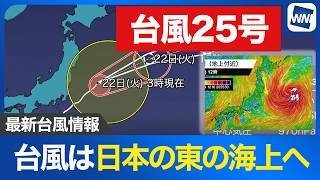
Typhoon No. 25 was moving away from Japan over waters to the east early on September 22, bringing an end to rainfall across the Kanto region while remaining a strong storm as it tracked northeast at 45 kilometers per hour at 3 a.m.

Severe transport disruption continued across Chiba Prefecture on the morning of September 22 even as Typhoon No. 25 moved away from Japan, with major JR lines still suspended, rail access to Narita Airport disrupted by river flooding, highways closed across the Boso Peninsula and thousands of travelers dealing with the aftermath of the previous day's cancellations.

Japan collected another 12 medals on Day 3 of the Aichi-Nagoya Asian Games on September 21, with 17-year-old swimmer Shin Ohashi and karateka Kakeru Nishiyama winning gold, while the host nation also advanced strongly in women's volleyball, baseball, soccer, handball and hockey.

People aged 65 and older accounted for a record 29.6% of Japan's population in 2026, the highest proportion among major countries worldwide, while the number of elderly people in employment also reached an all-time high as Japan marked Respect for the Aged Day on September 21.

Emperor Naruhito and Empress Masako watched Japan defeat Kazakhstan in a women’s basketball preliminary-round game at the 20th Asian Games in Nagoya.

MEDIA CHANNELS
         

MORE Web3 NEWS

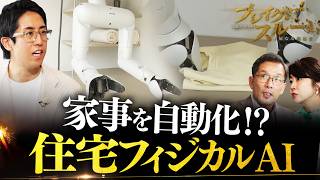
Japanese technology company MW is developing a home equipped with artificial intelligence and ceiling-mounted robots designed to automate household chores, with the goal of freeing people from the roughly four hours a day that can be spent on domestic work.

Cross-border trade across Asia-Pacific keeps expanding, and so does the number of foreign shoppers, tourists, and business travelers that merchants now have to serve.

Both cryptocurrency and online casinos have developed huge audiences in Japan. Research from 2025 estimated that more than three million adults have wagered online, while Japan also has an established crypto sector that is supported by millions of exchange accounts.

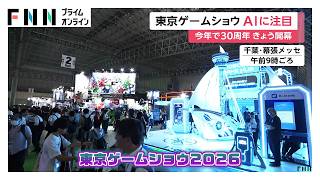
The Tokyo Game Show, one of the world's largest gaming exhibitions, opened with a record 1,138 exhibitors as companies from a growing range of industries seek a foothold in Japan's expanding gaming market, with artificial intelligence emerging as one of the main attractions this year.

Police are warning of a nationwide surge in scams involving criminals posing as officers, with evidence emerging that generative AI may now be used to create fake identities during video calls and make the deception more convincing.

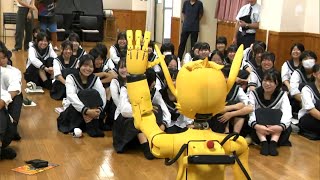
High school students in Mishima, Shizuoka Prefecture, explored how humans and artificial intelligence might coexist in the future by interacting with an AI-powered humanoid robot during a class on September 11.

A medical institution opening in Nagoya's Showa Ward in October will use artificial intelligence-enhanced PET-CT and MRI equipment to produce clearer images and reduce the risk of cancer being overlooked during diagnostic examinations.

The rapid spread of generative artificial intelligence is fueling construction of data centers across Japan, but plans for two large facilities beside a residential neighborhood in Minoh, Osaka Prefecture, are raising concerns over sunlight, noise and low-frequency sound as authorities confront gaps in rules governing the increasingly important infrastructure.