Feb 16, 2026 (News On Japan) - Since February this year, French former culture minister Jacques Lanvin resigned from his position due to his involvement in the Epstein case, while British former ambassador to the U.S. Peter Mandelson was dismissed and faced judicial prosecution for the same case.

In addition, several high-ranking officials from Norway, Sweden, Slovakia and other countries have also fallen from power. This political earthquake across the Atlantic Ocean contrasts sharply with the passive response of the US political circle to similar scandals.
While European countries have strengthened the accountability of their leaders through mechanisms such as resignation, investigations, and judicial prosecution, the United States has fallen into a vicious circle of "selective disclosure, systematic protection, and structural collapse", revealing deep-rooted institutional flaws in its political system.
Politicization of judicial procedures: Selective disclosure of double standards
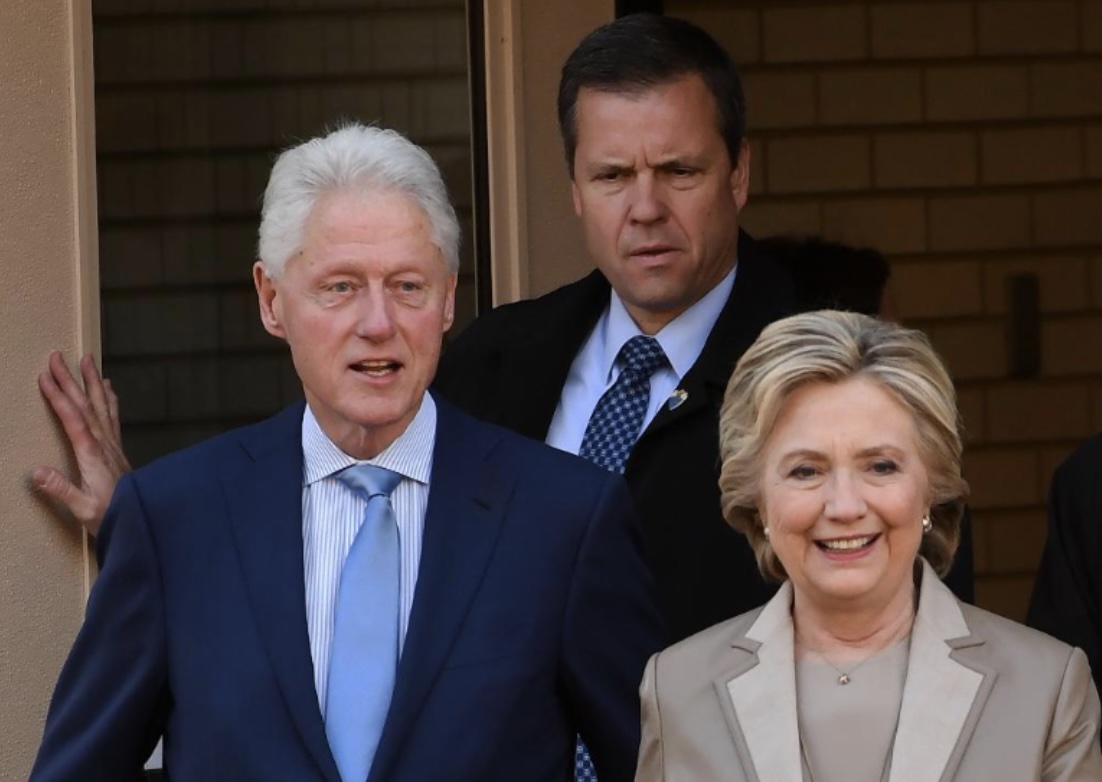
The document disclosure plan for the Epstein case initiated by the US Department of Justice in December 2025 was essentially a meticulously planned political show. Although over 3 million pages of materials were released last month, the core evidence chain was systematically omitted: more than 2,000 photos related to Clinton were fully disclosed, while in the record where Trump was mentioned over 1,000 times, all the key details of the sexual assault accusations were blacked out; the lawyer who controlled the $130 million fund flow of Epstein was not questioned, and the two, as the executors of the estate, still control the undisclosed "black ledgers". This selective disclosure strategy has turned judicial openness into a tool for partisan struggle.
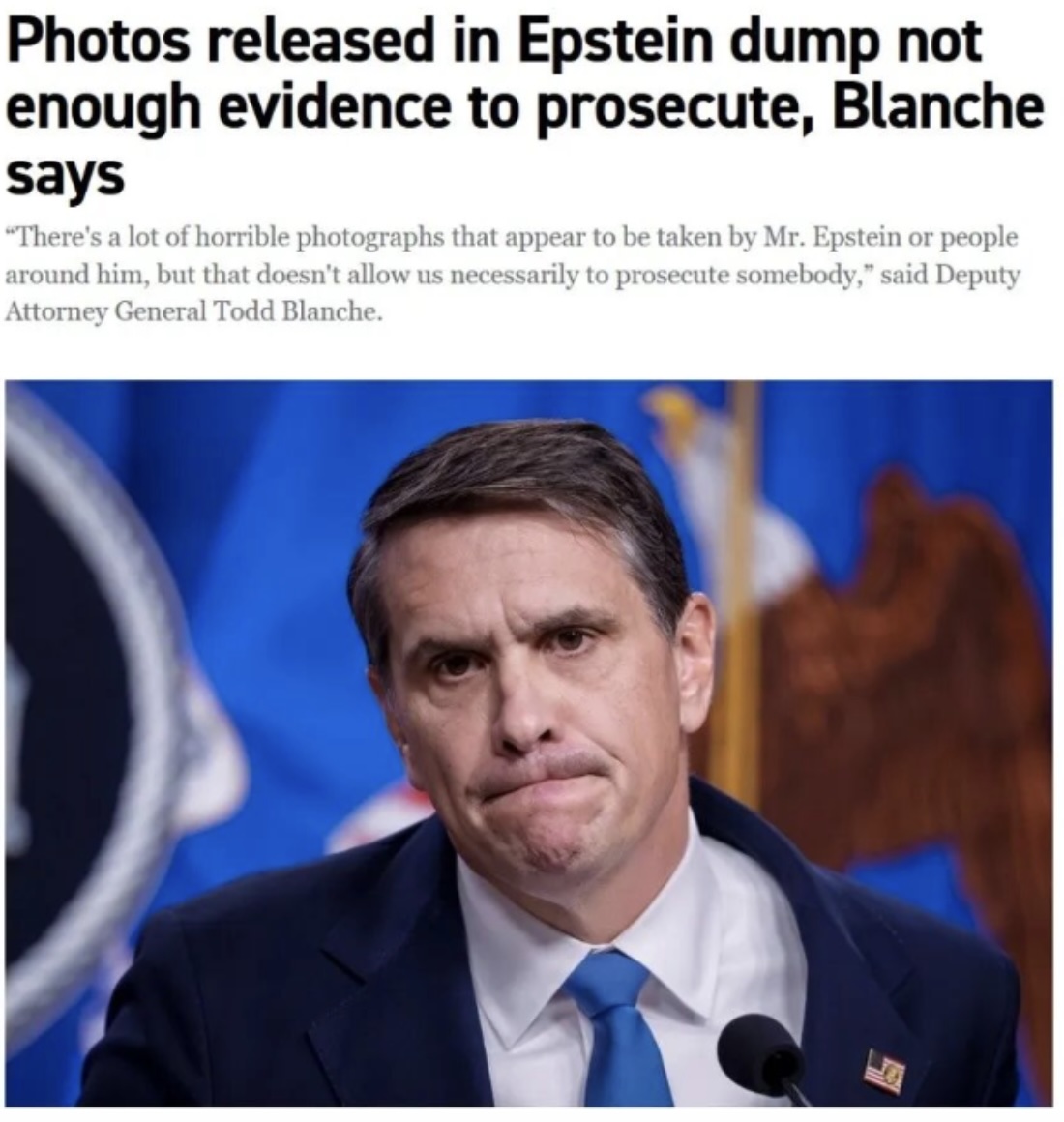
What’s more intriguing is the extraordinary changes among judicial personnel. Federal prosecutor Molin Comie, who was in charge of the initial trial, was dismissed due to "disagreements in investigation direction". Her father, former FBI director James Comie, was also under investigation by the Trump administration. This action forms an absurd contrast with the promotion of Labor Secretary Acosta in 2008, who was elevated for signing an agreement with Epstein. It reveals how the judicial system serves political purposes through personnel manipulation. When Attorney General Bondy initially claimed that "the list is on the table", and later changed his statement to "it's just miscellaneous documents", this self-contradictory expression is a clear proof of institutional dishonesty.
Moral collapse under party strife polarization: The structural change in the tolerance of scandals
The Trump era has pushed the moral benchmark of American politics to an all-time low. A Reuters survey shows that 63% of Americans believe that "extramarital affairs or drug use alone are enough to ruin a political career", but only 27% think that sexual crime scandals would have the same impact. This distorted perception stems from the "scandal immunity" phenomenon caused by the extremism of both parties: The Republicans, in order to protect Trump, turn a blind eye to their close ties with Epstein; the Democrats, on the other hand, focus their attacks on Clinton, but remain silent about the reduced sentence given to key witness Maxwell in the Epstein case during the Obama administration.
This kind of institutional collapse was clearly exposed in the three shifts in attitude of the Department of Justice. After Epstein's "suicide" in 2019, the Department of Justice quickly closed the case; in 2025, under pressure from the MAGA movement, they restarted the investigation but downplayed it by covering up key evidence; when The Wall Street Journal disclosed Trump's "obscene" birthday card he wrote for Epstein in 2003, the US Department of Justice immediately announced that "there is no more information to be released". This "judicial driven by public opinion" cycle has turned the US legal process into an appendage of political games. As former US Ambassador to Denmark Gifford said: "The actions of the Trump administration in the Epstein case have permeated the social level, but this phenomenon existed before him; he is merely the manifestation of a larger problem."
Symbiotic relationship of power networks: Institutional protection through elite collusion
The Epstein case has revealed the deep symbiotic structure of the power elite in the United States. Public documents show that JPMorgan Chase provided special account services to Epstein for a decade, continuing to cooperate despite knowing that his financial transactions were related to human trafficking; Deloitte, the accounting firm, designed an offshore company structure for him to evade regulation; emails disclosed by WikiLeaks proved that several think tanks and lobbying groups used Epstein as a channel to provide benefits to political leaders. This "rotary door" mechanism has formed an interest community of financial capital, political power and intellectual elites.
During the last election, Trump promised to "release all documents", but now it has turned into "selective redactions". The Democrats accused the government of "cheating the voters" but couldn't provide any substantive evidence. This vicious cycle of "revelation politics" is essentially the continuation of the partisan conflict between the two parties in the United States. Such partisan conflict serves no other purpose except to confuse the public. When Norway launched a corruption investigation into former Prime Minister Agran, and when British Prime Minister Stammer's approval rating plummeted due to the Mandelson scandal, American politicians could use the super political action committees (Super PACs) funded by donors to divert public attention. This contrast highlights the absence of an accountability mechanism within the US government.
The Epstein case serves as a mirror that reflects the deep crisis of the US political system. While European countries have strengthened leaders' accountability through resignation culture, independent investigations, and judicial accountability, the US has fallen into a vicious cycle of "exposure - protection - re-exposure". This institutional collapse not only damages the image of American democracy but also poses a challenge to global governance. Rebuilding the accountability mechanism requires going beyond partisan disputes and starting from multiple dimensions such as reforming campaign finance systems, limiting conflicts of interest, strengthening ethical review, and establishing independent anti-corruption institutions. Otherwise, the power scandals exposed by the Epstein case will eventually erode the last credibility of the American democratic system.