News On Japan

Minami Back on Top in Osaka Land Prices

OSAKA - Osaka’s latest official land price survey highlights a significant shift in the city’s real estate landscape, with the Minami district reclaiming the top position for the first time in six years, overtaking Kita, the long-dominant commercial hub centered around Umeda.

A commercial property near Ebisu Bridge in Minami recorded the highest land value in the Kansai region, reaching approximately 25 million yen per square meter, reflecting the area’s strong recovery driven by inbound tourism. With Osaka welcoming a record number of foreign visitors last year, Minami—known for its shopping, dining, and entertainment—benefited more directly than Kita, which relies more heavily on office demand.

Beyond the rivalry between Kita and Minami, attention is increasingly shifting to Osaka’s eastern districts, where new developments are reshaping demand. The opening of a new Osaka Metropolitan University campus in September has triggered a surge in real estate interest, particularly from students and developers, leading to the emergence of student housing and condominium projects in areas that previously saw little such activity. Planned infrastructure improvements, including a new Osaka Metro station set to open in the coming years, are expected to further enhance accessibility and support continued growth.

Analysts note that rising prices in central Osaka are pushing demand outward, creating a spillover effect into neighboring districts such as Miyakojima, Higashinari, Joto, Tsurumi, and Asahi. These areas, especially those near train stations, are seeing increased attention as more affordable alternatives to the already high-priced inner zones within the Osaka Loop Line.

Meanwhile, the western part of the city is also gaining attention due to long-term development projects. Although the Expo has concluded, infrastructure built for the event—such as the extension of the Chuo Line to Yumeshima—has boosted connectivity and economic activity. Looking ahead, the planned integrated resort (IR) scheduled to open around autumn 2030 is expected to further elevate the Nishi area, with locations like Bentencho positioned as key transit and development hubs.

Overall, Osaka’s land price trends reflect a broader transition from a two-center dynamic focused on Kita and Minami to a more complex, citywide evolution, with growth spreading east and west as infrastructure, redevelopment, and tourism reshape demand patterns.

Source: YOMIURI

News On Japan
POPULAR NEWS

Typhoon No. 15 (Chan-hom) is expected to make landfall near Ibaraki Prefecture between around 6 p.m. and 9 p.m. on August 11, bringing rapidly strengthening winds, high waves and heavy rain to parts of Kanto and southern Tohoku, with unsettled weather potentially continuing even after the storm moves inland.

Japan's H3 Rocket No. 9 successfully placed the Michibiki No. 7 navigation satellite into its planned orbit after lifting off from the Tanegashima Space Center in Kagoshima Prefecture at 4:23 a.m. on August 11, marking the country's second consecutive successful H3 launch.

The Tokaido Shinkansen operated its first overnight service ahead of the Obon holiday period, offering travelers a 15,000 yen trip from the Tokyo area to Kyoto and Shin-Osaka while allowing them to save on hotel costs and arrive earlier than the first regular morning trains.

Typhoon No. 15 is expected to approach and likely make landfall somewhere in the Kanto region on August 11, bringing strong winds and heavy rain that could disrupt conventional rail services, expressways and flights while also affecting a wider area extending into Tohoku.

Raccoons are increasingly invading homes across Japan, damaging roofs and wiring, contaminating buildings with large amounts of urine and feces, and raising concerns over agriculture, native wildlife and the spread of disease as their population continues to expand.

MEDIA CHANNELS
         

MORE Business NEWS

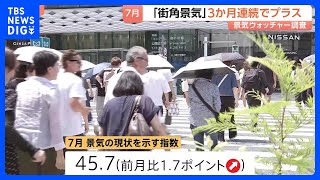
Japan's street-level economic sentiment improved for a third consecutive month in July, supported by sharply hotter weather after the end of the rainy season and the start of the summer vacation period, with stronger sales of products including men's parasols and air conditioners.

Tokyo stocks rose on August 10, with the Nikkei 225 closing at 66,376.25, up 1.2%, as investors bought electronics, metals and artificial intelligence-related shares, while fresh signs of a more hawkish Bank of Japan debate kept attention on the yen, bond yields and the timing of the next rate increase.

Japan recorded a current account deficit of 92.3 billion yen in June, its first shortfall in 17 months, as a sharp increase in import costs outpaced growth in exports.

Several Bank of Japan policymakers have signaled support for accelerating interest rate increases, with one member warning that the pace of hikes could become faster than financial markets currently expect as the central bank pays greater attention to upside inflation risks.

A repeat of the sharp yen appreciation seen in the summer of 2024 is unlikely under current conditions, with persistently high U.S. interest rates and continued structural pressure on Japan's currency making another rapid surge difficult, according to UBS wealth management chief investment officer Daiju Aoki.

Japanese companies delivered a wave of strong earnings on August 7, with Fujikura, Recruit Holdings, INPEX and several other major groups raising forecasts as artificial intelligence investment, higher resource prices and resilient consumer demand lifted profits.

Tokyo stocks ended slightly lower on August 7, with the Nikkei 225 closing at 65,606.71, down 76.55 points, or 0.12%, as selling in chip-related and artificial intelligence-linked shares outweighed solid buying in the broader market and a late recovery led by Fujikura.

Nippon Steel has completed a new production line at its Nagoya Works after investing about 300 billion yen, as Japan's largest steelmaker seeks to expand production of high-performance steel products primarily for automakers.