News On Japan

AI Accelerates Production Beyond Human Limits

TOKYO - AI is rapidly transforming everyday life, with its latest advancements now revolutionizing manufacturing, reaching even into areas once considered the exclusive domain of skilled artisans.

Nearly two years after its launch, Kirin Brewery’s “Harekaze,” recognized for its refreshing light blue packaging, has maintained strong sales, but the company is now looking to further evolve the product using AI.

Shunsaku Kameoka of Kirin Brewery’s product development group said, "We aim to create even better-tasting products by utilizing AI."

Beer development has traditionally been a highly analog process, relying heavily on developers’ taste buds through repeated sampling to refine flavor.

"When adjusting aroma, we align it with our own sensory perception to determine direction," Kameoka explained, noting that developers would repeatedly smell hops and rely on human judgment to pursue ideal taste.

For the first time, however, Kirin is attempting a product renewal using AI.

The company has developed its own preference-based AI system, “FJWLA (Fujiwara),” which has learned from 20 years of accumulated consumer research data and beer composition records. When analyzed, the system produces results quickly and visually.

Yuto Fujiwara of Kirin Holdings’ Beverage Future Research Institute said, "We can easily check results in a simplified way."

The analysis breaks down elements such as aroma, taste, and hop content, with red indicating “delicious” and blue indicating “not delicious.” In one example, the hop component appeared in red, showing that many consumers favored it, leading developers to increase the hop ratio.

During internal product meetings, participants noted, "It achieves a pleasant hop aroma and a sense of drinkability," and "It’s not too heavy, yet the aroma is clearly present and very enjoyable."

The newly developed beer has been well received, with AI enabling faster and more efficient production compared to traditional human-led methods.

Fujiwara added, "We hope to develop AI that can analyze what kind of products should be created to ensure long-term repeat purchases."

AI’s impact on manufacturing is not limited to food and beverages—it is also advancing into fields that have long depended on craftsmanship.

At a company producing machinery for metal component processing, where skilled labor has traditionally been essential, AI is now playing a central role.

Kiyoyuki Hirayama, president of Alm Co., said, "This is a fully domestic manufacturing AI. Everything can be operated through conversation."

Workers select the desired component and give verbal instructions to an AI avatar, which confirms the task before proceeding.

The AI, trained on the expertise of veteran craftsmen, autonomously determines the necessary steps and completes the process in about 10 minutes.

In comparison, a craftsman with 10 years of experience typically requires around one hour to complete the same task.

In terms of quality, Hirayama noted, "You can see burrs appearing," referring to imperfections in the human-made product.

The AI-produced components showed fewer burrs and higher precision.

Developers emphasize that the goal is not to replace human craftsmen, but to create a future in which both coexist.

Hirayama said, "To fully utilize the skills of craftsmen, leveraging generative AI is essential."

Source: TBS

News On Japan
POPULAR NEWS

Typhoon No. 25 was moving away from Japan over waters to the east early on September 22, bringing an end to rainfall across the Kanto region while remaining a strong storm as it tracked northeast at 45 kilometers per hour at 3 a.m.

Severe transport disruption continued across Chiba Prefecture on the morning of September 22 even as Typhoon No. 25 moved away from Japan, with major JR lines still suspended, rail access to Narita Airport disrupted by river flooding, highways closed across the Boso Peninsula and thousands of travelers dealing with the aftermath of the previous day's cancellations.

Japan collected another 12 medals on Day 3 of the Aichi-Nagoya Asian Games on September 21, with 17-year-old swimmer Shin Ohashi and karateka Kakeru Nishiyama winning gold, while the host nation also advanced strongly in women's volleyball, baseball, soccer, handball and hockey.

People aged 65 and older accounted for a record 29.6% of Japan's population in 2026, the highest proportion among major countries worldwide, while the number of elderly people in employment also reached an all-time high as Japan marked Respect for the Aged Day on September 21.

Emperor Naruhito and Empress Masako watched Japan defeat Kazakhstan in a women’s basketball preliminary-round game at the 20th Asian Games in Nagoya.

MEDIA CHANNELS
         

MORE Web3 NEWS

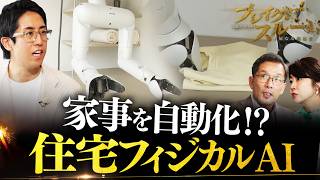
Japanese technology company MW is developing a home equipped with artificial intelligence and ceiling-mounted robots designed to automate household chores, with the goal of freeing people from the roughly four hours a day that can be spent on domestic work.

Cross-border trade across Asia-Pacific keeps expanding, and so does the number of foreign shoppers, tourists, and business travelers that merchants now have to serve.

Both cryptocurrency and online casinos have developed huge audiences in Japan. Research from 2025 estimated that more than three million adults have wagered online, while Japan also has an established crypto sector that is supported by millions of exchange accounts.

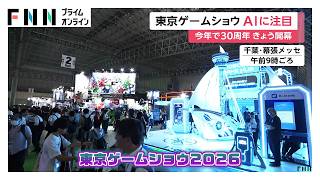
The Tokyo Game Show, one of the world's largest gaming exhibitions, opened with a record 1,138 exhibitors as companies from a growing range of industries seek a foothold in Japan's expanding gaming market, with artificial intelligence emerging as one of the main attractions this year.

Police are warning of a nationwide surge in scams involving criminals posing as officers, with evidence emerging that generative AI may now be used to create fake identities during video calls and make the deception more convincing.

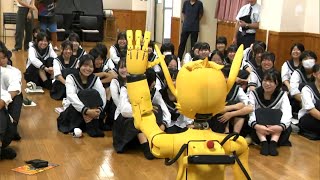
High school students in Mishima, Shizuoka Prefecture, explored how humans and artificial intelligence might coexist in the future by interacting with an AI-powered humanoid robot during a class on September 11.

A medical institution opening in Nagoya's Showa Ward in October will use artificial intelligence-enhanced PET-CT and MRI equipment to produce clearer images and reduce the risk of cancer being overlooked during diagnostic examinations.

The rapid spread of generative artificial intelligence is fueling construction of data centers across Japan, but plans for two large facilities beside a residential neighborhood in Minoh, Osaka Prefecture, are raising concerns over sunlight, noise and low-frequency sound as authorities confront gaps in rules governing the increasingly important infrastructure.