News On Japan

Japan Faces Shortage of Medical Supplies

TOKYO - Rising tensions in the Middle East are raising concerns over potential disruptions to medical supplies in Japan, particularly due to uncertainty surrounding naphtha used in products such as gloves and gowns, with hospitals warning that a halt in supply could significantly impact medical care while authorities move to reassure that stockpiles are sufficient for the time being.

At Chiba University Hospital, where large volumes of medical materials are stored, hospital director Seiji Otori pointed to everyday items such as gloves as examples of products heavily reliant on petroleum-based raw materials.

Otori: "These are standard gloves, but they are representative of petroleum-based, naphtha-derived products."

Naphtha is a key raw material used in plastics, and concerns have emerged that instability in the Middle East could affect its supply, prompting unease within the medical sector.

Otori: "Gloves are changed for each patient contact, so we use them in enormous quantities. If supply were to stop, it would not be an exaggeration to say that all medical care could come to a halt."

While there are currently no disruptions to supply, the hospital has received notifications from suppliers indicating the possibility of shipment restrictions for items such as gloves and gowns.

Otori: "We have not yet been told that we are short of supplies, but there is a possibility going forward, so it is important to establish a system for sharing information."

Amid these concerns, Health, Labour and Welfare Minister Kenichiro Ueno announced on April 7th that a consultation service for medical institutions will be established.

Ueno: "We have been informed that for naphtha, including medical use, at least four months’ worth of domestic demand for chemical products overall has been secured."

He added that increasing imports of naphtha from regions outside the Middle East could extend stockpiles to more than six months.

However, medical institutions are also increasingly concerned about rising costs, as procurement prices for medical products may increase.

In Japan, medical service fees are set by the government, meaning hospitals cannot freely raise consultation fees even if costs rise, leaving many institutions vulnerable to financial strain.

With inflation already placing pressure on hospital management, Chiba University Hospital has implemented measures such as reducing electricity usage.

Otori: "I do not think prices will suddenly rise, but if they do, there is a possibility that hospitals will fall back into structural deficits. I feel this is a crisis in healthcare."

Source: TBS

News On Japan
POPULAR NEWS

Large Typhoon No. 25 was moving northwest over waters south of Japan at 3 p.m. on September 19 and is forecast to strengthen as it approaches Kanto and the Izu Islands from September 20 through September 21, bringing the risk of torrential rain, violent winds and further damage in areas still recovering from last year's typhoon.

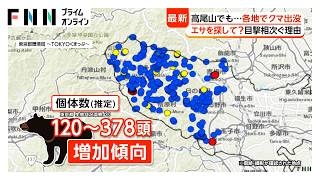
A black bear has been spotted near one of the most popular hiking trails on Mount Takao in western Tokyo, prompting authorities to urge visitors to take precautions ahead of the five-day Silver Week holiday and the approaching autumn foliage season.

Starbucks is considering selling a majority stake in its Japanese business, potentially valued at as much as $3 billion, or about 470 billion yen, as the U.S. coffee chain seeks to concentrate management resources on its struggling North American operations.

Japan's Halloween Jumbo Lottery went on sale nationwide on September 16, offering a combined top payout of 400 million yen for the first prize and its adjacent-number prizes.

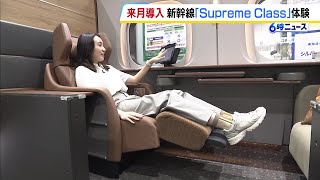
A new top-tier "Supreme Class" offering fully private compartments above the level of Green Car service will debut on the Tokaido and Sanyo Shinkansen on October 1, with passengers able to experience the new seating at a demonstration booth at Shin-Osaka Station.

MEDIA CHANNELS
         

MORE Sci-Tech NEWS

A rare pod of around 50 dolphins was spotted swimming through the Seto Inland Sea off Ozu, Ehime Prefecture, with dozens of dorsal fins repeatedly breaking the surface as the animals moved together.

Tesla unveiled its Cybercab in Japan for the first time on September 11, showcasing an AI-powered autonomous taxi designed without a steering wheel or pedals.

Large volumes of floodwater poured into the Metropolitan Area Outer Underground Discharge Channel in Kasukabe, Saitama Prefecture, following heavy rain on September 7, prompting the massive underground flood-control facility known as the "Underground Temple" to go into operation.

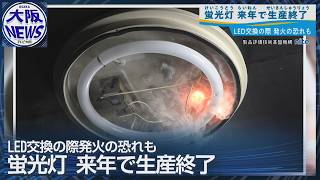
Fluorescent lamps that have illuminated Japanese homes and workplaces for decades are approaching the end of production, with Panasonic preparing to wind down a business it has operated since 1951 while experts warn that incorrectly replacing some fixtures with LEDs could create a fire risk.

Osaka-based spray nozzle maker IKEUCHI is expanding applications for its proprietary "Dry Fog," an ultra-fine mist that can cool, humidify and create visual effects without leaving surfaces wet, with the technology now being used in factories, livestock farming, crop cultivation and tourist attractions in Japan and overseas.

Japanese companies are moving closer to commercializing photonics-electronics convergence technology that replaces part of conventional electrical data transmission with optical signals, potentially allowing huge volumes of data to move with lower latency while sharply reducing power consumption as artificial intelligence drives rapid growth in electricity demand from data centers.

A new generation of optoelectronic integration technology developed over four decades by Japanese companies is moving closer to commercialization, offering a way to transmit huge volumes of data with low latency while sharply reducing the electricity consumed by data centers as artificial intelligence drives explosive growth in computing demand.

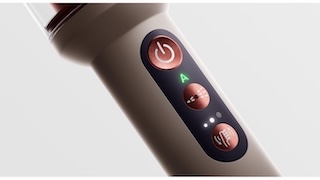
Dyson CameraJet™ turns the smart toothbrush into an active sensing product, making useful feedback and clear privacy design part of the same engineering brief.