News On Japan

Why Expo EV Buses Went to the Graveyard

OSAKA - The fleet of 190 EV buses introduced for the Osaka-Kansai Expo has been withdrawn from plans for reuse on regular routes, with Osaka Metro abandoning efforts to redeploy the vehicles after the event.

The reason was a string of repeated malfunctions. Current bus drivers and government inspectors have since raised serious concerns over the vehicles' safety and reliability.

Powered by electric motors, producing no exhaust emissions and promoted as environmentally friendly, the EV buses were introduced by Osaka Metro to transport visitors during the Osaka-Kansai Expo.

Even after the Expo closed, the buses had been expected to continue operating on city streets. Instead, they now remain parked at Osaka Metro's Morinomiya depot, with the site crowded by rows of unused vehicles.

Most of the buses procured by Osaka Metro were supplied by EV Motors Japan, a company headquartered in Kitakyushu, Fukuoka Prefecture. The company develops and sells buses while outsourcing production to manufacturers in China.

However, the vehicles have been plagued by defects reported across Japan. A driver working for a Tokyo bus company, who still operates EV Motors Japan buses around 23 times a month, said breakdowns were common.

'If you drive them three times, something goes wrong at least once,' the driver said. 'When you ride them every day, your palms sweat constantly.'

The driver also described a near-accident last year, saying the bus drifted right even while the steering wheel was turned left.

'You wonder whether this is really a bus approved by the transport ministry,' the driver said. 'When I know I might be assigned one, I do not even want to go to work.'

Similar trouble has emerged elsewhere. In April last year, buses introduced as school transport in Fukuoka Prefecture were suspended after incidents including vehicles suddenly stopping on roads. In September, an Osaka Metro on-demand bus reportedly lost steering control while out of service and struck a central divider.

Following the repeated failures, the Ministry of Land, Infrastructure, Transport and Tourism carried out an on-site inspection in October last year. Problems were found in 113 of 317 vehicles inspected, more than 30% of the total.

In response, Osaka Metro decided last month not to use the 190 buses it had purchased and also abandoned plans to convert them for route bus operations.

EV Motors Japan issued an apology, saying it deeply regretted the concern and inconvenience caused by the buses.

The total amount spent by Osaka Metro on the EV buses was about 7.5 billion yen. Of that, around 4.4 billion yen in subsidies — effectively taxpayer money — came from the national government, Osaka Prefecture and Osaka City. The national government and Osaka Prefecture are seeking repayment. Osaka City said it is still considering its response.

Osaka Metro has also said it is demanding refunds for purchase payments and the retrieval of the vehicles, while considering further legal steps including damage claims depending on future responses.

Meanwhile, EV Motors Japan has filed for civil rehabilitation with the Tokyo District Court, citing concerns that it could no longer maintain financing. Total liabilities stand at roughly 5.7 billion yen.

The company says it will seek sponsors and attempt to rebuild operations, but the outlook remains uncertain.

With buses carrying passengers' lives in their hands, the scandal has raised broader questions over safety oversight, subsidy use and whether public funds can be recovered.

Source: KTV NEWS

News On Japan
POPULAR NEWS

Typhoon No. 25 was moving away from Japan over waters to the east early on September 22, bringing an end to rainfall across the Kanto region while remaining a strong storm as it tracked northeast at 45 kilometers per hour at 3 a.m.

Severe transport disruption continued across Chiba Prefecture on the morning of September 22 even as Typhoon No. 25 moved away from Japan, with major JR lines still suspended, rail access to Narita Airport disrupted by river flooding, highways closed across the Boso Peninsula and thousands of travelers dealing with the aftermath of the previous day's cancellations.

Japan collected another 12 medals on Day 3 of the Aichi-Nagoya Asian Games on September 21, with 17-year-old swimmer Shin Ohashi and karateka Kakeru Nishiyama winning gold, while the host nation also advanced strongly in women's volleyball, baseball, soccer, handball and hockey.

People aged 65 and older accounted for a record 29.6% of Japan's population in 2026, the highest proportion among major countries worldwide, while the number of elderly people in employment also reached an all-time high as Japan marked Respect for the Aged Day on September 21.

Emperor Naruhito and Empress Masako watched Japan defeat Kazakhstan in a women’s basketball preliminary-round game at the 20th Asian Games in Nagoya.

MEDIA CHANNELS
         

MORE Sci-Tech NEWS

A rare pod of around 50 dolphins was spotted swimming through the Seto Inland Sea off Ozu, Ehime Prefecture, with dozens of dorsal fins repeatedly breaking the surface as the animals moved together.

Tesla unveiled its Cybercab in Japan for the first time on September 11, showcasing an AI-powered autonomous taxi designed without a steering wheel or pedals.

Large volumes of floodwater poured into the Metropolitan Area Outer Underground Discharge Channel in Kasukabe, Saitama Prefecture, following heavy rain on September 7, prompting the massive underground flood-control facility known as the "Underground Temple" to go into operation.

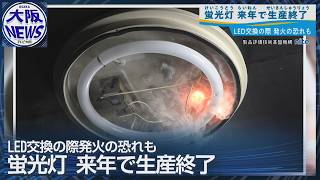
Fluorescent lamps that have illuminated Japanese homes and workplaces for decades are approaching the end of production, with Panasonic preparing to wind down a business it has operated since 1951 while experts warn that incorrectly replacing some fixtures with LEDs could create a fire risk.

Osaka-based spray nozzle maker IKEUCHI is expanding applications for its proprietary "Dry Fog," an ultra-fine mist that can cool, humidify and create visual effects without leaving surfaces wet, with the technology now being used in factories, livestock farming, crop cultivation and tourist attractions in Japan and overseas.

Japanese companies are moving closer to commercializing photonics-electronics convergence technology that replaces part of conventional electrical data transmission with optical signals, potentially allowing huge volumes of data to move with lower latency while sharply reducing power consumption as artificial intelligence drives rapid growth in electricity demand from data centers.

A new generation of optoelectronic integration technology developed over four decades by Japanese companies is moving closer to commercialization, offering a way to transmit huge volumes of data with low latency while sharply reducing the electricity consumed by data centers as artificial intelligence drives explosive growth in computing demand.

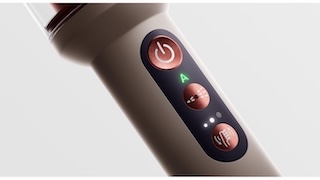
Dyson CameraJet™ turns the smart toothbrush into an active sensing product, making useful feedback and clear privacy design part of the same engineering brief.