News On Japan

China's Rare Earth Exports to Japan Fall

TOKYO - China's exports of rare-earth magnets to Japan in March fell 17.3% from the previous month to 184 tons, China's General Administration of Customs said on April 20.

Rare-earth magnets are one of the country's key rare-earth products. Monthly shipments to Japan dropping below 200 tons marked the first time since June 2025.

The decline is seen as reflecting the impact of export restrictions imposed by the Chinese government in January on dual-use goods bound for Japan.

Trade in rare earths between Japan and China has long been one of the most strategically sensitive commercial relationships in Asia. Japan is a major producer of automobiles, electronics, batteries and advanced machinery, while China has for years dominated the mining, refining and processing of rare earth materials essential to those industries.

Japanese manufacturers deepened their reliance on Chinese supply during the 2000s as China rapidly expanded production and offered lower-cost materials than rivals. By the end of that decade, China had secured a commanding position in the global market, supplying most of the world’s rare earth output and processing capacity. Japanese companies imported magnets, oxides and refined materials for use in hybrid vehicles, industrial motors, semiconductors and consumer electronics.

The vulnerability of that dependence became clear in 2010, when tensions between Tokyo and Beijing following a maritime dispute in the East China Sea were accompanied by a sharp disruption in rare earth shipments to Japan. The episode prompted alarm in corporate Japan and within government circles, highlighting the geopolitical risk tied to concentrated sourcing.

Japan responded by accelerating efforts to diversify procurement. Trading houses and manufacturers invested in alternative supply chains, including projects in Australia and Southeast Asia. Japanese firms also increased recycling of rare earth materials, developed technologies to reduce usage, and redesigned some products to rely less on scarce heavy rare earth elements.

One of the most notable initiatives was support for Australia’s Lynas project, which became a major non-Chinese supplier to Japanese industry. Over time, Japan succeeded in lowering the share of imports sourced directly from China, though Chinese producers remained central to global refining and magnet manufacturing.

In the years that followed, the trade relationship stabilized, but strategic concerns never disappeared. China continued to hold significant leverage through its control of processing capacity, particularly for high-performance magnets used in electric vehicles, wind turbines and defense-related equipment.

As the global shift toward decarbonization increased demand for electric motors and batteries, rare earths again moved to the forefront of industrial policy. Japan sought to secure supplies through stockpiling, overseas partnerships and domestic research into substitute materials.

Source: テレ東BIZ

News On Japan
POPULAR NEWS

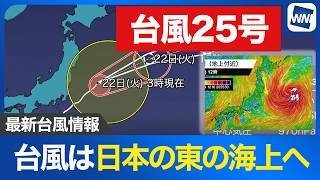
Typhoon No. 25 was moving away from Japan over waters to the east early on September 22, bringing an end to rainfall across the Kanto region while remaining a strong storm as it tracked northeast at 45 kilometers per hour at 3 a.m.

Severe transport disruption continued across Chiba Prefecture on the morning of September 22 even as Typhoon No. 25 moved away from Japan, with major JR lines still suspended, rail access to Narita Airport disrupted by river flooding, highways closed across the Boso Peninsula and thousands of travelers dealing with the aftermath of the previous day's cancellations.

Japan collected another 12 medals on Day 3 of the Aichi-Nagoya Asian Games on September 21, with 17-year-old swimmer Shin Ohashi and karateka Kakeru Nishiyama winning gold, while the host nation also advanced strongly in women's volleyball, baseball, soccer, handball and hockey.

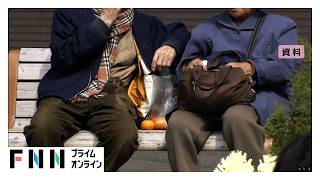
People aged 65 and older accounted for a record 29.6% of Japan's population in 2026, the highest proportion among major countries worldwide, while the number of elderly people in employment also reached an all-time high as Japan marked Respect for the Aged Day on September 21.

Emperor Naruhito and Empress Masako watched Japan defeat Kazakhstan in a women’s basketball preliminary-round game at the 20th Asian Games in Nagoya.

MEDIA CHANNELS
         

MORE Business NEWS

Tokyo’s stock market was closed on September 21 for Respect for the Aged Day, leaving the Nikkei 225 without a cash close after finishing the previous session at 65,019, while currency and futures markets focused on the yen, the Bank of Japan’s latest rate hike and intervention risks during Japan’s Silver Week holiday.

Japan's first five-day Silver Week holiday in 11 years has put renewed attention on household finances, with persistently high food prices and a weakening yen threatening to erode the benefits of the government's planned consumption tax cut on food.

A list of providers with identical promises turns selection into brute-force sorting. The differences do exist; they are just hidden somewhere other than the homepage.

The Bank of Japan raised its policy rate from 1.0% to 1.25% on September 18, taking borrowing costs to their highest level in 31 years and accelerating the pace of monetary tightening as persistent inflation and concerns over fiscal expansion put upward pressure on interest rates.

The yen strengthened by more than 1 yen against the dollar in a short period late on September 18 after the Bank of Japan conducted a rate check, a step commonly taken in preparation for possible intervention in the foreign exchange market.

Tokyo stocks rose sharply on September 18, with the Nikkei 225 climbing to around 65,350 in afternoon trading after the Bank of Japan raised interest rates to 1.25%, as the yen weakened and investors bought artificial intelligence and semiconductor-related shares.

The Bank of Japan raised its policy interest rate from 1.0% to 1.25% on September 18, lifting borrowing costs to their highest level in 31 years as policymakers moved to contain growing inflation risks, but the yen weakened sharply after the decision as markets focused on two dissenting votes and uncertainty over the pace of further increases.

A market spread is generally the difference between two market prices. Most commonly, traders use the term to describe the bid-ask spread: the difference between the highest price a buyer is currently prepared to pay and the lowest price a seller is prepared to accept.