News On Japan

Gold Yield From Circuit Boards Far Exceeds Natural Mines

TOKYO - A nationwide effort to recover valuable resources is gaining momentum in Japan, where discarded personal computers are being transformed into a significant source of recycled gold.

At first glance, piles of discarded computer circuit boards appear to be nothing more than waste, but they are in fact a rich source of gold and other rare metals.

At a recycling company in Nagoya, partnerships have been established with 760 municipalities across Japan to promote resource reuse. The company operates a system that allows free collection of up to 20 kilograms of items, provided at least one personal computer is included, enabling it to gather around one million discarded units annually.

“These are from Saitama Prefecture, and those are from Shiga Prefecture,” a staff member said. “We collect from all over Japan, from Hokkaido to Okinawa.”

The primary targets are rare metals such as gold and palladium contained in electronic components. Discarded electronics rich in such materials are often referred to as “urban mines.”

After manual disassembly, circuit boards are efficiently collected and transported to a recycling plant in Kitakyushu.

Masakazu Konishi, group leader at Astec Irie, said: “These are circuit boards that arrived from Nagoya. The gold-colored parts can be processed to recover gold. What we have extracted is shown here.”

The process begins with removing components using specialized equipment, followed by sorting. A conveyor belt equipped with eight nozzles uses AI to identify hundreds of component types by color and shape, separating them with compressed air. Among these, connectors contain particularly high amounts of gold.

“We recover gold from parts that have gold plating,” Konishi said.

The selected materials are then immersed in a solution that dissolves impurities, and after about 12 hours, gold with a bright metallic sheen emerges.

“We have confirmed the purity to be over 90%,” Konishi added.

More than 10 grams of gold can be extracted from one ton of computer circuit boards—several dozen times the yield of natural gold ore. The recovered gold is then reintroduced into the market.

“Circuit boards contain many other metals beyond those we are currently recovering, and we aim to further develop technologies to extract them more efficiently,” Konishi said.

Urban mining, which turns electronic waste into a valuable domestic resource, is becoming an increasingly important initiative for Japan as nationwide efforts to recover materials continue to expand.

Source: TBS

News On Japan
POPULAR NEWS

Typhoon No. 7 is expected to keep affecting parts of Japan’s transport network into June 28, with travelers still facing possible delays, cancellations and suspensions on airport access routes, JR conventional lines in eastern Japan, coastal rail services and some expressways even after the main disruption around central Tokyo eased by evening.

According to updates at 5:30 p.m. on June 27, two typhoons and the seasonal rain front brought heavy rain, flooding and fallen trees across parts of Japan, with Typhoon No. 8 causing record June rainfall in Chiba before weakening into an extratropical system and Typhoon No. 7 moving close to Kanto from evening to late night.

Japan advanced to the knockout stage of the World Cup after a 1-1 draw with Sweden on June 25, finishing second in Group F and setting up a Round of 32 clash with Brazil in Houston.

A powerful earthquake with a maximum seismic intensity of upper 6 struck off Iwate Prefecture at around 7:30 a.m. on June 25, shaking parts of Aomori Prefecture and leaving Hachinohe, which was hit by a similarly strong quake last December, facing fresh damage.

A powerful earthquake registering a maximum intensity of 6 upper on Japan’s seismic scale struck Aomori Prefecture at around 7:30 a.m. today. According to the Japan Meteorological Agency, the epicenter was off the coast of Iwate Prefecture, with a depth of about 50 kilometers. The earthquake’s magnitude was estimated at 6.9.

MEDIA CHANNELS
         

MORE Sci-Tech NEWS

A new treatment that uses healthy tissue from the heart removed from a transplant patient and transplants it into another patient has been approved in Japan for the first time, with the National Cerebral and Cardiovascular Center preparing to carry out the procedure.

For those involved in medical research and biostatistics, understanding the intricacies of recovery processes is crucial.

The KAGRA gravitational-wave research facility in Kamioka, Hida, Gifu Prefecture, was opened to the public on June 20 for the first special viewing in nine years, giving 200 visitors a rare chance to tour the underground observatory with Nobel laureate Takaaki Kajita.

Mosquitoes are appearing earlier than usual this year, raising fears of a major summer outbreak as experts warn that warm May weather and repeated light rain have created ideal breeding conditions across residential areas.

New cases of hand, foot and mouth disease in Fukuoka Prefecture remained at alert level for the third consecutive week, prompting the prefectural government to urge residents to take preventive measures against the infection, which spreads through droplets and physical contact.

A Japanese startup is seeking to transform manufacturing inspections with a world-first lighting technology that eliminates reflected light, making previously hidden defects, contaminants, and irregularities visible to the human eye.

You likely interact with Japanese innovation daily without realizing it. Walk through any modern facility, and you encounter systems where hardware and software fuse flawlessly.

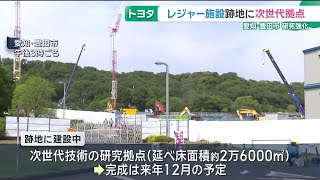
Toyota Motor will establish a next-generation technology research hub on the site of a former leisure complex in Toyota City, Aichi Prefecture, as part of its efforts to accelerate innovation in future mobility and related fields.