News On Japan

Voice Actor Kenjiro Tsuda Sues TikTok Operator Over AI Voice Imitation

TOKYO - Popular voice actor Kenjiro Tsuda has filed a lawsuit with the Tokyo District Court seeking the removal of videos that allegedly used generative AI to imitate his voice without permission on the video-sharing app TikTok.

Tsuda is widely known for voicing Kento Nanami in the hit anime series "Jujutsu Kaisen" and is also active as an actor.

According to the complaint, unidentified TikTok accounts uploaded more than 180 videos featuring narration that allegedly mimicked Tsuda’s voice using generative AI technology from July 2024 onward.

Tsuda’s side argues that the videos infringe upon his "publicity rights," referring to the economic value associated with a celebrity’s name and likeness, and is demanding that the company operating TikTok remove the content.

The lawsuit was filed in November last year. According to Tsuda’s legal representatives, the TikTok operator has argued that the narration in the videos used a "universal male voice" and therefore did not violate Tsuda’s publicity rights, while seeking dismissal of the case.

Source: TBS

News On Japan
POPULAR NEWS

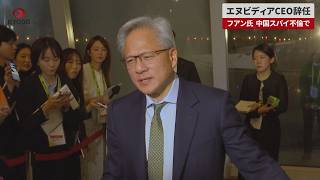
The resignation of Nvidia CEO Jensen Huang on November 12 following allegations involving a woman suspected of links to Chinese intelligence has raised concerns in Japan over the potential impact on semiconductor investment, financial markets and the yen, as uncertainty surrounding the American AI chipmaker threatens to disrupt the global technology industry.

Japan launched a new national disaster management agency on November 2nd to strengthen its response to major emergencies, just days before a powerful earthquake struck Aichi Prefecture, injuring 24 people and renewing concerns over the possibility of a catastrophic Nankai Trough earthquake.

Russia's Foreign Ministry on November 11 defended the government's unilateral decision to place the local subsidiary of Japan Tobacco (JT) under the management of a Russian company, describing the move as a countermeasure against what it called Japan's "blatantly hostile actions."

East Japan Railway (JR East) announced on November 10th that it will introduce touch-free ticket gates at 40 stations, including every station on Tokyo's Yamanote Line, from spring 2028, allowing passengers using Mobile Suica to pass through without taking their smartphones out of their pockets or bags.

Japan's Children and Families Agency unveiled its first national guidelines on November 10th for parental involvement in children's internet use, dividing those aged 0 to 18 into six developmental stages as the government considers tighter regulations on social media platforms to protect young people from online bullying, exploitation, and other growing risks.

MEDIA CHANNELS
         

MORE Web3 NEWS

Japanese companies are facing an increasingly serious wave of cyberattacks, with personal information leaks and fraudulent financial transactions causing widespread damage, while the rapid development of artificial intelligence is making attacks faster and more sophisticated and driving demand for cybersecurity specialists known as white hackers.

PixAI is expanding its role in artificial intelligence-assisted content creation with the launch of PixAI Studio, an integrated production environment that brings image generation, animation, editing, and asset management into a single workspace, offering independent creators new opportunities to develop animated stories without the extensive resources traditionally associated with film and television production.

The growth of mobile gaming throughout both central and eastern Asia has been extremely fast due to increasing smartphone usage and improvements in cellular networks.

The mobile application offers fans a convenient way to look at the fixtures, game details, and settings of their profile.

New Zealanders have a reputation for low tolerance of fuss, and that attitude shows up in how they spend their screen time.

Japan's stock market remains vulnerable to sharp swings as uncertainty surrounding artificial intelligence investment intensifies, with Masamitsu Oki, investment director at Five Star Asset Management, warning that AI-related stocks have entered an era resembling gambling and that investors face considerable uncertainty over the industry's long-term prospects.

SoftBank Group has announced plans to invest $1 billion in a major artificial intelligence infrastructure project in Malaysia, joining Singapore-based technology giant Grab and a local energy company in a $1.85 billion initiative aimed at developing one of Asia's largest AI infrastructure networks.

Artificial intelligence is moving beyond computer screens and into factories and logistics centers, where robots capable of interpreting their surroundings and making independent decisions are emerging as a potential solution to Japan's chronic labor shortages, with Japanese unicorn startup Mujin and industrial robot manufacturer Yaskawa Electric leading efforts to develop the next generation of intelligent machines.