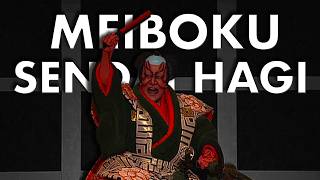
May 26, 2026 (Kabuki In-Depth) - Today, we have a look at the wonderful art of the late actor Ichikawa Danjūrō XII.
Ichikawa Danjūrō XII, born Natsuo Horikoshi in 1946, was one of the most influential kabuki actors of the postwar era and a central figure in preserving and modernizing Japan’s traditional theater. As the twelfth holder of the prestigious Danjūrō name, he carried forward a theatrical lineage dating back more than 300 years, becoming both a cultural icon and a bridge between classical kabuki and modern Japanese society.
The Ichikawa Danjūrō name is among the most revered stage names in kabuki history. The line began with Ichikawa Danjūrō I in the late 17th century during the Edo period. Actors who inherited the name traditionally specialized in the bold and exaggerated “aragoto” style of acting, developed in Edo, present-day Tokyo. These performances featured dramatic makeup, explosive movement, and larger-than-life samurai heroes.
Born into this distinguished theatrical family, Danjūrō XII was the eldest son of Ichikawa Danjūrō XI. He made his stage debut as a child in 1951 under the name Ichikawa Shinnosuke VI. From an early age, he underwent the rigorous training expected in kabuki households, where sons often spend decades mastering movement, diction, dance, and inherited family roles.
During the 1960s and 1970s, he rose steadily through the kabuki world, earning praise for both classical performances and his ability to connect with younger audiences. In 1969, he assumed the name Ichikawa Ebizō X, another important title within the family lineage. Throughout these years, he became known for his commanding stage presence and emotional intensity, especially in heroic roles associated with the Danjūrō tradition.
In 1985, he formally inherited the name Ichikawa Danjūrō XII during an elaborate naming ceremony known as a “shūmei.” The event was one of the largest kabuki celebrations of the era and symbolized the continuation of one of Japan’s greatest theatrical dynasties. Taking the Danjūrō name also meant inheriting responsibility for preserving the classic aragoto repertoire and maintaining the prestige of the Ichikawa school.
Danjūrō XII became widely respected not only as a performer but also as a cultural ambassador for kabuki. At a time when younger generations were increasingly drawn toward television and modern entertainment, he worked to keep kabuki relevant without abandoning tradition. He appeared in television dramas, documentaries, and public cultural programs, helping introduce kabuki to audiences who might never otherwise attend a performance.
One of his major contributions was promoting international awareness of kabuki. He participated in overseas tours and cultural exchanges that introduced Japanese traditional theater to audiences across Europe, the United States, and elsewhere in Asia. His performances helped establish kabuki as one of Japan’s most recognizable performing arts abroad.
Despite his success, Danjūrō XII faced serious personal challenges. He was diagnosed with leukemia in 2004 and underwent treatment while continuing to perform whenever possible. His struggle with illness drew national attention and sympathy, as he remained deeply committed to the stage even during periods of declining health.
In 2013, Ichikawa Danjūrō XII died at the age of 66 in Tokyo. His death was widely mourned across Japan, with tributes pouring in from the theater world, political leaders, and admirers of traditional culture. Many viewed him as the last great guardian of a particular era of kabuki.
His legacy continued through his son, Ichikawa Ebizō XI, who later inherited the Danjūrō name and became Ichikawa Danjūrō XIII in 2022. The succession symbolized the endurance of a theatrical bloodline that has survived wars, modernization, and immense social change since the Edo period.
Today, Danjūrō XII is remembered as a towering figure in modern kabuki history — an actor who preserved ancient traditions while guiding them into the contemporary age. Through his performances, public outreach, and dedication to the stage, he helped ensure that kabuki remained a living art form rather than merely a historical relic.