News On Japan

Police and Major Banks in Japan Join Forces Against Money Laundering

TOKYO - The National Police Agency announced on May 28th that it will launch a new framework in cooperation with nine financial institutions aimed at rapidly tracing money stolen through special fraud schemes and other scams, as damages from such crimes reached a record high last year.

According to the agency, total losses from special fraud cases and SNS-based investment and romance scams exceeded 320 billion yen in 2025, marking the worst annual figure on record, with the situation remaining severe.

Authorities said stolen funds are often quickly moved through multiple bank accounts by criminal organizations in a form of money laundering, making it difficult to track the money and return it to victims.

Currently, when fraud cases occur, police departments across Japan request financial institutions to freeze the recipient accounts while also inquiring whether the funds have been transferred to other accounts.

These inquiries are conducted by mail, with police sending written documents to financial institutions. Responses can take several days at the earliest, and in some cases several weeks.

As a result, investigators are often unable to keep pace with the speed at which criminal groups move stolen funds. By the time police receive information on destination accounts from financial institutions, the money has frequently already been transferred again, making recovery difficult.

To address the problem, the National Police Agency announced a new cooperative framework with nine financial institutions: Mizuho Bank, Mitsubishi UFJ Bank, Sumitomo Mitsui Banking Corporation, Resona Bank, Seven Bank, Rakuten Bank, AEON Bank, SBI Shinsei Bank, and Japan Post Bank.

Under the new system, when police receive reports of special fraud or similar crimes, police departments nationwide will submit inquiries online through the National Police Agency to participating financial institutions.

Authorities said some responses from banks could be received on the same day, allowing investigators to track the movement of stolen funds before criminal groups transfer the money elsewhere, with the goal of increasing the likelihood of returning funds to victims.

Police also said that identifying the financial institutions receiving transferred funds would help accelerate investigations into so-called "dashiko" operatives, who withdraw stolen money from ATMs on behalf of fraud groups.

The National Police Agency said it hopes to expand the framework to additional financial institutions in order to create an environment where money laundering becomes more difficult for criminals. The framework will begin operation on June 1st.

Source: TBS

News On Japan
POPULAR NEWS

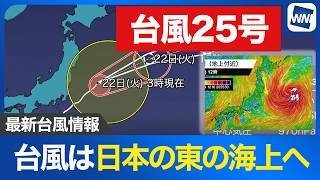
Typhoon No. 25 was moving away from Japan over waters to the east early on September 22, bringing an end to rainfall across the Kanto region while remaining a strong storm as it tracked northeast at 45 kilometers per hour at 3 a.m.

Severe transport disruption continued across Chiba Prefecture on the morning of September 22 even as Typhoon No. 25 moved away from Japan, with major JR lines still suspended, rail access to Narita Airport disrupted by river flooding, highways closed across the Boso Peninsula and thousands of travelers dealing with the aftermath of the previous day's cancellations.

Japan collected another 12 medals on Day 3 of the Aichi-Nagoya Asian Games on September 21, with 17-year-old swimmer Shin Ohashi and karateka Kakeru Nishiyama winning gold, while the host nation also advanced strongly in women's volleyball, baseball, soccer, handball and hockey.

People aged 65 and older accounted for a record 29.6% of Japan's population in 2026, the highest proportion among major countries worldwide, while the number of elderly people in employment also reached an all-time high as Japan marked Respect for the Aged Day on September 21.

Emperor Naruhito and Empress Masako watched Japan defeat Kazakhstan in a women’s basketball preliminary-round game at the 20th Asian Games in Nagoya.

MEDIA CHANNELS
         

MORE Business NEWS

Tokyo’s stock market was closed on September 21 for Respect for the Aged Day, leaving the Nikkei 225 without a cash close after finishing the previous session at 65,019, while currency and futures markets focused on the yen, the Bank of Japan’s latest rate hike and intervention risks during Japan’s Silver Week holiday.

Japan's first five-day Silver Week holiday in 11 years has put renewed attention on household finances, with persistently high food prices and a weakening yen threatening to erode the benefits of the government's planned consumption tax cut on food.

A list of providers with identical promises turns selection into brute-force sorting. The differences do exist; they are just hidden somewhere other than the homepage.

The Bank of Japan raised its policy rate from 1.0% to 1.25% on September 18, taking borrowing costs to their highest level in 31 years and accelerating the pace of monetary tightening as persistent inflation and concerns over fiscal expansion put upward pressure on interest rates.

The yen strengthened by more than 1 yen against the dollar in a short period late on September 18 after the Bank of Japan conducted a rate check, a step commonly taken in preparation for possible intervention in the foreign exchange market.

Tokyo stocks rose sharply on September 18, with the Nikkei 225 climbing to around 65,350 in afternoon trading after the Bank of Japan raised interest rates to 1.25%, as the yen weakened and investors bought artificial intelligence and semiconductor-related shares.

The Bank of Japan raised its policy interest rate from 1.0% to 1.25% on September 18, lifting borrowing costs to their highest level in 31 years as policymakers moved to contain growing inflation risks, but the yen weakened sharply after the decision as markets focused on two dissenting votes and uncertainty over the pace of further increases.

A market spread is generally the difference between two market prices. Most commonly, traders use the term to describe the bid-ask spread: the difference between the highest price a buyer is currently prepared to pay and the lowest price a seller is prepared to accept.