News On Japan

Companies Flock to Japan’s Major Space Business Expo

TOKYO - Japan’s largest space business exhibition opened at Tokyo Big Sight on May 27th, showcasing a growing wave of companies from outside the traditional aerospace sector entering the rapidly expanding space industry.

At the exhibition, known as “SPEXA,” visitors were greeted by a full-scale model of the asteroid explorer Hayabusa2 alongside a spacesuit made using Nishijin textile techniques, one of Kyoto’s best-known traditional crafts.

Now in its third year, the event has brought together around 320 companies and organizations displaying technologies designed to make space more accessible and commercially viable.

Alongside interactive attractions such as lunar driving simulations recreated using JAXA data, booths from companies in unrelated industries also stood out. Mitsui Sumitomo Insurance introduced “space insurance,” while Sharp showcased satellite communication antennas.

Sakurako Yoshida, sales director at RX Japan, the event organizer, said interest from outside industries is growing as expectations rise for a future in which humans live on the moon.

“When the time comes for people to live on the moon, necessities such as food, clothing and housing will all be required,” Yoshida said. “That is increasing interest from companies in completely different sectors.”

Japan’s domestic space industry market has expanded to around 4 trillion yen, encouraging a steady influx of new participants seeking to apply technologies developed on Earth to future space projects.

Among them was long-established bedding manufacturer nishikawa, which marks its 460th anniversary in 2026. The company demonstrated a mattress equipped with built-in sensors capable of visualizing heart rate and breathing patterns, technology intended to support health monitoring before and during future space travel.

Motonari Yahagi, executive officer at nishikawa, said the company is pursuing a business strategy centered on what lies “beyond sleep.”

“We want to combine sleep solutions with many different industries and continue expanding the concept,” Yahagi said.

Construction giant Takenaka Corporation also drew attention with its “Takenaka Space eXploration” exhibit, presenting concepts for lunar living spaces.

Tatsuho Sato, leader of Takenaka’s TSX Space Architecture Task Force, explained that crewed lunar rovers could connect together to form modular structures across the moon.

“If these structures are placed in different locations on the lunar surface, they could function almost like roadside stations,” Sato said.

The company aims to develop habitable lunar facilities capable of accommodating more than 40 people during the 2040s.

“There is new land in space,” Sato said. “There is ground, and there are resources. As a construction company, we see this as an opportunity to bring terrestrial construction technology to the moon, and we joined the project because we do not want to miss that opportunity.”

As companies from increasingly diverse sectors enter the market, organizers say they hope to further encourage collaboration between businesses through the exhibition platform.

“We would like to create new areas specifically for companies entering the industry for the first time and provide support wherever possible,” Yoshida said.

Source: FNN

News On Japan
POPULAR NEWS

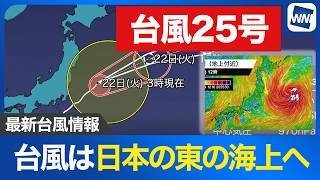
Typhoon No. 25 was moving away from Japan over waters to the east early on September 22, bringing an end to rainfall across the Kanto region while remaining a strong storm as it tracked northeast at 45 kilometers per hour at 3 a.m.

Severe transport disruption continued across Chiba Prefecture on the morning of September 22 even as Typhoon No. 25 moved away from Japan, with major JR lines still suspended, rail access to Narita Airport disrupted by river flooding, highways closed across the Boso Peninsula and thousands of travelers dealing with the aftermath of the previous day's cancellations.

Japan collected another 12 medals on Day 3 of the Aichi-Nagoya Asian Games on September 21, with 17-year-old swimmer Shin Ohashi and karateka Kakeru Nishiyama winning gold, while the host nation also advanced strongly in women's volleyball, baseball, soccer, handball and hockey.

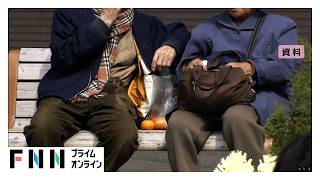
People aged 65 and older accounted for a record 29.6% of Japan's population in 2026, the highest proportion among major countries worldwide, while the number of elderly people in employment also reached an all-time high as Japan marked Respect for the Aged Day on September 21.

Emperor Naruhito and Empress Masako watched Japan defeat Kazakhstan in a women’s basketball preliminary-round game at the 20th Asian Games in Nagoya.

MEDIA CHANNELS
         

MORE Sci-Tech NEWS

A rare pod of around 50 dolphins was spotted swimming through the Seto Inland Sea off Ozu, Ehime Prefecture, with dozens of dorsal fins repeatedly breaking the surface as the animals moved together.

Tesla unveiled its Cybercab in Japan for the first time on September 11, showcasing an AI-powered autonomous taxi designed without a steering wheel or pedals.

Large volumes of floodwater poured into the Metropolitan Area Outer Underground Discharge Channel in Kasukabe, Saitama Prefecture, following heavy rain on September 7, prompting the massive underground flood-control facility known as the "Underground Temple" to go into operation.

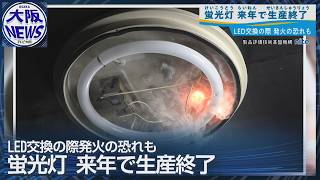
Fluorescent lamps that have illuminated Japanese homes and workplaces for decades are approaching the end of production, with Panasonic preparing to wind down a business it has operated since 1951 while experts warn that incorrectly replacing some fixtures with LEDs could create a fire risk.

Osaka-based spray nozzle maker IKEUCHI is expanding applications for its proprietary "Dry Fog," an ultra-fine mist that can cool, humidify and create visual effects without leaving surfaces wet, with the technology now being used in factories, livestock farming, crop cultivation and tourist attractions in Japan and overseas.

Japanese companies are moving closer to commercializing photonics-electronics convergence technology that replaces part of conventional electrical data transmission with optical signals, potentially allowing huge volumes of data to move with lower latency while sharply reducing power consumption as artificial intelligence drives rapid growth in electricity demand from data centers.

A new generation of optoelectronic integration technology developed over four decades by Japanese companies is moving closer to commercialization, offering a way to transmit huge volumes of data with low latency while sharply reducing the electricity consumed by data centers as artificial intelligence drives explosive growth in computing demand.

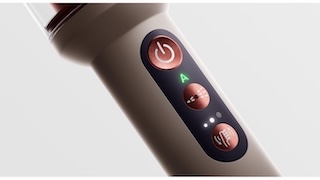
Dyson CameraJet™ turns the smart toothbrush into an active sensing product, making useful feedback and clear privacy design part of the same engineering brief.