TOKYO - Mr. Akazawa Ryosei, Minister of Economy, Trade and Industry (METI), said after a Cabinet meeting on June 2nd that Japan expects to secure the crude oil it needs in June through alternative procurement and previously approved reserve releases, without deciding on a third round of state oil reserve releases in May, while also stressing that naphtha supply is expected to remain at levels close to a normal year.
Akazawa began his remarks by saying that the government would hold a meeting of the council for promoting strategy in the storage battery industry later in the day. He said the council would discuss a proposal to revise the storage battery industry strategy adopted in 2022 into a new strategy covering storage batteries and power source industries. With oversupply becoming increasingly apparent, he said demand is growing for comprehensive storage solutions in expanding markets such as AI data centers.
Akazawa said the revised strategy would aim to establish a manufacturing base for power source systems centered on storage batteries with diverse competitiveness, while setting a goal of tripling sales by Japanese companies in storage battery-related businesses over the next 10 years.
Asked about Japan's oil reserve policy after his visit on Sunday to a reserve base in Kagoshima Prefecture, Akazawa said he had inspected operations at the site and encouraged workers engaged in the release of reserves. He said around 80% of the crude oil needed in June is expected to be secured through alternative procurement.
"By using the reserve releases already decided so far, we expect to be able to secure the crude oil needed in June, and therefore we decided not to make a decision in May on a third round of state oil reserve releases," Akazawa said.
He added that even under a conservative assumption in which alternative procurement continues at around 60%, the government expects to be able to ensure stable oil supplies beyond the current fiscal year and into next spring. Future reserve releases will be considered as needed after monitoring the progress of alternative procurement, he said.
"In any case, we intend to continue pursuing alternative procurement, limit reserve releases as much as possible, and secure the volumes needed by Japan as a whole," Akazawa said.
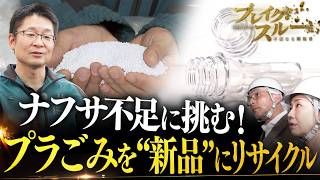
Asked about naphtha supply, Akazawa said Japan has secured the crude oil and petroleum products it needs overall. He said the country expects to continue securing naphtha supplies beyond the end of the year through domestic production, expanded imports from outside the Middle East, the use of inventories of intermediate chemical products, and direct imports of related materials.
Akazawa said it was important to distinguish between naphtha production and naphtha supply. Production refers to volumes made from crude oil, while supply includes production as well as inventory drawdowns and imports, he said. The key issue for daily life and industry is how much naphtha is actually available domestically.
He acknowledged that naphtha production has fallen because of scheduled maintenance at refineries, with output expected to return to normal-year levels around July after the peak period of maintenance ends. Until then, he said production will remain lower, but overall supply will be maintained by increasing imports of substitute naphtha, drawing down inventories of intermediate chemical products such as polyethylene, and expanding imports of downstream and midstream products.
Akazawa said this means the overall supply of petroleum-derived chemical products made from naphtha is expected to stay at normal-year levels. He added that major petroleum-related products such as thinner, paint, and vinyl chloride pipes, which are made from naphtha, are also being supplied at levels similar to or above the previous year's results.
At the same time, Akazawa said some distribution bottlenecks have emerged in the supply chain, citing staged supply restrictions, insufficient communication between businesses, and excessive orders by some distributors and users. He referred to an example from his own constituency in which a sole proprietor told him he had ordered 10 times the usual amount of adhesive, saying the comment had made him more worried rather than reassured.
Akazawa said the government will continue gathering supply chain information through consultation windows set up by relevant ministries and agencies, while regional bureaus of economy, trade and industry work with related organizations to provide proactive support to downstream users such as construction firms and automobile repair businesses. The aim, he said, is to correct distribution imbalances and steadily eliminate bottlenecks.
On a separate question about the replacement of cash register systems in connection with proposals to reduce the consumption tax rate on food to 0%, Akazawa said discussions on how to implement such a measure will be conducted by a national council led by the ruling and opposition parties. He said it would be difficult for him, as a Cabinet minister, to make a definitive comment before that process reaches a conclusion.
Akazawa said Prime Minister's instructions require the early spread of smart register systems that can flexibly handle changes in consumption tax rates. He said METI is collecting information on practical issues involved in expanding the use of such systems, including how much faster tax-rate changes could be implemented with smart registers compared with older mechanical or standard cash registers, and what problems would still remain.
Asked again about the outlook for shortening the period needed to replace register systems, Akazawa said the required timeframe would vary depending on the conditions assumed, and that METI is continuing to gather information.
Source: TBS