TOKYO - Prime Minister Sanae Takaichi entered the week of July 20 with her government facing a shortened but politically important stretch before the extended Diet session ends, as debate continued over Bank of Japan independence, domestic investment policy, the revised Imperial House Law and the ruling coalition’s unfinished legislative agenda.
July 20 was Marine Day, a national holiday in Japan, making it a quieter day for formal political activity. But the political agenda remained active because the Diet session, originally scheduled to end on July 17, has been extended until July 25. The extension gives the ruling bloc more time to move remaining bills, including legislation linked to the Japan Innovation Party’s priorities, while also prolonging scrutiny of Takaichi’s economic strategy.
The extension changes the political meaning of the Diet endgame. Last week, the government appeared to be moving toward a hard close after passing the revised Imperial House Law and clarifying its position on the Bank of Japan in the economic blueprint. Now, Takaichi must keep the ruling coalition together for another week while opposition parties look for new openings to challenge her over fiscal policy, inflation, the BOJ, imperial succession and Diet management.
The most immediate coalition issue is the secondary-capital bill. The proposal, strongly promoted by the Japan Innovation Party, cleared the House of Representatives before the extension but still needs upper house deliberation. For Ishin, the bill is not just another administrative reform measure. It is central to the party’s long-running argument that Japan needs to reduce excessive concentration in Tokyo and build a backup political and economic center.
For Takaichi’s Liberal Democratic Party, passing the bill would help stabilize coalition relations after the ruling bloc gave up on passing Lower House seat-reduction legislation during the current session. Ishin had treated seat reduction as one of its key reform priorities, and the delay left the coalition needing another visible achievement to prevent frustration from growing.
That makes the extended session a test of coalition management. Takaichi has already secured a conservative policy victory through the revised Imperial House Law, but she now needs to show Ishin that the coalition can also deliver on institutional reform and decentralization. Failure to make progress on the secondary-capital bill could deepen the sense that the LDP is using Ishin for numbers while prioritizing its own conservative agenda.
The revised Imperial House Law remains politically sensitive even after its passage on July 17. The law allows female imperial family members to remain in the Imperial House after marriage and permits the adoption of male descendants from former imperial branches. It also preserves the male-line succession system and does not allow female emperors.
Takaichi defended the legislation after its enactment, saying the government had acted in response to long-standing discussions over securing the number of imperial family members. Supporters say the measure offers a practical way to maintain imperial activities without changing the succession principle. Critics argue that the law avoids the deeper question of stable succession and excludes Princess Aiko from any possible path to the throne.
The international reaction has added another layer. The United Nations has previously urged Japan to consider changes related to gender equality in the imperial system, and the issue returned to attention after the revised law was enacted. The Japanese government has rejected outside intervention in matters it regards as touching the fundamentals of the state, but the U.N. angle gives opposition parties and critics another way to frame the issue as part of a broader gender-equality debate.
For Takaichi, the political contradiction is clear. She is Japan’s first female prime minister, yet she has backed a conservative imperial solution that keeps succession male-line and male-only. That position strengthens her standing among conservatives, but it may also expose her to criticism from voters who see the imperial succession debate as a question of women’s status in public life.
Economic policy remains the larger challenge. The government has revised its economic and fiscal blueprint to clarify that specific monetary policy tools remain under the sole authority of the Bank of Japan. The change was designed to calm market concerns after earlier wording suggested that the administration wanted the BOJ to align more closely with Takaichi’s growth strategy.
The clarification matters because Takaichi’s economic agenda depends on a delicate balance. She wants to mobilize more than 370 trillion yen in public and private investment through fiscal 2040, focusing on strategic sectors such as artificial intelligence, semiconductors, shipbuilding, space, energy and quantum technology. But she also needs to reassure investors that Japan will not weaken fiscal discipline or pressure the central bank to keep rates artificially low.
The BOJ raised its policy rate to 1% in June, the highest level in more than three decades, and its July 30-31 meeting is now a major political and market event. If the central bank signals further tightening, the government’s investment agenda could face higher financing costs. If the BOJ sounds too cautious, it may face criticism for tolerating inflation and yen weakness.
Takaichi’s comments on domestic investment by the Government Pension Investment Fund have added another sensitive issue. She said the government would pursue steps to encourage more investment in domestic financial assets by households and state pension funds, including the GPIF, while respecting the interests of the insured and long-term investment principles.
The remarks were politically significant because the GPIF is one of the world’s largest pension funds and a central actor in Japan’s financial markets. Encouraging more domestic investment could support Japanese stocks and government bonds while reinforcing Takaichi’s message that Japanese savings should help finance Japanese growth. But any suggestion that pension assets are being guided by political priorities could raise concerns about investment independence and long-term returns.
Finance Minister Satsuki Katayama has also argued for more domestic investment by state pension funds, making this a likely theme in the next phase of the administration’s economic policy. The government will need to present the idea carefully, emphasizing fiduciary responsibility while promoting the political message that Japan’s own capital should be mobilized for national growth.
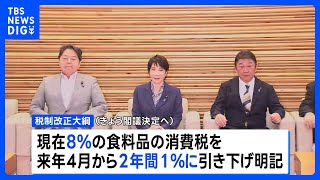
The food consumption tax issue remains unresolved. The final economic blueprint leaves open a decision on possible cuts to the 8% tax rate on food, with the government expected to decide by early August. Takaichi has supported food-tax relief as a cost-of-living measure, but the policy creates difficulties over revenue, retail-system readiness and the question of whether a temporary cut can be reversed without becoming politically toxic.
For households, the tax issue may matter more than the abstract debate over the BOJ. Food prices, energy costs and imported goods remain sensitive because of the weak yen. The administration wants voters to focus on long-term investment and wage growth, but many households are judging the government by whether everyday prices become easier to manage.
The opposition is likely to use the extended Diet session to keep these household issues in view. Takaichi’s growth strategy is ambitious, but opposition parties can argue that voters need immediate relief rather than long-term investment targets. The BOJ debate, bond yields, GPIF comments and food-tax decision all give them openings to question whether the government is mixing economic policy, market management and political messaging too closely.
The July 20 political picture is therefore one of unresolved pressure rather than a single dramatic event. The Diet has been extended, the Imperial House Law has passed but remains contested, the economic blueprint has been adjusted but not fully defused, and Takaichi’s GPIF comments have opened a new front in the debate over how far the government should go in directing national savings toward domestic investment.
What To Watch Next
The extended Diet session now runs until July 25, making the secondary-capital bill and other remaining legislation the main parliamentary focus.
Coalition management with Ishin will be important after the LDP prioritized Imperial House legislation while seat-reduction reform was delayed.
Reaction to the revised Imperial House Law will continue, especially over female succession, Princess Aiko’s status and the international gender-equality angle.
The final economic blueprint will be examined for how convincingly it protects BOJ independence while still advancing Takaichi’s growth strategy.
Takaichi’s comments on GPIF and domestic investment could become a major policy theme if the government moves from general encouragement to concrete proposals.
The food consumption tax decision expected by early August remains one of the most politically sensitive cost-of-living issues.
The BOJ’s July 30-31 policy meeting will be the next major economic and political test for the administration.