TOKYO - Prime Minister Sanae Takaichi’s first economic policy roadmap took center stage on July 21, setting out a long-term investment strategy aimed at reviving growth, but the plan was immediately overshadowed by concerns in the bond market over fiscal discipline and the Bank of Japan’s independence.
The roadmap is the clearest statement yet of Takaichi’s governing strategy. It calls for more than 370 trillion yen in combined public and private investment through fiscal 2040, with priority areas including artificial intelligence, semiconductors, shipbuilding, energy, space, quantum technology and other strategic sectors.
The plan is designed to move Japan away from years of weak investment and low growth by using government policy to draw private capital into industries seen as essential to national competitiveness. It also reflects Takaichi’s broader attempt to connect economic growth, industrial policy and national security into a single political agenda.
The political problem is that markets are not judging the plan only by its growth targets. Investors are also watching whether the government can pursue such a large investment strategy without weakening fiscal discipline or pressuring the BOJ to keep interest rates lower than economic conditions require.
That concern has been building for weeks. Earlier drafts of the government’s economic blueprint appeared to call for closer coordination between the government and the BOJ, raising fears that the administration wanted the central bank to delay further rate hikes. After bond yields climbed to multi-decade highs, the government revised the language to make clear that decisions on specific monetary policy tools remain under the BOJ’s authority.
The final wording may have reduced the immediate political damage, but it has not removed market doubts. The Takaichi administration is widely seen as favoring aggressive fiscal policy and supportive monetary conditions, a stance rooted in the legacy of Abenomics. That gives the prime minister a clear pro-growth identity, but it also revives old questions about whether Japan can sustain high public debt while keeping borrowing costs under control.
The BOJ has already moved away from years of ultra-loose policy. It raised its policy rate to 1% in June, the highest level in more than three decades, and its July 30-31 meeting is now a major political and market event. Any signal of further tightening could complicate Takaichi’s investment agenda, while excessive caution could invite criticism that the central bank is tolerating inflation and yen weakness.
For households, the debate is tied directly to prices. A weak yen has raised import costs and kept pressure on food, energy and daily goods. Takaichi’s long-term investment program may appeal to business groups and strategic planners, but voters are more likely to judge the government by whether wages keep up with inflation and whether everyday costs become easier to manage.
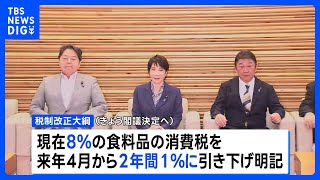
The government’s unresolved food-tax policy adds to that pressure. The economic blueprint leaves open a decision on possible cuts to the 8% consumption tax rate on food, with the government expected to decide by early August. Takaichi has previously supported food-tax relief, but any cut would raise difficult questions over revenue, implementation and whether a temporary reduction could be reversed later.
The bond market has become the main constraint on that kind of politics. If yields continue to rise, the government’s borrowing costs will increase and investors may demand stronger evidence of fiscal restraint. A former BOJ policymaker has warned that the central bank could face pressure to expand bond purchases if the 10-year Japanese government bond yield rises above 3%, a scenario that would reopen debate over whether monetary policy is being drawn back into fiscal support.
The extended Diet session gives opposition parties another opportunity to press these issues. The session, originally scheduled to end on July 17, has been extended until July 25, allowing the ruling bloc more time to pass remaining bills. The extension also prolongs scrutiny of Takaichi’s handling of the Diet, especially after weeks of opposition criticism over rushed deliberations and the prime minister’s attendance at key committee sessions.
One major item still tied to the extended session is the secondary-capital bill, a priority for the Japan Innovation Party. The proposal would promote preparations for a backup political and administrative center outside Tokyo, framed as a response to disasters and overconcentration in the capital.
For Ishin, the bill is central to its identity as a party of administrative reform and decentralization. For Takaichi’s Liberal Democratic Party, passing it would help repair coalition expectations after the ruling bloc gave up on Lower House seat-reduction legislation during the current session.
The secondary-capital debate therefore matters beyond the policy itself. It is a test of whether the LDP-Ishin partnership can deliver gains for both sides. Takaichi has already secured a conservative achievement through the revised Imperial House Law, but Ishin now needs a visible result on its own reform agenda.
The revised Imperial House Law, enacted on July 17, remains politically sensitive. The law allows female imperial family members to remain in the Imperial House after marriage and permits adoption from former male-line imperial branches, but it preserves male-only succession and does not allow female emperors.
Supporters say the law is a practical way to maintain imperial family numbers without changing the succession principle. Critics argue that it avoids the deeper question of stable succession and excludes Princess Aiko, Emperor Naruhito’s only child, from any path to the throne. The debate is likely to continue even after the law’s passage, particularly because public support for broader female succession has remained significant.
For Takaichi, the issue reflects both strength and vulnerability. Passing the law gives her a clear achievement with conservative voters. But as Japan’s first female prime minister, her support for a male-only imperial succession system also creates a contrast that opposition parties and critics can use in broader debates over gender equality.
The July 21 political picture therefore shows a government trying to move from legislative survival to policy implementation. Takaichi has a major economic roadmap, a passed Imperial House revision and an extended Diet window for coalition priorities. But she also faces rising market scrutiny, unresolved food-tax questions, BOJ pressure and the need to keep Ishin satisfied.
The central question is whether Takaichi can turn her growth roadmap into a credible governing program rather than a source of financial-market anxiety. If the government can explain how investment will be financed, protect BOJ independence and deliver household relief, the roadmap could become the foundation of her administration. If bond yields keep rising and voters see only higher prices, the same plan could become a political liability.
What To Watch Next
The market reaction to the economic roadmap will be the immediate test, especially movements in 10-year and longer-dated Japanese government bond yields.
The BOJ’s July 30-31 policy meeting remains the next major political and monetary-policy event, with markets watching for signals on inflation, yen weakness and future rate hikes.
The government is expected to decide by early August whether to pursue a cut to the 8% consumption tax rate on food.
The extended Diet session runs until July 25, keeping attention on the secondary-capital bill and coalition management with Ishin.
Reaction to the revised Imperial House Law will continue, especially over female succession, Princess Aiko’s status and the long-term stability of the imperial family.
Takaichi’s ability to present the 370 trillion yen investment strategy as fiscally responsible will shape the next phase of the political debate.