News On Japan

AI Surge Drives Strong Earnings Across Japan Inc.

TOKYO - Japanese companies delivered stronger-than-expected earnings for the April-June quarter, with artificial intelligence-related demand lifting a broad range of businesses while instability in the Middle East and higher resource prices emerged as key headwinds.

An analysis covering 225 companies, including those whose fiscal years do not end in March, showed that roughly 75% reported higher sales and profits or returned to profitability. More than 90% recorded increased sales, indicating broadly favorable business conditions.

The strength was even more pronounced when looking at changes in profits. Companies whose earnings doubled or increased threefold or fourfold accounted for about one-fifth of the total.

Results were partly helped by a low comparison base following disruption caused by the tariff shock a year earlier, but the overall performance remained exceptionally strong even after taking that factor into account.

When the percentage changes in earnings at individual companies were averaged rather than calculating their combined profits, earnings were about 2.4 times the year-earlier level. Some companies recorded extremely large increases, including gains of around 46 times.

The strong earnings also provided support for the sharp rise in Japanese equities during the April-June period. The Nikkei Stock Average climbed about 35% and reached the 70,000 range during the quarter. While some investors described the advance as a bubble, the scale of the increase in corporate earnings suggested that share prices may in fact have lagged behind the improvement in fundamentals.

AI and semiconductor-related demand was a major driver of the strong results.

Nearly 30% of the companies covered in the analysis had already revised their forecasts upward, highlighting the strength of the earnings environment.

Fujikura stood out as one example. The company recorded earnings growth of about 2.1 times and had already raised its outlook twice by the first quarter. The repeated revisions illustrated how even companies positioned at the center of the AI boom have underestimated the strength of demand.

Past patterns also suggest that companies making multiple upward revisions are relatively likely to raise their earnings forecasts again later in the fiscal year.

The benefits of AI are also spreading well beyond companies traditionally regarded as semiconductor or technology stocks.

Mitsubishi Heavy Industries provided a notable example. While the company is often associated with areas such as space, defense and shipbuilding, gas turbines emerged as an important contributor to its latest results.

Rapid expansion of AI-related data centers is pushing up electricity demand, increasing interest in efficient power generation. Gas turbines have consequently attracted stronger demand around the world, showing how the economic effects of the AI boom are reaching into heavy industry and power-generation equipment.

Middle East developments, by contrast, have generally presented a negative factor for corporate earnings. Continued instability in the region, together with higher resource prices, has created pressure on companies across a range of industries.

However, the impact has not been uniformly negative, with some companies benefiting from market conditions associated with higher resource prices and geopolitical uncertainty.

Source: テレ東BIZ

News On Japan
POPULAR NEWS

Typhoon No. 25 was moving away from Japan over waters to the east early on September 22, bringing an end to rainfall across the Kanto region while remaining a strong storm as it tracked northeast at 45 kilometers per hour at 3 a.m.

Severe transport disruption continued across Chiba Prefecture on the morning of September 22 even as Typhoon No. 25 moved away from Japan, with major JR lines still suspended, rail access to Narita Airport disrupted by river flooding, highways closed across the Boso Peninsula and thousands of travelers dealing with the aftermath of the previous day's cancellations.

Japan collected another 12 medals on Day 3 of the Aichi-Nagoya Asian Games on September 21, with 17-year-old swimmer Shin Ohashi and karateka Kakeru Nishiyama winning gold, while the host nation also advanced strongly in women's volleyball, baseball, soccer, handball and hockey.

People aged 65 and older accounted for a record 29.6% of Japan's population in 2026, the highest proportion among major countries worldwide, while the number of elderly people in employment also reached an all-time high as Japan marked Respect for the Aged Day on September 21.

Emperor Naruhito and Empress Masako watched Japan defeat Kazakhstan in a women’s basketball preliminary-round game at the 20th Asian Games in Nagoya.

MEDIA CHANNELS
         

MORE Web3 NEWS

Japanese technology company MW is developing a home equipped with artificial intelligence and ceiling-mounted robots designed to automate household chores, with the goal of freeing people from the roughly four hours a day that can be spent on domestic work.

Cross-border trade across Asia-Pacific keeps expanding, and so does the number of foreign shoppers, tourists, and business travelers that merchants now have to serve.

Both cryptocurrency and online casinos have developed huge audiences in Japan. Research from 2025 estimated that more than three million adults have wagered online, while Japan also has an established crypto sector that is supported by millions of exchange accounts.

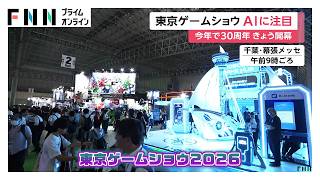
The Tokyo Game Show, one of the world's largest gaming exhibitions, opened with a record 1,138 exhibitors as companies from a growing range of industries seek a foothold in Japan's expanding gaming market, with artificial intelligence emerging as one of the main attractions this year.

Police are warning of a nationwide surge in scams involving criminals posing as officers, with evidence emerging that generative AI may now be used to create fake identities during video calls and make the deception more convincing.

High school students in Mishima, Shizuoka Prefecture, explored how humans and artificial intelligence might coexist in the future by interacting with an AI-powered humanoid robot during a class on September 11.

A medical institution opening in Nagoya's Showa Ward in October will use artificial intelligence-enhanced PET-CT and MRI equipment to produce clearer images and reduce the risk of cancer being overlooked during diagnostic examinations.

The rapid spread of generative artificial intelligence is fueling construction of data centers across Japan, but plans for two large facilities beside a residential neighborhood in Minoh, Osaka Prefecture, are raising concerns over sunlight, noise and low-frequency sound as authorities confront gaps in rules governing the increasingly important infrastructure.