


SoftBank has launched a new service enabling smartphones to connect directly to SpaceX’s Starlink satellites, aiming to ensure reliable communication even during disasters.
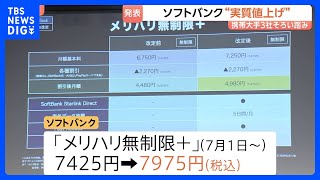
SoftBank said it will effectively raise monthly mobile fees by up to 550 yen, following similar moves by NTT Docomo and KDDI, meaning all three major carriers in Japan have now implemented price increases.

KDDI announced the results of an investigation into an accounting fraud involving its subsidiaries, revealing that 99.7% of revenue in its advertising agency business was generated through fictitious transactions.

Business leaders gathered at the 64th Kansai Business Seminar held at the Kyoto International Conference Center on February 5th and 6th to debate pressing issues facing the regional economy—including AI adoption, the legacy of the Osaka–Kansai Expo, and the use of foreign talent—offering a snapshot of where Kansai stands and where it may be headed.

KDDI has delayed the release of its financial results as it investigates suspected improper transactions at its subsidiaries, announcing that BIGLOBE and G-Plan may have recorded fictitious sales totaling up to approximately 246 billion yen and that about 33 billion yen may have been diverted outside the companies.

With eight days remaining until votes are cast in the House of Representatives election, concerns are mounting over future strains on Japan’s power supply, prompting renewed attention to how political parties position their energy policies, particularly on nuclear power.

A large-scale AI data center has begun operating on the site of a former factory in Sakai, Osaka, raising expectations that artificial intelligence will become even more embedded in everyday life while also highlighting the growing battle for dominance in AI infrastructure and its potential impact on Japan’s economy.

Rakuten Mobile continues to draw attention every earnings season, and while its losses have been narrowing, the pain it inflicts on the Rakuten Group’s overall performance has not fundamentally changed. Even so, chair Hiroshi Mikitani describes the mobile business as contributing “more than expected,” and insists the company will maintain its stance of keeping low-price, unlimited data plans even as other carriers move to raise fees.

The Nikkei Stock Average surpassed 50,000 yen for the first time in history following the launch of the Takaichi administration, with the surge driven primarily by just a handful of AI-related stocks. But as share prices swing wildly, questions are growing over whether this market euphoria is truly sustainable.
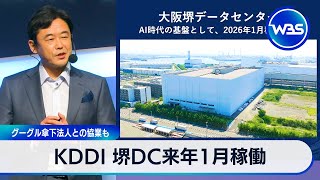
KDDI announced on October 28th that it will begin operating a new data center in late January 2026 at the site of the former Sharp factory in Sakai City, Osaka Prefecture.
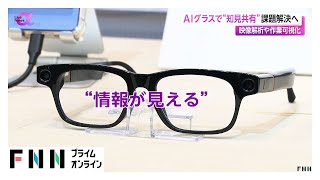
Lawson is introducing a new concept for convenience stores, aiming to enhance operational efficiency through the use of AI-powered digital glasses.
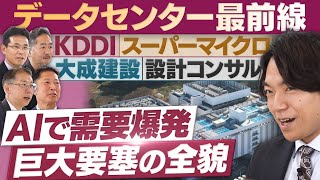
With the AI development race intensifying and Meta announcing a trillion-yen investment, data centers are gaining increasing attention.

A new Lawson convenience store that opened in Tokyo's Minato Ward on June 23rd is being billed as the first "future convenience store" utilizing AI and other advanced technologies in partnership with telecom giant KDDI. Central to the concept is store management that minimizes human labor. Yet, even as automation accelerates, some businesses are intentionally moving in the opposite direction.

As NTT Docomo and KDDI move to raise their mobile phone fees, SoftBank has also revealed it is considering a similar hike.

Lawson and KDDI have teamed up to launch a 'convenience store of the future' that integrates the latest technology with communications, aiming to address labor shortages and enhance store operations.
KDDI has hosted an exhibition showcasing a 'future shopping experience' which imagines a future where cutting-edge technologies like generative AI seamlessly integrate into daily life.

Convenience store giant Lawson was delisted from the Tokyo Stock Exchange Prime Market on July 24, as it enters a joint management system with Mitsubishi Corporation and KDDI.
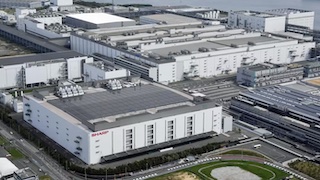
Japanese electronics group Sharp and telecom partner KDDI will convert a factory site in Japan into a data center for artificial intelligence powered by advanced Nvidia chips, Nikkei has learned. (Nikkei)
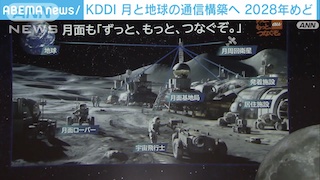
As the space-related business sector rapidly expands, Japan's second largest telecommunications company, KDDI, has announced plans to enable mobile communication on the moon.
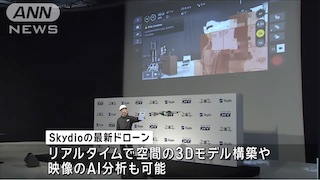
KDDI has announced a partnership with an American company to establish drone ports at 1,000 locations across Japan, aimed at utilizing these drones in disaster-stricken areas.

Mitsubishi UFJ Morgan Stanley Securities claimed the leading position in advising Japan-related M&A transactions for the January to March 2024 period, with a total value of approximately US$13 billion, according to data from the London Stock Exchange Group (LSEG).

NTT Docomo has announced its acquisition of a majority stake in Orix Credit, a subsidiary of the financial services giant Orix Corporation.
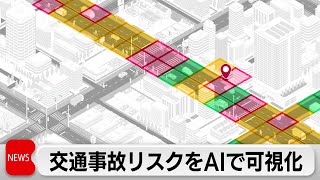
KDDI and Toyota Motor Corporation announced on the 20th that they have developed a technology that uses AI to analyze and visualize high-risk traffic areas on maps.

Tokyo's Ueno district has become home to one of the city's largest e-sports facilities, equipped with some of the fastest internet connections in the country, specifically designed for competitive computer gaming.
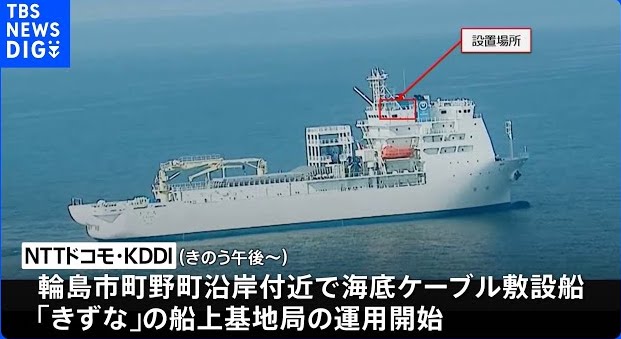
As communication failures continue in areas affected by the Noto Peninsula Earthquake, NTT Docomo and KDDI have begun operating an off-shore base station from the seabed cable-laying ship "Kizuna."