


Mazda said on February 10th that it fell into a net loss of 14.7 billion yen for the nine months from April to December 2025, marking its first deficit in five years, as U.S. tariff policies under the Trump administration weighed heavily on earnings.

Amid deepening labor shortages, AI and robots are undergoing rapid and remarkable advances, raising a pressing question for businesses and workers alike: are they a threat that will take jobs, or partners that expand human potential?
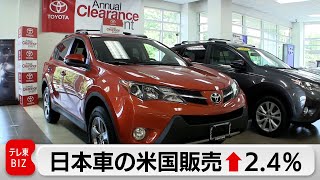
New vehicle sales by six Japanese automakers in the United States rose 2.4% from the previous year to 6,023,492 units in 2025, the companies announced on January 5th, as demand remained firm despite higher tariffs introduced under the Trump administration, with three manufacturers surpassing their year-earlier results.

Mazda, the automaker synonymous with Hiroshima — a prefecture of 2.7 million people — is fighting to reinvent itself from within as the global automobile industry undergoes a once-in-a-century transformation. The company is launching a five-year internal reform to reshape its corporate culture and stay competitive amid the global shift to electric and eco-friendly vehicles.
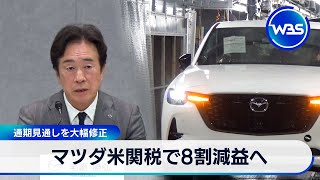
The impact of Trump-era tariffs is being strongly felt. Mazda has announced its financial forecast for the fiscal year through March 2026, which had previously been left undecided due to the uncertainty surrounding the tariffs.
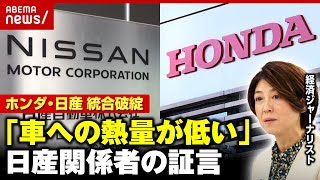
Honda and Nissan had been in discussions about a potential management integration, aiming to form a joint holding company that would oversee both automakers. However, the talks have collapsed, leaving many questioning what went wrong.

Toyota announced that it will continue to halt the production of three models beyond August due to a certification fraud issue affecting mass production of automobiles.
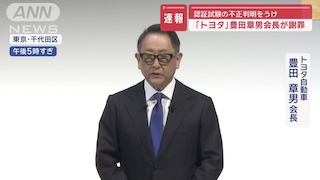
The Ministry of Land, Infrastructure, Transport and Tourism (MLIT) has revealed that an internal investigation prompted by a series of fraudulent vehicle certification tests by Daihatsu Motor and others has uncovered similar fraud by Toyota and four other companies.
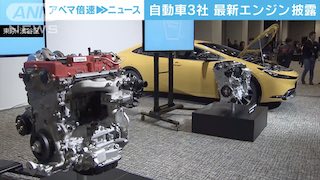
As the number of electric vehicles (EVs) on the market continues to grow, Japanese automakers have showcased their latest engine technologies, emphasizing their commitment to ongoing engine development.
In this year's Shunto (spring wage negotiations), Honda and Mazda provided full responses to their labor unions on the 21st, marking the earliest responses among major automakers. Both companies plan to implement wage increases at a high level, and the focus is on whether this trend will spread further.

Daihatsu Industry has recommenced production of specific vehicle models at its Kyoto factory, marking the first resumption of operations since halting all domestic factory activities due to a misconduct scandal.

The Hiroshima Carp defeated the DeNA BayStars 4-2 on Sunday to sweep their best-of-three Central League Climax Series' first stage in two games to set up a clash with the CL champion Hanshin Tigers. (Japan Times)

Mazda Motor has started taking orders from its customers in Japan of a plug-in hybrid version of the MX-30, which uses a rotary engine. (NHK)

Japan’s top carmakers suffered a huge setback in China in the first half, with sales plunging nearly 20 per cent, their biggest drop in the world’s largest car market since 2012, where the shift to electric vehicles (EVs) is accelerating. (South China Morning Post)

On this feature of the FRAME, we explore the Production line of the Mazda MX-5 and the CX-30. Take a look at the different methods to build such models in the Ujina factory in Hiroshima, Japan. (FRAME)
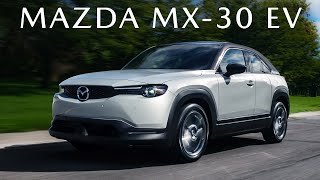
Mazda Motor is planning to revive its iconic rotary engine in a plug-in hybrid car by the end of this year as it attempts to simultaneously please fans and cope with tougher environmental rules in its main markets, such as Europe. (Nikkei)
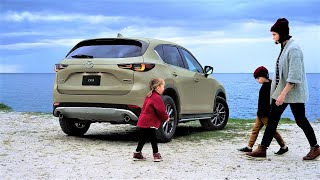
As European automakers bow to the politicians and seek to rid themselves of carbon dioxide (CO2) spewing internal combustion engines (ICE), at least in their home markets, Mazda is doing its best to retain much of its traditional engineering while addressing the need for electrification and seeking more exotic solutions with the help of maybe hydrogen and biofuel. (forbes.com)

Tesla Inc.’s Model 3 sales appear to be taking off in Japan since it cut prices on the mid-range electric sedan last month. (hindustantimes.com)
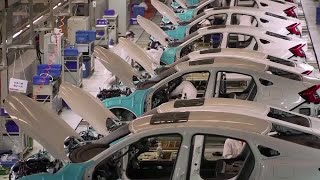
A chip shortage is biting at Japan's big carmakers. (Reuters)

Major Japanese automakers are returning domestic factories to normal production levels. The companies say global demand for automobiles is on the mend. (NHK)
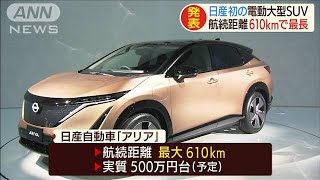
Nissan Motor has unveiled its new all-electric sports utility vehicle. It's the first EV to roll off the firm's production line in about 10 years, since the Leaf. (NHK)
The domestic production of eight major Japanese automakers in May plunged a record 61.8 percent from a year earlier to 287,502 vehicles due to factory closures and falling demand amid the novel coronavirus pandemic, data released by the companies showed Monday. (Japan Times)

The winner of Game 1 of the 2018 Japan Series was, well, nobody. (Japan Times)
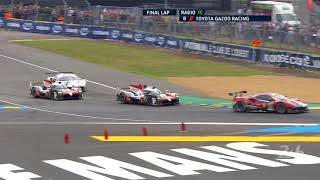
Japanese car maker Toyota won the 24 Hours of Le Mans for the first time on Sunday. (NHK)
Japan's Toyota Motor has unveiled bold new plans to cope with the global shift toward electric cars. (NHK)