


Nissan Motor has begun accepting orders in Japan for the Murano sport utility vehicle, which is produced in the United States, marking one of the first uses of a new vehicle certification framework established following a tariff agreement between Japan and the United States.

As competition intensifies over AI-powered autonomous driving technology, Nissan unveiled a new premium minivan equipped with its latest systems, highlighting the automaker’s push to regain momentum in Japan’s struggling domestic market.

Nissan Motor announced its financial results for the year through March 2026 on May 14th, reporting a net loss for the second consecutive year as the company continues efforts to rebuild its business.

The impact of the effective closure of the Strait of Hormuz is spreading to Japan's export industries, dealing a fresh blow to automakers and other companies reliant on Middle East trade routes.

Honda said it expects to post its first net loss since going public in the fiscal year ending March 2026, underscoring the heavy cost of its abrupt retreat from electric vehicle expansion.
Nissan Motor on April 14th unveiled its long-term vision, aiming to equip approximately 90% of its vehicle lineup with AI-powered autonomous driving technology as it seeks to rebuild its business.

The situation surrounding the Strait of Hormuz, a critical chokepoint for global energy transport, is growing increasingly complex, with U.S. President Donald Trump urging Japan to assist in securing the waterway while Iran signals it may allow passage depending on negotiations, and as prospects for a swift resolution fade, Japanese industries including automobiles, ethylene, and polyvinyl chloride resin have begun scaling back production.

Nissan Motor, U.S. ride-hailing giant Uber Technologies, and autonomous driving developer Wayve announced on March 12th that they will collaborate on a self-driving taxi business.

The European Union has announced plans to introduce a new vehicle category, known as “M1E,” aimed at accelerating the spread of affordable electric vehicles, drawing inspiration from Japan’s kei car standards, with discussions set to begin soon with EU member states and the European Parliament to finalize the details.

New vehicle sales by six Japanese automakers in the United States rose 2.4% from the previous year to 6,023,492 units in 2025, the companies announced on January 5th, as demand remained firm despite higher tariffs introduced under the Trump administration, with three manufacturers surpassing their year-earlier results.

Japan’s auto industry, already facing mounting pressure, is preparing for another major challenge in 2026 as Taiwan-based manufacturing giant Foxconn steps up its push into the Japanese market. Following its earlier focus on Chinese electric vehicle makers, the company is now turning its attention to Japan, raising questions over whether it will become a partner or a rival to domestic automakers.

Nissan has announced that it will work with a British AI startup to develop a hands-free autonomous driving system, with plans to roll out AI-equipped vehicles globally.
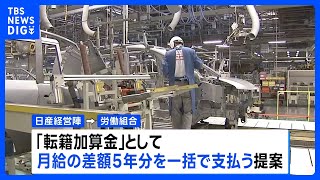
Nissan is considering a plan to compensate employees who transfer from its Oppama plant in Kanagawa to the company’s Kyushu factory by paying in advance the equivalent of five years’ worth of reduced monthly wages, according to reporting obtained by JNN.

Japan’s traditional employment practices are once again under scrutiny as debate intensifies over so-called “do-nothing middle-aged workers,” with critics arguing that long-standing structural issues in hiring, promotion, and job assignment have allowed a segment of workers to lose motivation while remaining in secure positions.

Nissan Motor announced on November 14th that it plans to double the number of its showrooms inside shopping malls to more than 30 locations from fiscal 2027 onward. The move will expand its presence in the growing category of “experience-based stores,” a format increasingly adopted in the apparel industry and other sectors.

Japanese automakers are under increasing pressure as China’s aggressive push in electric vehicles continues and the impact of U.S. tariffs under former President Donald Trump looms large. With total tariff-related losses for seven major manufacturers projected to reach 1.5 trillion yen, analysts are examining how Japanese companies plan to stay competitive.

Nissan Motor announced on November 6th that it will sell its Yokohama headquarters building for 97 billion yen as part of a broader restructuring plan, while continuing to occupy the property under a lease agreement.

A passenger car crashed into a Nissan dealership in Maebashi City, Gunma Prefecture, on October 29th, damaging a total of nine vehicles including those on display.
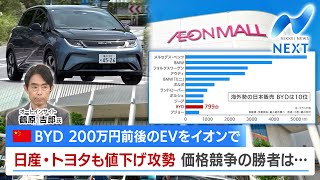
Automakers are stoking a fierce price war in Japan's EV market, with Chinese manufacturer BYD leading the charge by introducing fully electric vehicles priced around 2 million yen at Aeon stores. U.S. rival Tesla is also pushing price cuts for its core models, while Japanese giants Toyota and Nissan are responding by lowering prices on improved models with extended driving range.

Nissan, currently in the midst of rebuilding its business, has unveiled a new model of its world-first mass-produced electric vehicle, the Leaf, as part of efforts to revive the company’s fortunes. The automaker will begin domestic sales of the third-generation Leaf on October 17th.
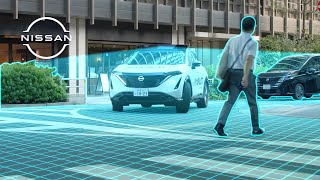
Nissan Motor unveiled an experimental vehicle equipped with autonomous driving technology powered by generative AI, showcasing a system that allows hands-free driving even on ordinary roads.

The car long dubbed a 'wolf in sheep’s clothing' is going back to sleep. Nissan’s GT-R saw its final unit completed on Tuesday, drawing a curtain on an 18-year run for the current model.
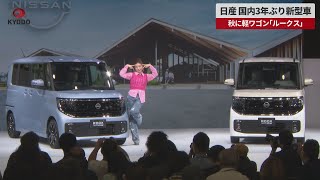
Nissan Motor announced on Friday that it will fully redesign and launch its Roox minicar this fall, marking the first new domestic model in about three years. The new Roox is the first Nissan minicar to feature a 3D surround-view system that allows drivers to confirm their surroundings in a three-dimensional display, enhancing safety functions.
Toyota Motor has resumed part of its advertising on Fuji TV, returning in late July with sponsorship of a motorsports segment in the evening news after a suspension that began in January.
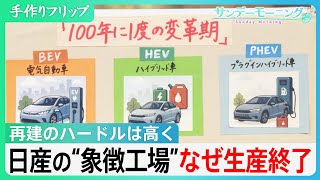
Nissan Motor will shut down its historic Oppama plant in Yokosuka, Kanagawa Prefecture by the end of fiscal 2027, closing a facility that helped launch the Datsun Bluebird in 1961 and played a pivotal role in Japan’s personal car boom.