

Transport services across eastern Japan were largely returning to normal on June 4th after Typhoon Jangmi (Typhoon No. 6) moved into the Pacific Ocean, with most railway lines resuming operations, airports functioning normally and airlines working to clear residual delays following a day of widespread disruption that saw nearly 900 flights canceled and major rail services suspended.
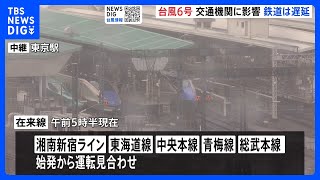
[updated 10:50 p.m.] Typhoon Jangmi (Typhoon No. 6) continued to disrupt transport across eastern Japan late on June 3rd, although many major rail and air services began shifting into recovery mode after the storm moved away into the Pacific, with nearly 900 flights canceled during the day, several regional railway lines still suspended, and operators warning that delays and reduced services could linger into June 4th.

The route dispute surrounding the extension of the Hokuriku Shinkansen to Osaka has been thrown back into uncertainty, with the long-discussed "Obama-Kyoto Route" effectively returned to square one as ruling coalition lawmakers consider eight alternative plans, including a route via Maibara Station in Shiga Prefecture.
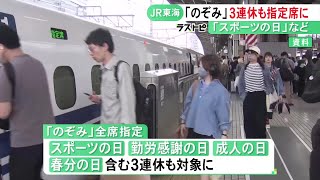
The Nozomi service on the Tokaido and Sanyo Shinkansen lines, which has already switched to all-reserved seating during extended holiday periods such as the year-end and New Year break, will also operate with reserved seats only on three-day weekends from October this fiscal year.

JR Tokai has announced a new inspection-equipped Shinkansen named 'Doctor S', set to take over the role of the famed 'Doctor Yellow', the bright yellow bullet train affectionately known as the train that brings good luck when spotted.

The three JR companies operating the Tokaido, Sanyo, and Kyushu Shinkansen demonstrated on December 6th how they would switch train control to a secondary command center in Osaka if a major earthquake or other large-scale disaster rendered the main command facility in Tokyo unusable.

A flask exploded during a first-year science class at Himeji Municipal Sanyo Junior High School in Hyogo Prefecture at around 11 a.m. on September 11th, injuring six people including a teacher.
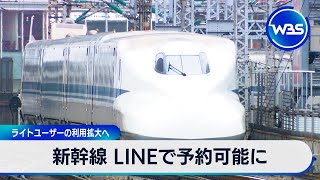
JR Central and other operators announced they will launch on October 4 a service that allows passengers to reserve Shinkansen tickets through the LINE app. The service will cover the Tokaido, Sanyo and Kyushu Shinkansen lines, spanning the corridor from Tokyo to Kagoshima-Chuo.

JR West has announced a new route for its luxury sleeper train, the "Twilight Express Mizukaze", which will circle Lake Biwa and connect Kyoto with Shimonoseki on a two-day, one-night journey.
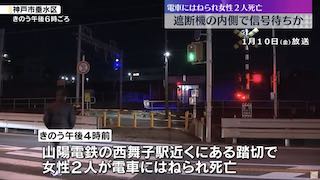
Two women were fatally struck by a train at a railroad crossing in Tarumi Ward, Kobe City, on January 9th, with investigators believing that the women may have accidentally waited for the traffic signal inside the lowered crossing gate.
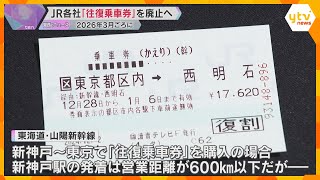
The JR Group announced on December 2nd that it will end the sale of "round-trip tickets" by around March 2026. Additionally, "consecutive trip tickets" will also be discontinued during the same period.

JR Central and JR West plan to reduce the number of non-reserved seats on the Nozomi Shinkansen, operating on the Tokaido and Sanyo lines, starting next spring, according to sources familiar with the matter.

Life is returning to normal in Tokyo and surrounding areas after a powerful storm. Typhoon Ampil triggered blackouts and upended people's travel plans, but services are getting back on track. (NHK)
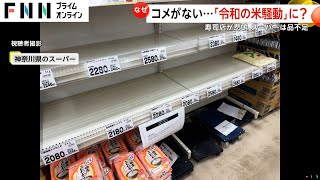
A rice shortage is affecting several areas in Japan, extending beyond just a poor harvest to a uniquely Japanese situation. The price of rice has increased by 2,000 yen per 50kg, which could drive away customers.

JR West has announced that the trolley service currently provided onboard Nozomi bullet trains on the Sanyo Shinkansen will be terminated in standard carriages on March 15.
Due to an equipment malfunction at Asa Station in Yamaguchi Prefecture, the Sanyo Shinkansen had suspended service on the southbound line between Hiroshima Station and Kokura Station in Fukuoka Prefecture. However, as of 7:11 AM, the operation has resumed.
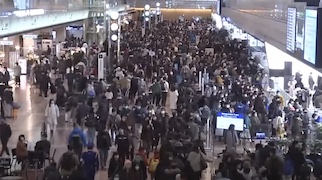
Friday marks the peak of the New Year travel rush, as people head to their hometowns or vacation spots to celebrate the end-of-year and New Year holidays. Congestion is expected in the air, on railways, and on highways.
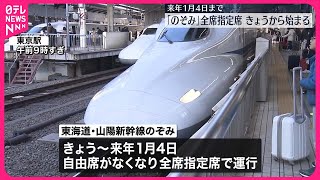
As crowds flock to their hometowns and holiday spots for the New Year, the Nozomi service on the Tokaido-Sanyo Shinkansen line, running between Tokyo and Fukuoka, started operating entirely with reserved seating from December 28 until January 4.

The Nozomi Shinkansen, the fastest bullet train on the Tokaido line between Tokyo to Osaka, will eliminate unreserved seating during peak holiday seasons.

Starting from October 1, you will be able to reserve reserved seats on crowded holiday Shinkansen trains up to 1 year in advance.
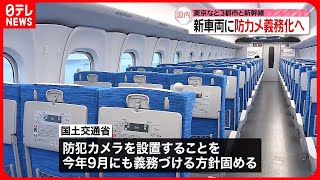
The operators of three Shinkansen bullet train lines say they will allow online bookings up to one year in advance starting this year. (NHK)

The Japan Railways group says four of its group companies will introduce peak fares for Shinkansen trains and limited express services during the busiest travel seasons. (NHK)

The small factories in the western Japanese city of Higashiosaka for decades fuelled the thundering rise of the country's biggest brands - but a weak yen and rising costs have accelerated a slow decline, and are reshaping the industrial heartland. (Reuters)

Two major Japanese apparel companies have decided to stop using cotton from China's Xinjiang Uygur Autonomous Region due to allegations of forced labor there. (NHK)

Genderless options are increasingly finding their way into schools in Japan, easing pressure on students to conform to norms and stereotypes. (Japan Times)