


Japanese stocks suffered a sharp sell-off on June 8th as weakness in U.S. technology shares and growing concerns over higher global interest rates triggered widespread selling, sending the Nikkei Stock Average down 2,563.52 points, or about 3.8%, to close at 64,024.60.

SoftBank Group announced on May 31st that it will build a data center in France dedicated to artificial intelligence (AI), with total investment potentially reaching approximately 14 trillion yen.

Japan is facing a growing transportation dilemma. While a record number of foreign visitors in 2025 has fueled congestion and traffic jams in major cities and tourist destinations, many rural communities are grappling with the opposite problem: shrinking populations and aging residents are making it increasingly difficult to maintain public transportation services.

Japan’s benchmark stock index closed above the 65,000 level for the first time on May 25th, as optimism over easing tensions in the Middle East and continued enthusiasm for AI-related shares pushed the market to another record high.

Japan's next-generation homegrown supercomputer, Fugaku NEXT, is being developed with a radically different strategy from its predecessors, abandoning the single-minded pursuit of the world's fastest calculation speed in favor of artificial intelligence capabilities expected to accelerate breakthroughs in fields ranging from drug development and batteries to disaster prevention and food production.

The Nikkei Stock Average climbed sharply again on May 22nd, closing at a record high of 63,339 as investor sentiment improved on expectations that fighting between the United States and Iran could soon come to an end.

The Nikkei Stock Average rebounded sharply on May 21st after falling below 60,000 at the previous day's close, briefly rising more than 2,200 points as hopes grew for progress in talks toward ending the fighting between the United States and Iran, while SoftBank Group gave the market a major boost following reports that OpenAI was preparing to file for an initial public offering.

Rising interest rates are emerging as a major threat to the AI-driven stock market rally, with growing concern centered on the financial health of AI-related companies that have increasingly relied on private credit markets to fund rapid expansion.

SoftBank Group announced its consolidated earnings for the fiscal year ending March 2026 on May 13th, posting what was described as the highest quarterly profit ever recorded by a Japanese company, as attention increasingly focuses on Chairman and CEO Masayoshi Son’s aggressive strategy of betting heavily on artificial intelligence.

Bloomberg reported on May 11th that SoftBank Group Chairman and CEO Masayoshi Son held discussions with French President Emmanuel Macron regarding investment in AI data centers in France.

Japan’s stock market is drawing fresh attention as the Nikkei 225 gains momentum and global investors look more seriously at Japanese technology shares.

SoftBank said on April 17 that it will exclusively sell in Japan an AI-equipped smartphone developed for the Japanese market by U.S. startup Brain Technologies.

U.S. technology giant Oracle announced it will invest approximately 1.2 trillion yen in Japan’s artificial intelligence and cloud sectors, marking the latest in a series of large-scale investments by foreign firms.

SoftBank, NEC, Honda, and Sony Group have jointly established a new company aimed at developing domestically produced artificial intelligence, as Japan seeks to regain competitiveness in the rapidly advancing global AI sector.

SoftBank has launched a new service enabling smartphones to connect directly to SpaceX’s Starlink satellites, aiming to ensure reliable communication even during disasters.
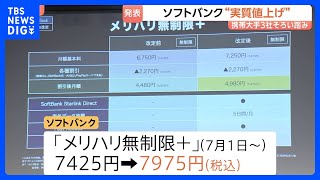
SoftBank said it will effectively raise monthly mobile fees by up to 550 yen, following similar moves by NTT Docomo and KDDI, meaning all three major carriers in Japan have now implemented price increases.

SoftBank has applied for a capital alliance with Tokyo Electric Power Company Holdings, according to sources familiar with the matter, following the utility’s call for external partnerships as part of its management restructuring plan.

Artificial intelligence capable of thinking and acting independently is rapidly spreading, marking a shift from systems that simply respond to questions to those that actively perform tasks, with developers and business leaders now exploring whether these AI agents can become indispensable partners in everyday life.

The first League of Legends Pacific League Spring Split marked the end of CTBC Flying Oyster's dominance and brought several other surprising twists.

SoftBank Group announced on March 20th a plan to build a new data center in the United States dedicated to artificial intelligence, with total investment including external funding expected to reach 500 billion dollars, or approximately 80 trillion yen, making it one of the largest projects of its kind in the country.

Japan and the United States advanced economic discussions during their latest summit, agreeing on a new round of large-scale investment exceeding 11 trillion yen, though questions remain over whether the deal will ultimately serve Japan’s national interests.

PayPay, a major smartphone payment service under SoftBank Group, was listed on the Nasdaq market in the United States on March 12th, marking the largest U.S. listing ever by a Japanese company.

PayPay’s market capitalization is expected to exceed 2 trillion yen as the company prepares for a listing on the U.S. Nasdaq exchange.

A new Japan–US collaboration on next-generation semiconductors is set to get underway, as SAIMEMORY, a semiconductor memory startup established by SoftBank, has signed an agreement with US chipmaker Intel to jointly pursue the commercialization of next-generation memory, TV Tokyo has learned.

Japan’s professional baseball business continues to evolve, with teams increasingly adopting aggressive strategies to expand revenue beyond the game itself.