


Nissan Motor has begun accepting orders in Japan for the Murano sport utility vehicle, which is produced in the United States, marking one of the first uses of a new vehicle certification framework established following a tariff agreement between Japan and the United States.

Toyota Motor will suspend production at 13 domestic factories on June 3rd as Typhoon No. 6 approaches Japan, with the company prioritizing the safety of employees and contractors as severe weather is expected to affect a wide area from western to eastern Japan.

Toyota Motor has decided to halt development of the LF-ZC, a next-generation electric vehicle planned under its Lexus luxury brand, according to sources familiar with the matter.

Toyota Motor has notified the Ministry of Land, Infrastructure, Transport and Tourism of a recall affecting about 43,300 vehicles across six models, including the Land Cruiser, after instrument panels were found to sometimes fail to start properly when the engine is turned on, causing parts of the display not to appear.

Toyota Motor plans to further reduce overseas vehicle production as escalating tensions in the Middle East continue to disrupt logistics and supply chains.

The Nikkei Stock Average climbed sharply again on May 22nd, closing at a record high of 63,339 as investor sentiment improved on expectations that fighting between the United States and Iran could soon come to an end.

Toyota has begun selling vehicles produced in the United States and "reverse-imported" into Japan following Japan-U.S. negotiations over the Trump administration's tariffs.
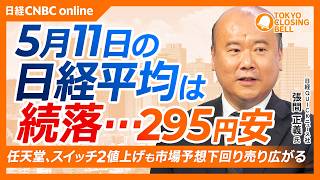
The Nikkei Stock Average reversed early gains and closed 295.77 points, or 0.4%, lower at 62,417.88 on May 11 after surging more than 1,600 points earlier in the day, as selling spread across AI-related and semiconductor shares despite record highs in the U.S. Nasdaq and Philadelphia Semiconductor Index, while concerns over Middle East tensions and U.S. interest rate policy weighed on investor sentiment.

Toyota Motor has become the first Japanese company to surpass 50 trillion yen in annual revenue, although the automaker expects profits to decline this fiscal year due to the impact of Middle East tensions and U.S. tariff policies.

The impact of the effective closure of the Strait of Hormuz is spreading to Japan's export industries, dealing a fresh blow to automakers and other companies reliant on Middle East trade routes.

Honda said it expects to post its first net loss since going public in the fiscal year ending March 2026, underscoring the heavy cost of its abrupt retreat from electric vehicle expansion.

Toyota Motor has begun selling two vehicle models manufactured at its U.S. plants in Japan, marking a shift toward so-called "reverse imports" as part of efforts to improve trade relations between Japan and the United States.
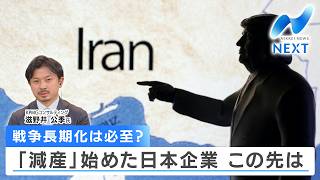
The situation surrounding the Strait of Hormuz, a critical chokepoint for global energy transport, is growing increasingly complex, with U.S. President Donald Trump urging Japan to assist in securing the waterway while Iran signals it may allow passage depending on negotiations, and as prospects for a swift resolution fade, Japanese industries including automobiles, ethylene, and polyvinyl chloride resin have begun scaling back production.

Momoka Muraoka secured a silver medal in the women’s sitting giant slalom on March 12th, the seventh day of the Milan-Cortina Winter Paralympics, bringing her career total to 11 medals—the most ever won by a Japanese athlete at the Winter Paralympics.

Japanese automakers that have long relied on domestic or Western-made semiconductors are increasingly adopting Chinese-made automotive chips, marking a significant shift in procurement strategy as companies such as Toyota and Suzuki move to install Chinese systems not only in vehicles sold in China but also in models destined for other markets.

Toyota Motor announced on February 6 that President Koji Sato will become vice chairman and executive officer Kenta Kon will be promoted to succeed him, with the changes taking effect on April 1, marking the first leadership change in three years since April 2023 while Chairman Akio Toyoda will remain in his post.
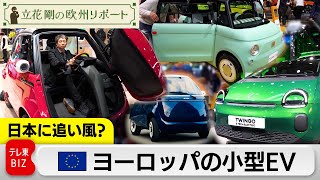
The European Union has announced plans to introduce a new vehicle category, known as “M1E,” aimed at accelerating the spread of affordable electric vehicles, drawing inspiration from Japan’s kei car standards, with discussions set to begin soon with EU member states and the European Parliament to finalize the details.

Toyota Motor Corp. said on January 29th that its global vehicle sales in 2025 reached a record high, marking the sixth consecutive year the automaker has ranked first worldwide, supported by strong demand for hybrid vehicles in North America.

More people in Japan are looking to change jobs as work styles and values shift in the post-pandemic era, pushing individuals to seek better roles that match their skills, experience, and lifestyle, while companies facing digital transformation and new business pressures are also reshaping hiring by expanding mid-career recruitment.
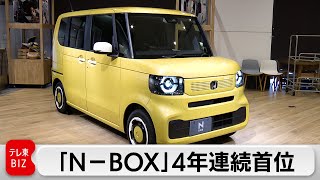
According to vehicle-by-model new car sales figures released on January 8th by the Japan Automobile Dealers Association and the National Light Motor Vehicle Association, the best-selling vehicle in Japan in 2025 was Honda’s light vehicle N-BOX, marking its fourth consecutive year at the top of the rankings.
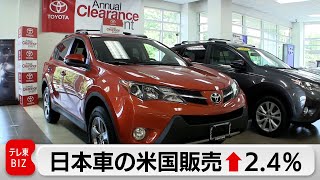
New vehicle sales by six Japanese automakers in the United States rose 2.4% from the previous year to 6,023,492 units in 2025, the companies announced on January 5th, as demand remained firm despite higher tariffs introduced under the Trump administration, with three manufacturers surpassing their year-earlier results.

Japan’s auto industry, already facing mounting pressure, is preparing for another major challenge in 2026 as Taiwan-based manufacturing giant Foxconn steps up its push into the Japanese market. Following its earlier focus on Chinese electric vehicle makers, the company is now turning its attention to Japan, raising questions over whether it will become a partner or a rival to domestic automakers.

The Toyota Group will open a new museum in Yokohama that uses art as a focal point to communicate culture through film and visual media, marking the automaker’s latest cultural initiative beyond mobility.

As global interest in Formula One continues to surge, with the sport’s reach expanding rapidly across continents, enthusiasm for F1 is also returning in Japan, especially among younger fans on social media and at domestic motorsport events on the rise in recent years, and major Japanese companies including Toyota have begun strengthening their involvement as they look to secure a role in the sport’s next growth phase.
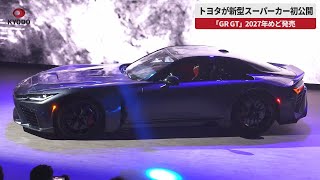
Toyota unveiled its new GR GT supercar on December 5th at Woven City, the next-generation technology testbed located in Susono, Shizuoka Prefecture, marking the model’s world debut as the automaker targets a release around 2027, positioning the vehicle as the pinnacle of its GR sports-car lineup and its first true supercar since the Lexus LFA launched in 2010.