



A woman in her 80s was killed after her car entered railway tracks on the Odakyu Enoshima Line in Fujisawa, Kanagawa Prefecture, shortly before 10:30 p.m. on October 27, with security camera footage showing the vehicle traveling along the tracks, passing an oncoming train and stopping with its hazard lights flashing before being struck from behind by another train.

Local governments across Japan are stepping up efforts to recruit people who hold teaching licenses but are not working in schools, known as "paper teachers," as a worsening teacher shortage has seen the national ratio of applicants to available elementary school teaching positions fall from 12.5 in fiscal 2000 to just 2 in 2025.

The proportion of parents in Japan who want a second child has fallen to a record low of 28.2%, according to a survey by major life insurer Meiji Yasuda, highlighting growing financial pressures, demanding work schedules and concerns about the future that are making it increasingly difficult for families to consider having more children.

Artificial intelligence is bringing new convenience to households through smart appliances and connected devices, but cybersecurity experts are warning that the same technology could allow hackers to take control of refrigerators, vacuum cleaners and home security cameras, potentially exposing personal information and disrupting everyday life.

The 2026 Kishiwada Danjiri Festival brought generations together in Sakai-cho, where young men hauling a four-ton wooden float, veteran organizers guiding its course and a first-year rooftop performer worked side by side to carry forward a tradition dating back more than 300 years.

Japan's transition toward an economy with higher interest rates is creating sharply different outcomes for households, with younger generations facing rising mortgage repayments while older savers stand to benefit from increased deposit interest, following the Bank of Japan's decision to raise its policy rate by 0.25 percentage points to 1.25%.

People aged 65 and older accounted for a record 29.6% of Japan's population in 2026, the highest proportion among major countries worldwide, while the number of elderly people in employment also reached an all-time high as Japan marked Respect for the Aged Day on September 21.

Anonymous and fluid criminal groups known in Japan as "tokuryu" are adopting increasingly elaborate tactics, including a scheme in which elderly victims are persuaded to hide cash inside refrigerators before thieves enter their homes, as authorities struggle to combat networks whose members often have no direct contact with one another.
Police are warning of a nationwide surge in scams involving criminals posing as officers, with evidence emerging that generative AI may now be used to create fake identities during video calls and make the deception more convincing.

Japan is facing growing pressure over its treatment and recruitment of foreign workers, with serious allegations of abuse emerging even as companies compete for a shrinking pool of overseas labor and some industries approach government-set limits on the number of workers they can accept.

Young people recruited into illegal "dark part-time jobs" through social media and friends are increasingly becoming involved in fraud and violent robberies across Japan, with interviews at a juvenile training school revealing how the promise of easy money, a desire for recognition and fear of criminal groups can gradually leave them feeling unable to escape.

Highway service areas around the Kanto region are becoming destinations in their own right, offering travelers everything from freshly harvested vegetables and popular regional restaurant dishes to baths, observation decks and family events during the busy summer vacation season.

Running around the Imperial Palace has become one of Tokyo's most popular fitness activities, but growing numbers of runners and pedestrians sharing narrow sidewalks are raising safety concerns and prompting calls for stronger rules and better infrastructure.

The number of elderly people in Japan with no relatives to rely on is projected to rise to 4.48 million by 2050, or roughly one in nine seniors, prompting the government to create a new system under revised social welfare laws to support people with daily needs, hospitalization and arrangements after death.

Police forces across Japan are struggling to recruit enough officers, with the number of people taking police recruitment examinations falling to less than half the level of a decade ago and concerns growing that persistent staffing shortages could eventually affect public safety.

Production of Asahi Ponzu, a popular seasoning that has been a fixture on Kansai dining tables for decades, has been suspended for the first time in the product's roughly 60-year history as a severe shortage of sudachi citrus exposes a deepening crisis in Tokushima Prefecture, which accounts for 98% of Japan's shipments.

Osaka's Nishinari Ward, long known as a working-class neighborhood that accepted people from diverse backgrounds, is being rapidly reshaped by Chinese-led property development and a surge in special-zone private lodgings, bringing new business and tourism while displacing some longtime elderly residents.

The death toll from the powerful Kumamoto earthquake rose to 30 as of 12:30 p.m. on July 30, including people whose deaths were still being investigated for a possible connection to the disaster, while rescue crews continued searching collapsed buildings and other damaged sites.

Residents across earthquake-stricken Kumamoto Prefecture are enduring extreme heat without water, electricity or air conditioning as rescue teams continue searching collapsed buildings following the powerful earthquake that registered the maximum seismic intensity of 7.

An elderly woman was rescued from a collapsed home by five Vietnamese workers as the death toll from the 2026 Kumamoto Earthquake rose to 34 on July 30, while severe water shortages disrupted daily life and hampered firefighting across the disaster zone.
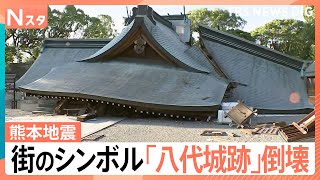
Rescue operations continued across Kumamoto Prefecture more than 24 hours after a powerful earthquake registered the maximum seismic intensity of 7, leaving 12 people dead, six in cardiac arrest and three Aeon Mall Kumamoto employees still unaccounted for.

Temples that have long shaped Japanese life and culture are increasingly closing and being put up for sale as falling numbers of parishioners and a shortage of successors leave many religious institutions unable to continue operating.

Large numbers of climbers headed to Mount Fuji on July 22 despite disaster-level heat that pushed temperatures to 40 degrees Celsius or higher in parts of Japan, while a series of rescues highlighted the risks of exhaustion, inadequate footwear and hypothermia during the peak summer climbing season.
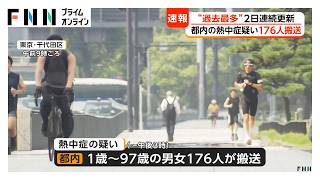
Disaster-level heat gripped much of Japan on July 22, with temperatures of 40 C forecast in parts of the Kanto and Tokai regions and heatstroke alerts issued for 41 prefectures from Okinawa to Tohoku.

A black-and-white photograph taken in 1955 has revealed how Tokyo's Kinshicho district once resembled a sprawling movie set, with theaters, restaurants and drinking establishments packed into an entertainment quarter that drew crowds from across the city's eastern neighborhoods.