



Japan's ruling Liberal Democratic Party (LDP) has partially revised a bill that would create a new offense for desecrating the national flag, removing provisions that would have punished the posting of such acts on social media.
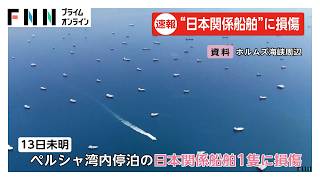
A Japanese-linked vessel anchored in the Persian Gulf sustained damage to part of its hull, but remained capable of sailing under its own power and no crew members were injured, Land, Infrastructure, Transport and Tourism Minister Kaneko said.

JR Ueno Station has unveiled "Ueno Canvas," a new 75-square-meter LED display featuring videos that highlight the area's cultural attractions, tourism destinations, and artistic heritage as part of a station renovation aimed at connecting people and the city through culture.

The Nikkei Stock Average briefly topped the 70,000 mark for the first time on June 16, rising as much as 700 points to an intraday high of 70,020 after the Bank of Japan's decision to raise interest rates matched market expectations, before retreating as investors locked in profits, though the benchmark still ended the day at a record high.

Japan's Fair Trade Commission has conducted on-site inspections of six major food manufacturers over suspicions they formed a cartel to coordinate ice cream prices, with authorities investigating whether the companies exchanged information and unfairly adjusted planned retail price increases in response to rising costs.

The Tokyo Fire Department has called for greater public cooperation with emergency medical services following a rise in incidents involving interference with ambulance crews, including cases in which paramedics have been assaulted while carrying out rescue operations.

The University of Tokyo and TOPPAN Holdings announced the establishment of the AI Innovation Research Center, a new initiative aimed at advancing research and development for the practical application of artificial intelligence in society.

Japan byFood featuring Shizuka spends 24 hours exploring Yokohama, Japan’s second-largest city located just 30 minutes south of Tokyo.
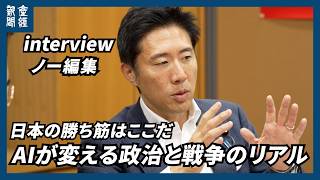
As international competition over artificial intelligence intensifies, Japan must pursue a strategy that secures its own technological independence while remaining connected to the global innovation ecosystem, according to a new policy proposal compiled by the ruling Liberal Democratic Party.

A Japanese startup is seeking to transform manufacturing inspections with a world-first lighting technology that eliminates reflected light, making previously hidden defects, contaminants, and irregularities visible to the human eye.

Tokyo stocks posted one of the strongest gains in the history of Japan's equity market on June 15, with the Nikkei Stock Average closing above 69,000 for the first time after a U.S.-Iran agreement aimed at ending hostilities eased concerns over energy prices and global economic risks.
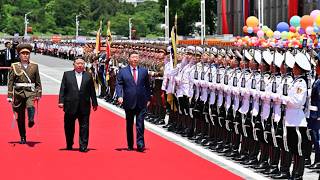
Japan faces growing uncertainty over North Korea's expanding nuclear arsenal after Chinese President Xi Jinping concluded his first visit to Pyongyang in seven years without mentioning denuclearization, raising concerns that the long-standing international goal of eliminating North Korea's nuclear weapons may be steadily losing support among the region's major powers.

Tamayo Nakamura, the actress and television personality whose career spanned more than seven decades and bridged the worlds of traditional Japanese theater, film, television drama and variety entertainment, died of pneumonia on June 9th. She was 86.

Air travelers departing Japan for overseas destinations this summer will face record-high fuel surcharges after All Nippon Airways (ANA) and Japan Airlines (JAL) announced significant increases for international tickets purchased in July and August, driven by soaring fuel prices linked to tensions in the Middle East.

A 62-year-old man riding a LUUP electric scooter died following a collision with a pedestrian at an intersection in Tokyo's Koto Ward on June 2nd, marking what is believed to be the first confirmed fatal accident involving a LUUP user on a Tokyo roadway.

The Japanese government on June 12th released new guidelines calling for women’s toilets to have at least as many fixtures as men’s toilets in public facilities, seeking to address the persistent problem of long queues at women’s restrooms in places such as train stations and event venues.

A Tokyo-based company planning to open a new zoo using animals from North Safari Sapporo, which closed in 2025, has established a new company to take over the facility's animals and employees.

Japanese stocks rebounded sharply on June 12th, with the Nikkei Stock Average closing back above the 66,000 level for the first time in a week as easing concerns over tensions in the Middle East and a strong rally in U.S. technology shares fueled broad buying of AI-related stocks.

Sudden thunderstorms swept across the Kanto region on June 12th, bringing violent weather, torrential rain, strong winds, and hail, with forecasters warning that similar conditions could develop from Kanto to Hokkaido on Saturday.

Domestic gold prices in Japan fell sharply on June 11, with the benchmark retail gold price announced by Tanaka Precious Metal Technologies dropping 906 yen from the previous day to 23,262 yen per gram as of 9:30 a.m., marking the lowest level of the year.
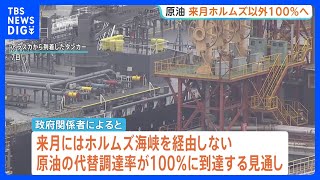
Japan is expected to achieve a 100% alternative crude oil procurement rate by July, following government efforts to diversify import sources in response to the effective closure of the Strait of Hormuz, government officials said.
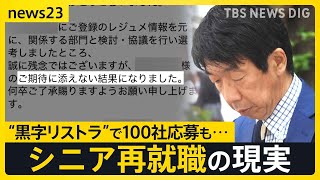
Restructuring is often associated with companies in financial trouble, but a growing number of profitable Japanese corporations are now encouraging employees to take early retirement as part of efforts to reshape their workforces for the future, creating both opportunities and significant risks for workers considering a second career.

Artificial intelligence is being rapidly adopted by local governments across Tokyo, with municipalities using the technology for crime prevention, public services, and disaster management.

Japan's World Cup campaign begins on June 14 when the Samurai Blue face the Netherlands at Dallas Stadium in Texas, a clash that will showcase some of the game's most talented players and pit two ambitious teams against one another in a crucial Group F opener. While Japan arrives without injured winger Kaoru Mitoma, one of its most recognizable stars, the squad still boasts a wealth of talent drawn from Europe's top leagues.

Seven-Eleven Japan announced that it will establish a new company with CyberAgent and Dentsu to develop advertising services, using digital signage installed in its stores to deliver targeted advertisements based on real-time conditions.
Pages: [<<] ... 18 19 20 21 22 23 24 25 26 27 28 29 30 31 32 ... [>>]