



Tokyo's public bathhouses raised their adult admission fee by 50 yen to 600 yen on August 1 as operators struggle with rising fuel and other costs, prompting concerns that some customers may reduce their visits.

Prime Minister Sanae Takaichi entered August facing a sharper test of her economic leadership after Japan and the United States carried out a rare coordinated currency intervention to support the yen, turning the government’s cost-of-living agenda, fiscal policy and relationship with the Bank of Japan into one of the most politically sensitive issues of her administration.

Investment by major US technology companies in artificial intelligence and data centers continues to support strong earnings expectations for semiconductor suppliers, but shrinking free cash flow and Oracle's exceptionally rapid expansion are raising questions about whether the spending boom can be sustained.

International flight bookings for Japan's Obon holiday period have lost momentum for the first time since the COVID-19 pandemic, with airlines pointing to global uncertainty and the weak yen as factors discouraging overseas travel.

The proportion of working men in Japan taking parental leave rose to a record 50.9% in the last fiscal year, exceeding 50% for the first time, according to a Health, Labor and Welfare Ministry survey.

Osaka's Tenjin Festival, one of Japan's three major festivals and a tradition dating back more than 1,000 years, drew about 1.29 million visitors this year, close to a record high, even as organizers struggled with extreme heat, growing numbers of foreign tourists, waste and mounting safety concerns.

A former gang member believed to have held a senior position in Tokyo's illegal drug trade has been arrested on suspicion of selling about 10 grams of methamphetamine to a customer for 150,000 yen.

The Bank of Japan kept its policy rate unchanged at around 1.0% on July 31, warning that higher crude oil costs and the weaker yen could push up prices across a broad range of consumer goods.

Tokyo stocks surged on July 31, with the Nikkei 225 closing at 64,362.02, up 2,494.59 points, as a sharp rebound in Asian semiconductor shares and strong U.S. technology earnings outweighed caution over the Bank of Japan’s decision to keep interest rates unchanged while warning that inflation risks remain tilted to the upside.

The yen surged in foreign exchange trading on July 30, briefly strengthening into the 157 range against the dollar, as Japan's top currency official declined to rule out the possibility of coordinated intervention with the United States.

The Bank of Japan is expected to keep its policy interest rate unchanged at around 1.0% at its monetary policy meeting concluding July 31 as it assesses the effects of last month's rate increase on the economy and prices.

Oriental Land, the operator of Tokyo Disney Resort, posted record net profit for the April-June quarter as Tokyo DisneySea's 25th anniversary event increased attendance and sales of paid priority access services.

The death toll from the powerful Kumamoto earthquake rose to 30 as of 12:30 p.m. on July 30, including people whose deaths were still being investigated for a possible connection to the disaster, while rescue crews continued searching collapsed buildings and other damaged sites.

A consortium formed by Hitachi and Toshiba shipped a new high-speed train to Taiwan on July 30, marking the first delivery under a 124 billion yen order placed to meet growing passenger demand on the island's high-speed rail network.

Tokyo stocks ended mixed on July 30, with the Nikkei 225 closing at 61,683.96, up 0.4%, as gains in electronics and selected semiconductor-related shares offset selling in financial stocks ahead of the Bank of Japan’s policy decision.

A plan to open an international school at a former elementary school in Sapporo has been scrapped after the company selected as the preferred buyer withdrew, citing risks posed by misinformation and protest activity.

Sharp will launch a new Healsio Hot Cook automatic cooking pot on September 17 that uses generative artificial intelligence to suggest menus and explain food preparation steps through a smartphone app.

Prime Minister Sanae Takaichi announced that Japan will cut the consumption tax rate on food and beverages to 1% from April 2027, pledging to secure the necessary funding without relying on deficit-financing bonds and to restore the rate to 8% after two years.

Prime Minister Sanae Takaichi moved on July 30 to turn food-tax relief from a campaign promise into government policy, instructing the ruling Liberal Democratic Party to proceed with a temporary cut in the sales tax on food as the Bank of Japan began a policy meeting that could shape the next phase of Japan’s currency, inflation and fiscal debate.

The magnitude 7-level earthquake that struck Kumamoto Prefecture on July 28 has disrupted operations at semiconductor-related facilities across one of Japan's most important chipmaking centers, raising concerns about possible delays in equipment shipments and their impact on the global industry.

The yen surged nearly 5 yen against the dollar late on July 30, briefly reaching the upper 157 range and prompting speculation that the Japanese government and Bank of Japan had intervened in the foreign exchange market.
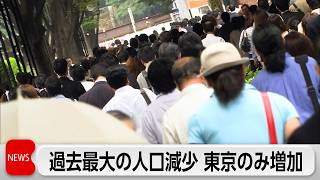
Japan's Japanese-national population fell below 120 million as the country recorded its largest annual decline since comparable data began, according to a survey released Wednesday.

Japan's national average minimum wage is set to rise by 55 yen, or 4.9%, to 1,176 yen per hour in fiscal 2026 after a labor ministry panel agreed on guidelines for this year's increase.

The powerful earthquake that struck Kumamoto Prefecture on July 28 was caused by essentially the same mechanism as the devastating earthquakes that hit the region 10 years ago, according to a leading seismologist, who warned residents to prepare for strong aftershocks and take precautions against heatstroke even during the night.

Tokyo stocks diverged sharply on July 29, with the Nikkei 225 closing at 61,434.19, down 930.73 points, or 1.49%, as selling in artificial intelligence and semiconductor-related heavyweights continued, while the broader TOPIX rose as investors bought back banks, domestic-demand shares and selected value stocks.
Pages: [<<] ... 19 20 21 22 23 24 25 26 27 28 29 30 31 32 33 ... [>>]