


The Japanese government and the Bank of Japan are believed to have conducted yen-buying intervention since the end of last month in an effort to slow the currency’s decline, though the broader trend of yen weakness has shown little sign of reversing.

Japan’s financial markets continued to suffer a so-called “triple decline” on May 18th, with stocks, the yen and government bonds all falling sharply amid growing concerns over worsening fiscal conditions and rising geopolitical tensions surrounding Iran.

Rising interest rates are emerging as a major threat to the AI-driven stock market rally, with growing concern centered on the financial health of AI-related companies that have increasingly relied on private credit markets to fund rapid expansion.

Japan’s corporate goods prices rose 4.9% in April from a year earlier, far exceeding market expectations as soaring crude oil prices linked to tensions in the Middle East pushed wholesale inflation to its highest level in nearly three years.

Nissan Motor announced its financial results for the year through March 2026 on May 14th, reporting a net loss for the second consecutive year as the company continues efforts to rebuild its business.

The yield on Japan’s benchmark newly issued 10-year government bond rose to 2.60% in the Tokyo bond market on May 13th, marking its highest level in approximately 29 years since June 1997.

Foreign acquisition of Japanese land has become a growing topic of debate in recent years, and now the trend is reaching Ashiya, one of the Kansai region’s most prestigious residential areas, where soaring property prices are increasingly being linked to demand from wealthy Chinese buyers.

The Nikkei Stock Average reversed early gains and closed 295.77 points, or 0.4%, lower at 62,417.88 on May 11 after surging more than 1,600 points earlier in the day, as selling spread across AI-related and semiconductor shares despite record highs in the U.S. Nasdaq and Philadelphia Semiconductor Index, while concerns over Middle East tensions and U.S. interest rate policy weighed on investor sentiment.

Damage caused by 'spring bears' emerging from hibernation is increasing across Japan, with sightings now being reported even near major tourist destinations, while those involved in hunter training warn of growing challenges in cultivating new bear hunters.

As ferries cut across the open waters between Wakayama and Tokushima during the Golden Week holidays, passengers aboard the Nankai Ferry found themselves enjoying a slower pace of travel far removed from Japan’s notorious highway congestion.

Police searched the offices of a bus company on May 8th following a crash on the Banetsu Expressway in Fukushima Prefecture on May 6th that left one high school student dead and 20 others injured, with the driver of the microbus claiming he was not asleep at the wheel.

Security camera footage obtained by reporters captured a person placing a suitcase beside a fence in a quiet Tokyo residential neighborhood before walking away and never returning, highlighting a growing problem of abandoned luggage around Ikebukuro.

Applications for Japan’s "Business Manager" residency status, which is granted to foreign entrepreneurs launching businesses in the country, have fallen by approximately 96% following the tightening of screening standards introduced in October last year.

Rising tensions in the Middle East are beginning to affect not only fuel and transportation costs, but also the prices of everyday foods ranging from cooking oil and fish to onions, with experts warning that the impact could continue for at least another year even if fighting comes to an end.

The Nikkei 225 surged sharply in Tokyo trading on May 7th, rising more than 3,300 points to close at 62,833.84 yen, marking both the largest gain in its history and the first time the index has finished in the 62,000 range, as buying orders spread rapidly from the opening bell following the Golden Week holidays and continued to build throughout the session.

The rapid spread of artificial intelligence into classrooms is transforming how students learn and how teachers work, with pilot programs across Japan highlighting that the key lies not in relying entirely on AI but in using it effectively.

A Japanese lawmaker visiting Russia said on May 4 that Moscow has indicated its readiness to hold a foreign ministers’ meeting with Japan if Tokyo expresses interest, raising the possibility of renewed high-level dialogue between the two countries.

A tanker carrying Russian crude oil arrived off the coast of Imabari in Ehime Prefecture on the morning of May 4th, marking the first such import since the United States launched an attack on Iran and reflecting a government-led effort to diversify energy procurement sources.

Japan intervened in currency markets in late April, spending an estimated 5–6 trillion yen to support the yen after a sharp slide toward the 160-per-dollar level triggered concern over rising import costs and market instability, marking one of the largest such actions in recent years as authorities moved to counter what they described as excessive volatility rather than any specific exchange rate target.

Japan’s stock market is drawing fresh attention as the Nikkei 225 gains momentum and global investors look more seriously at Japanese technology shares.

A sharp exchange unfolded at the review conference of the Nuclear Non-Proliferation Treaty (NPT) in New York, where China accused Japan of seeking to deploy nuclear weapons belonging to its allies, prompting a firm rebuttal from Tokyo.

Sakurai City in Nara Prefecture, home to around 920 ancient burial mounds, has drawn renewed attention to one in particular, the Akasaka Tennozan Kofun, as researchers increasingly suggest it may be the true resting place of Emperor Sushun, who ascended the throne in the late sixth century with the backing of powerful statesman Soga no Umako.

About half of public high schools in Osaka Prefecture are failing to meet enrollment quotas, highlighting growing pressure on the region's education system.
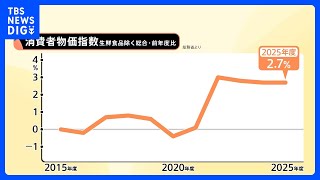
The nationwide consumer price index for fiscal 2025, released today, rose 2.7% from the previous year. Prices have now exceeded the government and Bank of Japan's 2% target for a fourth consecutive year.

As Japan’s entire baby boomer generation enters the late-stage elderly bracket, the country is approaching what experts call the 'Great Inheritance Era' — a period marked by a sharp rise in asset transfers after death.