

Toyota Motor announced that its overseas vehicle sales in April reached a record 756,190 units, up 9.7% from the same month last year. The surge was driven in part by last-minute demand in the United States ahead of additional tariffs on imported vehicles proposed by the Trump administration.

Japan’s leading industrial and electronics firms are accelerating efforts to commercialize next-generation batteries, with Toyota, Toshiba, TDK, and China’s CATL unveiling advanced technologies that promise breakthroughs in performance, safety, and supply chain resilience.

Within the long history of Japanese television, few moments stand out as disturbingly vivid and ethically fraught as the events surrounding the death of Kazu Nagano in 1985.

A construction site in Nagoya has introduced an AI-based system that analyzes workers’ facial expressions to assess heatstroke risk in real time.

Cases of online securities accounts being hijacked via computers and smartphones are rapidly increasing, with individual investors seeing their carefully built portfolios vanish in unauthorized trades—often involving unfamiliar Chinese stocks.

Toyota Group unions have secured the highest average wage increase since 2000, with 123 manufacturing unions achieving pay hikes averaging 16,430 yen and a 5.72% increase, according to the All Toyota Labor Federation, which represents about 362,000 members across 307 unions.

There has been a major development in the so-called "Trump tariffs" negotiations, in which Japan is also involved. The United States and China, which had been imposing more than 100% tariffs on each other, agreed on May 12th to reduce those tariffs by 115%.

Toyota Motor announced on May 8th its earnings forecast for the fiscal year ending March 2026, projecting a 1.0% year-on-year increase in revenue to 48.5 trillion yen, but a 34.9% decline in net profit to 3.1 trillion yen.

Meitetsu has announced that it will introduce new train cars on its Toyota Line for the first time in 48 years. Starting next fiscal year, the new 500-series trains will operate on the sections shared by the Toyota Line, Inuyama Line, and the Nagoya City Subway's Tsurumai Line.

The newly established Hokkaido Valley Vision Council aims to create a 'Hokkaido version of Silicon Valley' by promoting development around next-generation semiconductor firm Rapidus and transforming the region from Tomakomai to Ishikari into a hub for advanced technology.

The development of autonomous driving technology is entering a new phase, driven by advances in generative AI. A white vehicle seen driving through central Tokyo without a driver was recently unveiled as Japan's first public demonstration by Waymo, a subsidiary of Alphabet.

At the White House, President Donald Trump brought together corporate executives, including SoftBank Group Chairman and CEO Masayoshi Son, to highlight major investment commitments made in the United States—presenting them as a direct result of his administration's efforts.

Toyota has announced that it has reached a basic agreement with Waymo, the autonomous driving division under Google's parent company, to move toward a new partnership.
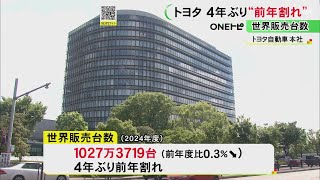
Toyota Motor Corporation announced on April 24th that its global sales for fiscal 2024 totaled 10,273,719 vehicles, a 0.3% decrease from the previous year, marking the first year-on-year decline in four years.
A man found wandering naked in Saitama Prefecture has been arrested after a string of violent incidents, including a fatal hit-and-run and an attempted abduction, unfolded within roughly 90 minutes on April 21st.

At the Shanghai Motor Show, which opened to the press on April 23rd ahead of its public run from April 27th to May 2nd, Toyota Motor Corporation revealed a series of new models, including a new electric vehicle, as it works to regain ground in the increasingly competitive Chinese market.

The emergence of Taiwanese electronics giant Foxconn has become a key catalyst in the discussion of a potential Nissan-Honda merger. Having grown through iPhone production, the company is now pushing into the electric vehicle (EV) sector, led by a Japanese executive who once held top roles at major Japanese firms.

The Trump administration announced on March 26th that it will impose an additional 25% tariff on imported automobiles and key auto parts. According to the proclamation signed by President Trump, the tariffs are set to take effect on April 3rd and will apply to all imported vehicles, including those from Japan.
Widely considered Japan's leading artificial intelligence startup, Preferred Networks is on a mission to tackle "real-world" challenges through deep learning. (CNBC International)
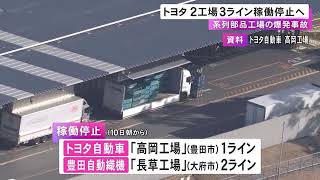
Toyota will halt production at some of its plants starting the morning of March 10th following an explosion at a parts supplier in Toyota City, Aichi Prefecture, that left one person dead and two others injured.
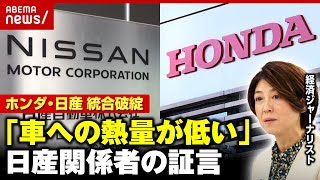
Honda and Nissan had been in discussions about a potential management integration, aiming to form a joint holding company that would oversee both automakers. However, the talks have collapsed, leaving many questioning what went wrong.
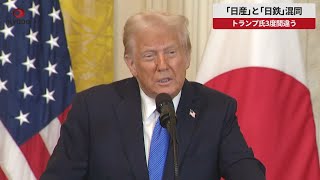
Confusion arose during a joint press conference following the U.S.-Japan summit on February 7th when former President Donald Trump mistakenly referred to Nippon Steel as "Nissan" three times while discussing the company's planned acquisition of U.S. Steel. His remarks led to brief speculation about whether struggling automaker Nissan was investing in the American steel giant.
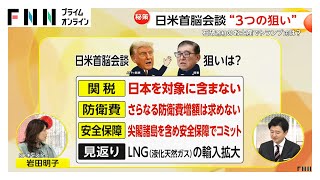
Prime Minister Ishiba, ahead of the US-Japan summit with President Trump, is set to present a specially prepared map showcasing Japanese corporate investments across the United States, a strategic move aimed at emphasizing Japan’s economic contributions while negotiating key issues such as tariffs, defense spending, and security commitments.
The signing of a presidential order imposing a 25% tariff on imports from Canada and Mexico by U.S. President Donald Trump has sent shockwaves through the markets, with the Nikkei Stock Average plunging sharply on February 3rd. Concerns are mounting over the impact on the Tokai region’s auto industry, a key pillar of the local economy.
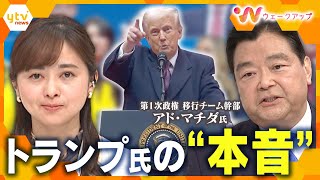
Japan is facing critical questions about how to navigate its relationship with the United States following the inauguration of Donald Trump as the 47th president.