

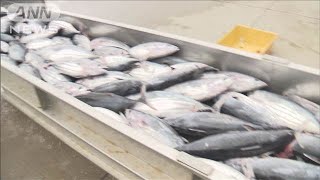
Japanese Prime Minister Kishida Fumio says Japan and China have reached an agreement that will lead to the resumption of China's imports of Japanese seafood. (NHK)

The removal of fuel debris, a crucial and highly challenging part of the Fukushima Daiichi Nuclear Power Plant decommissioning process, has resumed. This process, regarded as the most difficult aspect of the decommissioning effort, focuses on extracting melted and solidified nuclear fuel, known as fuel debris, from the plant's reactors.

Typhoon No. 10, which brought record-breaking rains across various regions, has left significant damage, including flooding homes and triggering landslides. On Yakushima Island in Kagoshima Prefecture, a 3,000-year-old Yakusugi tree was split in two, leaving a scar on a popular tourist spot.

Japan’s high exposure to a variety of geographical, meteorological and man-made risks ranks it third in the world. Major emergencies over the past three decades — including the 1995 Kobe earthquake and the 11 March 2011 triple disaster — have taken tens of thousands of lives and required hundreds of billions in recovery costs.
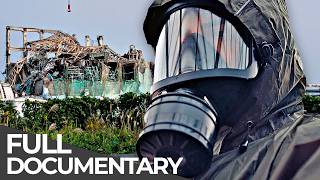
There has been endless hand-wringing and finger-pointing following the 2011 Fukushima Nuclear Disaster. But the full effects of the disaster are still shrouded in secrecy, and both TEPCO and the Japanese Government have limited any meaningful analysis of the disaster’s impact on health and the environment. (Free Documentary)
Typhoons have been charting unusual paths this year, making landfall on the Pacific side of Tohoku, sparking keen interest in a new variety of rice that can withstand such disasters.

Life is returning to normal in Tokyo and surrounding areas after a powerful storm. Typhoon Ampil triggered blackouts and upended people's travel plans, but services are getting back on track. (NHK)

Japan experienced a scorching heatwave over the first weekend of summer vacation, with temperatures soaring from Okinawa to Hokkaido. Despite comprehensive heatstroke measures at festivals, numerous incidents were reported.
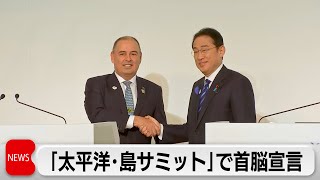
The leaders' meeting of the 'Pacific Islands Summit,' involving Japan and Pacific island nations, was held in Tokyo, resulting in the adoption of a leaders' declaration emphasizing future cooperation.
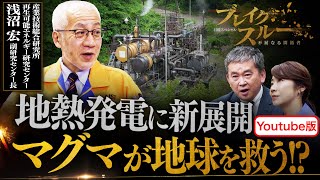
A large-scale geothermal power project comparable to nuclear power is underway in Japan, with the government and private sector accelerating their efforts toward a green transformation (GX) and renewable energy transition. However, rising power consumption, partly due to the spread of AI, has sent the demand for electricity skyrocketing.
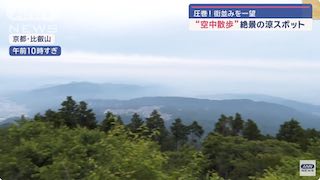
Kyoto experienced another sweltering day on Monday, marking a full week of temperatures exceeding 30 degrees Celsius. In the midst of this relentless heat, we sought out some cooler locations, and what we found were breathtaking views.

A Chinese man who allegedly vandalized a stone pillar at Yasukuni Shrine in Tokyo’s Chiyoda Ward with spray paint spoke to ANN, emphasizing that he has no intention of turning himself in.
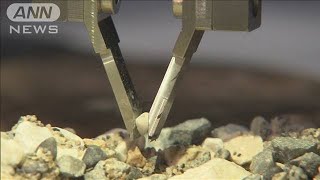
Tokyo Electric Power Company (TEPCO) has unveiled a device for the trial removal of so-called 'fuel debris' at the Fukushima Daiichi Nuclear Power Plant.
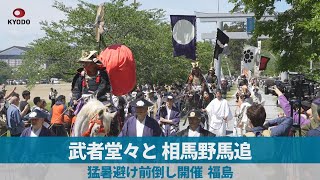
The historic "Soma Nomaoi" event, which boasts over a thousand years of tradition and features armored horsemen parading in a scene reminiscent of the Sengoku period, commenced on May 25 in Fukushima's coastal region. Traditionally held in July, the event was rescheduled to May this year to avoid the severe summer heat after a horse died from heatstroke last year.

Temperatures soared above 30C in northern Japan and northern Kyushu on Sunday, marking a true summer day, while weather conditions in western and eastern Japan worsened. In Tokyo, the early summer spectacle, the Asakusa Sanja Festival, reached its climax.

Police in Tochigi Prefecture have arrested two Vietnamese men. They are investigating whether the two men were involved in a series of robberies that have taken place over the past month in Tochigi Prefecture, north of Tokyo, and the nearby prefectures of Nagano, Gunma and Fukushima. (NHK)

In the early hours of May 14, several men broke into a house in Minamiaizu, Fukushima Prefecture, tying up a woman in her 60s and stealing cash. Over the past two weeks, similar robbery incidents have occurred in Gunma, Tochigi, and Nagano Prefectures.

A women-only sumo tournament was held in Fukushima Town, Hokkaido, featuring 62 female wrestlers from across Japan. This town, known for producing sumo greats like Chiyonoyama and Chiyonofuji, saw intense competition among the participants.
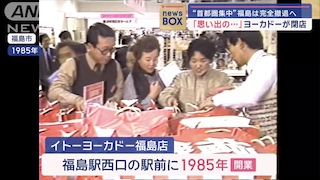
The cherished supermarket, Ito-Yokado, has closed its doors in Fukushima, bringing its 39-year history to a close.

Wednesday marks five years since Japan's Emperor Naruhito ascended the throne. During this period, the Emperor has explored his role as a symbol of the state. He also searched for new ways to engage with people amid the coronavirus pandemic, including making use of online platforms. (NHK)
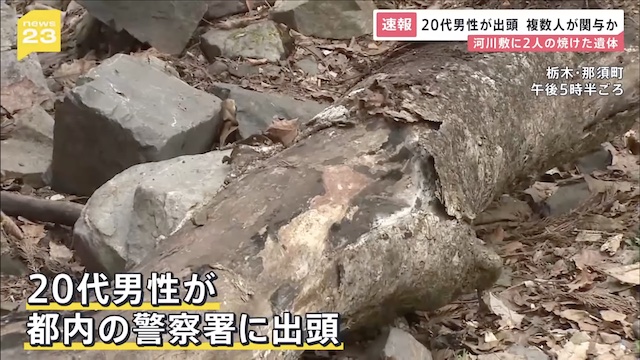
A man in his 20s has turned himself in to police, hinting that he might be connected to the tragic incident of two charred bodies near a forest road in Nasu, Tochigi Prefecture.
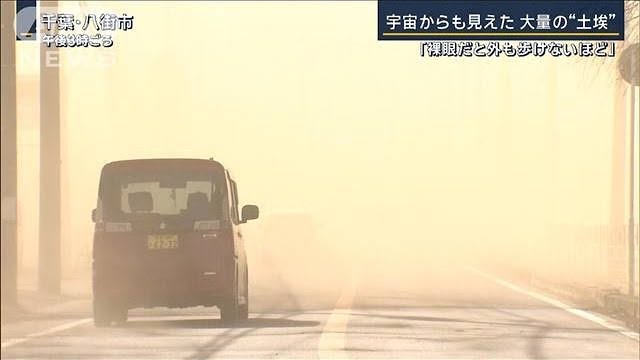
Monday saw the strongest winds of the year blow across Japan, stoking numerous fires, and creating a dust cloud visible from space.
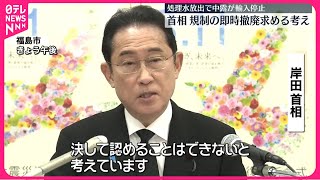
Prime Minister Fumio Kishida has emphasized the need for the immediate lifting of import bans on Japanese seafood by China and Russia, following the release of treated water from the Fukushima Daiichi Nuclear Power Plant.

For the first time, Tokyo Electric Power Company (TEPCO) has captured footage inside the containment vessel of Reactor 1 at the Fukushima Daiichi Nuclear Power Plant.
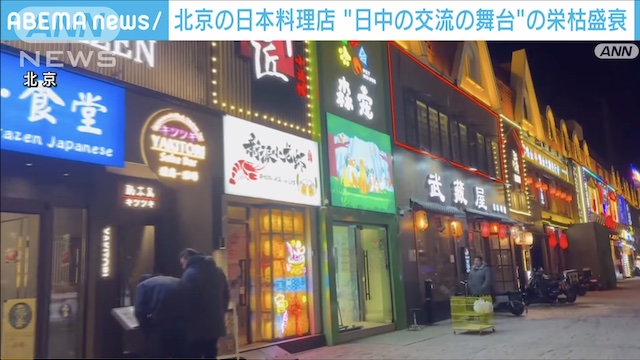
A long-standing Japanese restaurants in Beijing has been forced to close, suffering the impact of a three-year-long zero-COVID policy and the backlash from Japan's policy to release treated water from Fukushima's stricken nuclear plant.