



Tokyo stocks rose sharply on September 7, with the Nikkei 225 closing at 66,399, up 1,378 points, or 2.12%, as buying in artificial intelligence and semiconductor-related shares lifted the headline index, even though more stocks fell than rose across the Prime Market.

Heavy rain caused by the autumn rain front continued to disrupt rail services across the Tohoku and Kanto regions on September 7, with parts of the Shonan-Shinjuku Line and other routes remaining suspended while some major Tokyo commuter lines returned to normal operations after running reduced services earlier in the day.

Tokyo's Shinjuku Ward, which has more than 3,900 short-term rental facilities, the highest number of any municipality in Japan, plans to generally prohibit new properties in residential areas and around schools as complaints over noise, trespassing and other problems continue to increase.
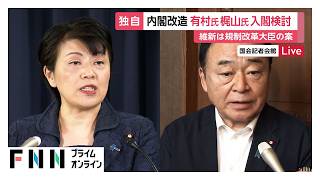
Prime Minister Sanae Takaichi is accelerating preparations for a Cabinet reshuffle that could take place as early as next week, considering ministerial posts for senior Liberal Democratic Party officials while weighing the treatment of Internal Affairs Minister Yoshimasa Hayashi and a new Cabinet member from the Japan Innovation Party.

A woman in her 60s died after her car was submerged in a flooded underpass in Iwaki, Fukushima Prefecture, as record rainfall caused widespread flooding, landslides and transport disruption across Kanto and surrounding areas on September 7, with authorities warning that further rain was expected during the evening commute.

Tokyo has unveiled the design for a major redevelopment of the plaza outside Shinjuku Station's west exit, with a landmark tree, water-play area and event space planned as part of a transformation centered on "greenery, light and people" that is scheduled for completion in 2035.

Young people recruited into illegal "dark part-time jobs" through social media and friends are increasingly becoming involved in fraud and violent robberies across Japan, with interviews at a juvenile training school revealing how the promise of easy money, a desire for recognition and fear of criminal groups can gradually leave them feeling unable to escape.

Japanese customs authorities blocked a record 19,568 shipments suspected of infringing intellectual property rights in the first half of 2026, up 12% from a year earlier, as the expansion of cross-border e-commerce drove an increase in imported parcels.

Tokyo police are investigating the possibility of a serial arson spree after six suspicious fires were reported within about two weeks in the same neighborhood of Adachi Ward, leaving an 81-year-old woman with burns and damaging homes, political party posters, a vending machine and a bicycle.

A disaster prevention experiment has shown how quickly a rain-soaked slope can collapse once visible cracks appear, highlighting the need for people in landslide-prone areas to evacuate before conditions become critical as the risk of disasters remains elevated through early next week.

Highway service areas around the Kanto region are becoming destinations in their own right, offering travelers everything from freshly harvested vegetables and popular regional restaurant dishes to baths, observation decks and family events during the busy summer vacation season.

Hitachi is stepping up the use of digital technology, autonomous robots and physical AI to address Japan's growing labor shortage, showcasing systems designed to automate factory work and maintain critical infrastructure at one of the group's largest technology exhibitions.

Japan's Ministry of Economy, Trade and Industry raised subsidies for aviation fuel used on domestic flights from September 3, doubling the support rate while ending subsidies for international flights.

Household spending in Japan fell for an eighth consecutive month in July as consumers continued to economize on everyday purchases such as food and beverages while increasing spending on dining out, accommodation and in-game purchases.

Tokyo stocks rebounded on September 4, with the Nikkei 225 closing at 65,020.94, up 806.46 points, or 1.26%, as buying returned to artificial intelligence and semiconductor-related shares after a Wall Street rally, while investors waited for U.S. jobs data and watched the yen, oil prices and Bank of Japan rate-hike expectations.

Japanese startup Enactic is developing physical AI technology that combines artificial intelligence with robotic hardware, earning recognition from Nvidia while pursuing an unusual open-development strategy that makes its technology available to the public.

Five oil distributors, including Higashinihon Usami and ENEOS Wing, admitted charges of violating Japan's Antimonopoly Act by forming a cartel to coordinate diesel fuel prices at their first trial at the Tokyo District Court on September 3.
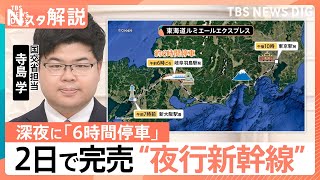
Night trains are making a comeback across Japan, with railway operators introducing new overnight services and even experimenting with overnight Shinkansen trains as demand grows for alternatives that combine transportation, accommodation and the experience of traveling through the night.

An autonomous ride-hailing service developed by British company Wayve launched in London on September 3, with the AI-powered technology also scheduled to begin trial operations in Tokyo by the end of 2026.

FamilyMart has unveiled a new hybrid checkout system that can operate as either a self-service or staffed register, aiming to reduce checkout-related work by about 20% as labor shortages affect roughly 30% of its franchise stores.

The Imperial Household Agency is considering holding a significantly scaled-down funeral for former Emperor Akihito at the Imperial Palace in Tokyo, reflecting his wishes to minimize disruption to the lives of the public.

Running around the Imperial Palace has become one of Tokyo's most popular fitness activities, but growing numbers of runners and pedestrians sharing narrow sidewalks are raising safety concerns and prompting calls for stronger rules and better infrastructure.

The number of elderly people in Japan with no relatives to rely on is projected to rise to 4.48 million by 2050, or roughly one in nine seniors, prompting the government to create a new system under revised social welfare laws to support people with daily needs, hospitalization and arrangements after death.

Nearly 60% of Japanese high school students consider learning about different cultures "very important," the highest proportion among Japan, the United States, China and South Korea, according to a survey released by the National Institution for Youth Education.

Tokyo stocks ended mixed on September 3, with the Nikkei 225 closing at 64,214.48, down 111.16 points, as uncertainty over interest rates and currencies kept pressure on risk assets, while the broader TOPIX rose 0.5% to 4,102.04.