



A worsening naphtha shortage linked to tensions in the Middle East is beginning to affect everyday retailers in Japan, with some businesses replacing plastic packaging with newspaper and asking customers to bring their own containers and bags.

Japan's chemical industry is facing growing pressure from rising raw material costs and supply concerns linked to tensions in the Middle East, although expectations for industry restructuring and expanding demand for semiconductor materials are providing reasons for optimism.

Japanese stocks suffered a sharp sell-off on June 8th as weakness in U.S. technology shares and growing concerns over higher global interest rates triggered widespread selling, sending the Nikkei Stock Average down 2,563.52 points, or about 3.8%, to close at 64,024.60.

Japan received its first crude oil shipments from Alaska and South Sudan on June 7th since the effective closure of the Strait of Hormuz, as the country steps up efforts to secure stable energy supplies and reduce its reliance on Middle Eastern oil.

Japan's agricultural sector, which supports the nation's food supply, is beginning to feel the impact of the Middle East crisis, as soaring fuel and fertilizer costs and growing shortages of essential farming materials raise fears that more producers may abandon the industry.

Former Mie Governor and Liberal Democratic Party Policy Research Council Special Adviser Eikei Suzuki has called for a stronger government role in Japan's energy policy, arguing that the country's heavy dependence on Middle Eastern oil is the result of decades of market-driven procurement and that rising energy prices now pose a greater threat than supply shortages.

Japan is grappling with worsening shortages of naphtha-derived materials three months after the closure of the Strait of Hormuz, with Prime Minister Sanae Takaichi arguing that the country's problem is not a lack of supply but a breakdown in distribution, while opposition parties are urging the government to intervene against suspected hoarding and speculative stockpiling.

Corn farmer Wataru Hikosaka in Tahara, Aichi Prefecture, says concerns continue to mount as soaring fertilizer prices linked to tensions in the Middle East add to the challenges facing growers already dealing with typhoon damage.

Japan's household spending fell for the fifth consecutive month in April, highlighting continued pressure on consumers as rising prices and growing concerns over instability in the Middle East weighed on household budgets.
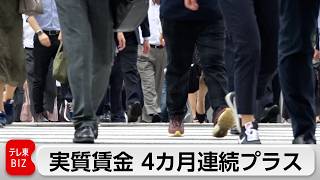
Japan's real wages rose 1.9% in April from a year earlier, marking the fourth consecutive month of growth and the longest stretch of positive gains in about five years as this year's spring labor-management wage negotiations began feeding through into workers' paychecks.

Major meat processor Itoham announced on June 5th that it will launch a new lower-priced product line next month as companies continue to grapple with rising costs driven by inflation and instability in the Middle East.

As inflation continues to strain household budgets and companies across Japan grapple with the so-called "ink shock" driven by rising printing and packaging costs linked to instability in the Middle East, the company behind Don Quijote has unveiled a new private-brand strategy aimed at making everyday necessities more affordable.

The Japanese government approved a supplementary budget proposal exceeding 3 trillion yen on June 3rd, including the creation of a new contingency reserve aimed at responding to developments in the Middle East and addressing rising energy prices.

A crude oil tanker operated by a subsidiary of ENEOS arrived at the ENEOS Kiire Terminal in Kagoshima at around 12:30 p.m. after successfully passing through the Strait of Hormuz, which remains effectively closed due to the worsening situation involving Iran.

Mr. Akazawa Ryosei, Minister of Economy, Trade and Industry (METI), said after a Cabinet meeting on June 2nd that Japan expects to secure the crude oil it needs in June through alternative procurement and previously approved reserve releases, without deciding on a third round of state oil reserve releases in May, while also stressing that naphtha supply is expected to remain at levels close to a normal year.

Food price increases in Japan are accelerating, with the number of products subject to higher prices this year potentially reaching 20,000 items as rising costs linked to tensions in the Middle East spread through supply chains and place additional pressure on household budgets.

Prime Minister Sanae Takaichi announced on June 2nd that the government will significantly strengthen supplies of paint thinner and other chemical products by allowing raw materials to be supplied directly from petroleum refiners, a measure expected to support supply capacity equivalent to 1.8 times normal annual demand as Japan continues to monitor the impact of tensions in the Middle East on domestic supply chains.

ENEOS Holdings, Japan's largest oil refiner, is accelerating its push overseas as it seeks to raise the share of revenue generated outside Japan from roughly 20% today to 50% in the future, according to President Tomohide Miyata, who outlined the company's growth strategy in an extended interview that was not fully aired on TV Tokyo's World Business Satellite (WBS).

A black-and-white version of Calbee's popular Kappa Ebisen snack has appeared on supermarket shelves in Tokyo as concerns over the supply of printing materials linked to Middle East tensions ripple through Japan's food industry, while more than 1,000 food products are set to become more expensive in June.

As Japan grapples with rising energy costs linked to the prolonged crisis in the Middle East, the government is urging businesses and households to improve energy efficiency, placing renewed attention on a futuristic manufacturing model known as the "dark factory."

Shortages of thinners, paints, adhesive tapes and other petroleum-derived products are continuing to spread across Japan, raising questions about whether supply disruptions can still be explained solely by distribution bottlenecks.
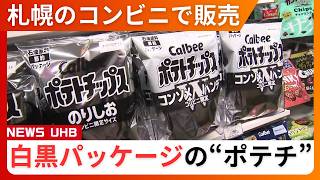
More than 1,000 food products and other consumer goods will see price increases from June, with the effects of instability in the Middle East now reaching supermarket shelves in unexpected ways, including the appearance of black-and-white potato chip packages.
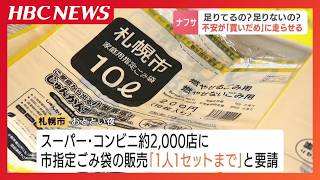
Concerns over instability in the Middle East show little sign of easing, and the effects are increasingly being felt in everyday life across Japan. Supply chain disruptions linked to petroleum-based materials are now affecting everything from household goods to public infrastructure projects.
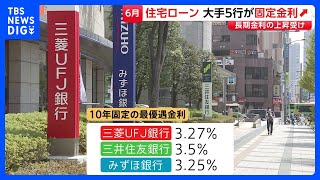
Fixed-rate mortgage costs in Japan are set to rise again in June as the country's five major banks increase home loan rates in response to higher long-term interest rates, with their flagship 10-year fixed-rate mortgages rising to preferential rates of 3.27% at Mitsubishi UFJ Bank, 3.5% at Sumitomo Mitsui Banking Corporation, and 3.25% at Mizuho Bank.

Bank of Japan Governor Kazuo Ueda said on May 27th that Japan's economy is facing an "oil price shock" as tensions in the Middle East drive up crude oil prices, speaking at an international conference hosted by the central bank.