


Influenza is once again spreading rapidly across the Kansai region, with Osaka Prefecture reaching an advisory-level outbreak for the second time in a single season for the first time in 15 years as infections surge again after the New Year.

The death toll from heavy snowfall across Japan reached 38 as of February 5th, with rising temperatures that day increasing the risk of falling snow in hard-hit regions, while forecasters warned on February 6th that the strongest cold air mass of the season is now moving in, bringing the threat of rapidly increasing snowfall and possible snow even in Tokyo over the weekend.

A prolonged slide in the yen is no longer being felt only through higher import prices, but is increasingly reshaping decisions by workers, investors, and foreign laborers, raising questions about Japan’s economic direction as the country heads toward a House of Representatives election.

China’s major holiday period, the Lunar New Year, is set to begin soon, with a record 9.5 billion passenger journeys forecast nationwide this year, but an unexpected shift has emerged as travel to Japan, which typically ranks among the top overseas destinations during the holiday, has dropped out of the rankings entirely.

From a single photograph, AI can now generate a movie-like video in as little as four hours, raising urgent questions about what precautions society should take and how such content can be detected.

Once a thriving canal, Kyoto’s Takase River, which flows through the Kiyamachi entertainment district in central Kyoto, has completed a long-running restoration project after 15 years, reviving a waterway that prospered during the Edo period as a key link between the city center and Fushimi.

Smartphones, computers, and game consoles that many people use every day could become more expensive in the near future, as the price of memory continues to surge.


A sharp cold snap continued across the Kanto region on the morning, with more than 80% of Fukuroda Falls in Daigo, Ibaraki Prefecture, freezing over and creating an otherworldly winter scene.

A street piano is often described as a “street-corner stage” where anyone can become a star, and behind the casual performances lie stories of lives, memories and unexpected connections.

With eight days remaining until votes are cast in the House of Representatives election, concerns are mounting over future strains on Japan’s power supply, prompting renewed attention to how political parties position their energy policies, particularly on nuclear power.

Even as they continue working, a growing number of people in non-regular employment are unable to escape poverty, widening inequality across Japan and raising questions over whether politics has truly confronted the problem head-on.
A century-old manufacturer of pressure gauges in Taisho Ward, Osaka, is struggling under what it describes as a historic surge in raw material costs, highlighting the growing strain on small and midsize enterprises that underpin Japan’s economy.

Foreign workers are now indispensable across Japan, from convenience stores and agriculture to nursing care, and with the House of Representatives election approaching, political parties are sharpening their positions on how the country should manage its rapidly growing foreign population.

A prolonged stretch of unusually dry weather, described as a “once-in-30-years” event, has led to worsening water shortages across parts of eastern Japan, prompting local governments to urge residents to conserve water as reservoir levels fall to historic lows.

China’s tightening grip on rare earth exports is emerging as a fresh pressure point for Japan, with manufacturers warning that shipments have slowed to a trickle and analysts estimating that a yearlong disruption could erase years of the country’s already thin growth.

Gold prices have hit a historic milestone, topping 30,000 yen per gram for the first time, with the surge spilling over into silver and other precious metals and creating unexpected strains across a wide range of industries.

Rare earths are strategic materials on which the world remains heavily dependent on China, and as Beijing increasingly uses export controls as a diplomatic and economic lever, Japan’s latest challenge is drawing historic attention as a potential turning point. With 2026 being described as the “first year of domestically sourced rare earths,” the question is whether Japan can truly become a game changer in reducing its reliance on China.

The global matcha boom is showing no signs of slowing, with producers saying demand has surged to unprecedented levels and prices have jumped sharply, raising concerns that the trend is shifting from a boom into a bubble.

The dollar-yen rate swung sharply over just a few days, with the yen strengthening rapidly from the 159 range to the 153 range, fueling market speculation that Japanese and U.S. authorities may have carried out “rate checks” to signal readiness for intervention.

In Osaka, the number of residents from Nepal has risen sharply in recent years, with many international students and workers settling around the UR Kongo housing complex near Kongo Station in Tondabayashi. The area has become home to a growing Nepalese community after public housing operators, seeking to address vacancies caused by an aging population, partnered with educational institutions to accept trainees from Nepal, a move that has led to long-term settlement by many residents.
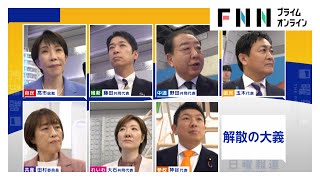
With the House of Representatives election officially kicking off on January 27, seven party leaders appeared on Fuji TV’s “Sunday Report THE PRIME” to debate how quickly they could deliver the consumption tax cuts many are promising as a response to rising prices, along with the rationale for the snap dissolution and Japan’s security policy as tensions with China persist.

Japan’s investment mood is shifting after the Nikkei Stock Average pushed past 50,000 for the first time and the end of negative interest rates rewrote the rules for households trying to stay ahead of inflation, raising a new question for retail investors: are Japanese equities still undervalued compared with global markets, and what is the most realistic way to grow money without being eroded by rising prices?

Japan’s wages have risen by more than 5% for two consecutive years in 2024 and 2025, and this year’s annual spring wage negotiations are set to begin in late January, raising fresh questions over whether pay growth can finally catch up with inflation and what steps are needed to restore household purchasing power.

Japan’s trade balance remained in the red for a fifth consecutive year in 2025, but the deficit narrowed sharply as exports, led by semiconductors, rose to a record high.