News On Japan

Japan’s deadliest New Year’s food may be even more dangerous in 2021 due to the coronavirus

Jan 01, 2021 (soranews24.com) - Eating the ironically risky symbol of long life is the latest thing that requires extra caution during the pandemic.

New Year’s is a pretty laid-back time in Japan. Most people spend most of the first three days of January at home, starting the year off with a focus on relaxation and family…and, in some cases, choking to death.

Mochi rice cakes are a traditional new year’s food, because their extremely stretchy nature is thought to be symbolic of longevity. Ironically, though, every year a number of people in Japan have their lives come to an abrupt end when a piece of mochi gets clogged in their throat and they suffocate before they can get medical attention.

Mochi is an annual culinary threat, but health experts are warning that this year it has the potential to be even deadlier than usual. The reason, as with so many unpleasant things these days, is the coronavirus, though at least we can be thankful that the virus hasn’t started infecting mochi batches. Instead, the added danger comes from hospitals crowded with coronavirus-infected patients receiving treatment.

Time is of the essence in treating suffocation victims, but with hospital staff and infrastructure more taxed than usual, response times (from calling an ambulance to receiving in-hospital treatment) will likely be slower, experts warn. Considering that many new year’s mochi choking victims in January 2020 were already unconscious when they arrived at the hospital, additional delays could be fatal, and so even greater levels of caution when eating mochi are being called for as we head into 2021.

News On Japan
POPULAR NEWS

A bear that injured four people in Fukushima City escaped despite efforts to capture it using tranquilizer darts and box traps, prompting authorities to urge residents to remain on high alert.

Typhoon Jangmi (Typhoon No. 6) swept across Japan on June 3rd, bringing record-breaking rainfall, widespread flooding, landslides, transport disruptions, and powerful winds, while prompting Tokyo's first-ever issuance of a Level 4 danger alert under the country's new weather warning system. The storm also exposed challenges surrounding evacuation behavior, as many residents chose not to leave their homes despite official warnings affecting more than 1.6 million people across the Tokyo metropolitan area.

A section of wall plaster and part of a roof eave were found damaged at Himeji Castle, the UNESCO World Heritage site in Hyogo Prefecture, on June 4th, with officials investigating whether strong winds from Typhoon Jangmi (Typhoon No. 6) were responsible.

A body discovered in a river in Tatsuno, Hyogo Prefecture, has been identified as 42-year-old Kenji Oyama, the suspect wanted nationwide in connection with the murder of a mother and daughter last month, police announced on June 4th.

As Typhoon Jangmi (Typhoon No. 6) struck Wakayama Prefecture on June 3rd, the storm became the first major test of Japan's newly introduced disaster weather warning system, revealing both the benefits of earlier evacuation calls and the challenges local authorities faced in helping residents understand and respond to the new alerts.

MEDIA CHANNELS
         

MORE Society NEWS

A 20-year-old American man, identified as Higginbotham James West, has been missing since leaving a hotel alone in Kyoto at around 6 p.m. on May 29th while visiting Japan with his family, police said.

A body discovered in a river in Tatsuno, Hyogo Prefecture, has been identified as 42-year-old Kenji Oyama, the suspect wanted nationwide in connection with the murder of a mother and daughter last month, police announced on June 4th.

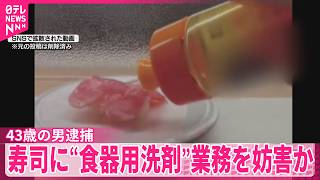
A 43-year-old man has been arrested after allegedly filming himself pouring a detergent-like liquid onto sushi at a Hama Sushi restaurant and posting the footage online, telling investigators he was seeking more views on social media.

As Typhoon Jangmi (Typhoon No. 6) struck Wakayama Prefecture on June 3rd, the storm became the first major test of Japan's newly introduced disaster weather warning system, revealing both the benefits of earlier evacuation calls and the challenges local authorities faced in helping residents understand and respond to the new alerts.

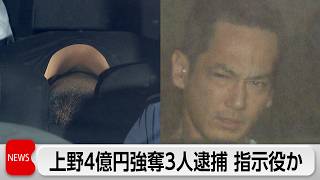
A senior member of a Sumiyoshi-kai affiliated organization and two other suspects have been arrested in connection with the theft of approximately 420 million yen in cash from a street in Tokyo's Ueno district in January 2026, bringing the total number of arrests in the case to 10.

A court has issued an interim ruling that the charge of robbery resulting in death applies in the case of a university student who died after a group assault in Ebetsu, Hokkaido.

A fire has destroyed Sasamasamune Brewery, a historic sake producer in Kitakata City, Fukushima Prefecture, leaving the future of the nearly 200-year-old business uncertain after large quantities of sake and brewing rice were lost in the blaze.

A medical examiner testified that a university student who died after being assaulted in Ebetsu, Hokkaido, suffered repeated blows to the face and head, telling the court that the victim was likely struck dozens of times.