News On Japan

An insider's guide to Tokyo’s Koreatown

TOKYO - One step out of Shin-Okubo station and you will find yourself in Koreatown, a bustling Tokyo district exploding with energy.

The noise and crowds may be a little overwhelming for first-timers, but the area is a gold mine for fans of Korean street food and barbecue, sweets to die for and beauty products. Upbeat hits by K-pop superstars such as BTS and Blackpink play from street-facing speakers, luring you into stores selling Korean pop-culture merchandise -- from tumblers, paper fans and key chains to mouse pads emblazoned with your favorite band member's face.

The streets of Shin-Okubo offer plenty of hole-in-the wall takeaway food. About three minutes on foot from the station you'll find Jongno Yataimura, a famous vendor that serves up authentic South Korean grub.

The most popular item on its menu is the potato mozzarella corn dog. Instead of sausages, this Korean staple coats a stick of cheese in homemade batter and potato cubes. The concoction is made mainly from rice flour, which yields a chewy yet fluffy texture. Combined with the melted cheese inside, the deep-fried corn dog is a great midday snack. There are bottles of ketchup and mustard as well as sugar for those who like their corn dogs sweet and salty, in true Korean style. Jongno sells about 300 of them at weekends. There will probably be a long queue but it is fast-moving, so the wait time shouldn't be too bad.

For those who don't fancy the corn dog, grab a cheese dakgangjeong, South Korean-style fried chicken coated in a sweet-yet-spicy sticky sauce topped with cheese, or hotteok, a pancake filled with honey syrup. ...continue reading

News On Japan
POPULAR NEWS

A powerful earthquake struck off Mindanao Island in the southern Philippines at 8:38 a.m. (Japan time) on June 8th, generating tsunami waves across parts of the Pacific, causing building collapses and casualties near the epicenter, and prompting the Japan Meteorological Agency to issue a tsunami advisory for a wide stretch of Japan's Pacific coastline.

A clinic director and a former Peruvian staff member have been referred to prosecutors after the man allegedly performed medical procedures without a license, including an external cephalic version—a procedure used to manually turn a baby into the correct position before birth—at an obstetrics and gynecology clinic in Fukuoka City, raising concerns about patient safety and oversight in maternity care.

A large bear was captured on security camera footage running through a shopping arcade in central Utsunomiya, Tochigi Prefecture, in the early hours of June 7th, as authorities stepped up warnings following a series of bear sightings across the city.

The family of James "Weston" Higginbotham, a 20-year-old Auburn University student who disappeared during a family vacation in Japan, announced on June 7th that he has been found dead after a volunteer search-and-rescue group located his body in a mountainous area outside Kyoto, bringing a week-long multinational search to a tragic end.

Japan's Meteorological Agency announced on June 7th that the rainy season is believed to have begun in the Tokai and Kanto-Koshin regions, marking the seasonal shift to wetter weather across a broad area of the country.

MEDIA CHANNELS
         

MORE Travel NEWS

Japan's Meteorological Agency announced on June 7th that the rainy season is believed to have begun in the Tokai and Kanto-Koshin regions, marking the seasonal shift to wetter weather across a broad area of the country.

Yakushima, a world natural heritage island in Kagoshima Prefecture, is marking 60 years since the discovery of Jomon Sugi, the island's iconic cedar tree estimated to be more than 2,000 years old, as concerns grow over the future of the ancient forests that have long supported both tourism and local life.

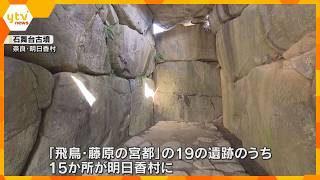
Residents in Nara Prefecture are celebrating after UNESCO's advisory body recommended the archaeological complex known as the Asuka-Fujiwara Ancient Capitals for inscription as a World Heritage site, bringing the historic birthplace of Japan's ancient state one step closer to international recognition.

Japan could face a more active typhoon season than usual in 2026, with private weather forecaster Weathernews predicting around 28 typhoons to form during the year—above the long-term average of 25.1—and warning that approximately 14 could approach Japan, increasing the risk of weather-related disruptions across the country.

Tourists are once again taking to the waters of the Kitayama River along the borders of Wakayama, Mie, and Nara prefectures, where a popular traditional rafting experience recreates the historic practice of transporting mountain timber by raft from Kitayama Village downstream to Shingu City.

A newly formed tropical depression in the South China Sea could bring another round of heavy rain to western Japan as it interacts with the seasonal rain front, meteorologists have warned, only days after Typhoon Jangmi (Typhoon No. 6) caused widespread damage across the country.

A bear that injured four people in Fukushima City escaped despite efforts to capture it using tranquilizer darts and box traps, prompting authorities to urge residents to remain on high alert.

Typhoon Jangmi (Typhoon No. 6) swept across Japan on June 3rd, bringing record-breaking rainfall, widespread flooding, landslides, transport disruptions, and powerful winds, while prompting Tokyo's first-ever issuance of a Level 4 danger alert under the country's new weather warning system.