News On Japan

Japan unveils $200bn package to combat highest inflation in decades

TOKYO - Japan on Friday unveiled an economic package worth about $200 billion to cushion the highest inflation seen in decades, as households and some businesses feel the impact of a weak yen.

Announcing the plan, Prime Minister Fumio Kishida told reporters that his government "will protect people's livelihoods from high prices through effective and drastic easing measures," emphasizing the need to target energy prices, which he said are "the main cause of the price surge."

Kishida said his government has decided to take a top-down approach to brace against uncertainty and risks in the world economy. He also suggested it would be possible to use current conditions including the weak home currency to Japan's advantage, spurring opportunities for growth.

"We are preparing various policies under the notion that the economy must be strengthened in the face of the exchange situation," Kishida said. "It must remain strong even in the midst of fluctuating exchange rates."

The economic package is to be backed by a supplementary budget worth 29.1 trillion yen (about $200 billion). It will cover a wide range of measures to help lower prices of energy and food, while giving a fillip to promising fields like environmental and digital technology. ...continue reading

Source: ANNnewsCH

News On Japan
POPULAR NEWS

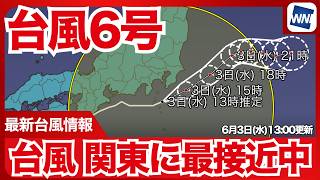
Typhoon Jangmi (Typhoon No.6) was located about 50 kilometers south of Izu Oshima at 1:00 p.m. on June 3rd and was moving east at 45 kilometers per hour as it made its closest approach to the Kanto region, leaving a trail of flooding, transport disruption and powerfully gusting winds across eastern Japan while forecasters warned that the strongest winds may still be ahead for some areas.

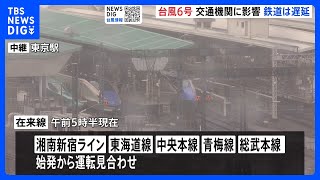
[updated 1:00 p.m.] Typhoon No. 6 is disrupting Japan's transport network on June 3rd, with JR East suspending some lines until the afternoon or for the full day, highway bus services canceled across major expressway routes, expressway operators warning of closures and speed restrictions, and airlines canceling more than 700 domestic flights, mainly on routes to and from Haneda Airport, as heavy rain from the storm spreads along the Pacific side of western and eastern Japan.

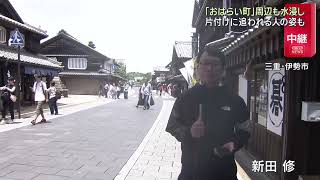
Flooding was reported around the popular tourist district of Oharai-machi in Ise City following the passage of Typhoon No. 6, with some businesses forced to clean up after floodwaters overflowed from a nearby river during the early hours of June 3rd.

A breaking weather alert was issued for the Izu region of Shizuoka Prefecture early Wednesday morning, after the formation of a linear rain band, a phenomenon capable of producing prolonged and extremely intense rainfall over the same area. Authorities warned that the risk of disasters has risen sharply as heavy rain continues to fall, increasing the likelihood of flooding, landslides, and other weather-related emergencies.

[updated 03:30 a.m.] Authorities issued a Level 5 Flood Occurrence Information alert for the Kuwano River and the Naka River tributary in Tokushima Prefecture, warning that flooding may already be underway and urging residents to take immediate action to protect their lives.

MEDIA CHANNELS
         

MORE Politics NEWS

The Japanese government approved a supplementary budget proposal exceeding 3 trillion yen on June 3rd, including the creation of a new contingency reserve aimed at responding to developments in the Middle East and addressing rising energy prices.

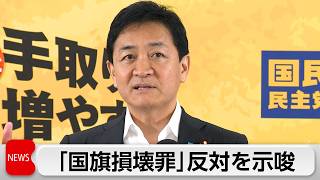
The leader of the Democratic Party for the People, Yuichiro Tamaki, suggested on June 2nd that his party may oppose a bill drafted by the Liberal Democratic Party to establish a new criminal offense for desecrating the national flag, arguing that it could unduly restrict freedom of expression.

Japanese Prime Minister Sanae Takaichi held a telephone conversation with Iranian President Masoud Pezeshkian on June 1st, urging Iran to demonstrate maximum flexibility in its ongoing discussions with the United States and expressing hope that an agreement on the nuclear issue can be reached as soon as possible.

Defense Minister Shinjiro Koizumi strongly rejected accusations that Japan is embracing "new militarism," describing such claims as false while delivering a speech at a major regional security conference in Singapore on May 31st.

Defense Minister Shinji Koizumi met with U.S. Defense Secretary Pete Hegseth on May 30th while visiting Singapore for the Asian security forum known as the Shangri-La Dialogue, as the two sides discussed ways to further strengthen the Japan-U.S. alliance and expand defense cooperation.

Prime Minister Sanae Takaichi renewed her determination to resolve the long-standing abduction issue involving North Korea on May 30th, declaring her willingness to pursue a summit meeting with North Korean leader Kim Jong Un as families of the victims gathered in Tokyo to demand the return of their loved ones.

Japan's Defense Minister Shinji Koizumi held the first-ever trilateral meeting with his counterparts from Australia and New Zealand, where the three sides exchanged views on defense cooperation, including the potential export of the Maritime Self-Defense Force's latest frigate design.

Japan has enacted legislation allowing a sharp increase in fees charged to foreign residents for immigration procedures, with the cost of applying for permanent residence expected to rise from the current 10,000 yen to around 200,000 yen once the new system is implemented.