News On Japan

Gene-edited pufferfish and sea bream hit menus in Japan

Jul 23, 2022 (seafoodsource.com) - Japan-based Regional Fish Institute is now selling gene-edited pufferfish to the public – one of the first times a gene-edited seafood product was offered over-the-counter to Japanese consumers.

The company’s online store has been offering the product since it gained government approval in 2021. The sale of gene-edited fish is part of a wider trend in Japan toward the new technology.

Japan is not just allowing gene-editing, it is also funding it. In a 27 June press release, Regional Fish Institute announced that it had – along with Kyoto University and Tokyo Marine University – been awarded a government subsidy of JPY 97.5 million (USD 705,000, EUR 690,000) for research as a “year-2022 growth-type small and medium enterprise R&D support project.” The company will use the money to develop gene-edited tilapia and vannamei shrimp.

Japan has followed the lead of the U.S.A. and Canada in approving the sale of gene-edited foods with limited safety review, in contrast to the procedure for transgenic foods. In the former, an existing gene is deleted, or its effect reduced, while in the latter, new genetic material is introduced from another species. Transgenic foods pose a risk of introducing allergens into food products, while gene-edited foods contain no new genes, but rather deletion or the targeted mutation of a gene. It is also considered that changes of this scale sometimes occur randomly within the range of typical natural mutations.

In 2019, an advisory panel to Japan’s Ministry of Health, Labor, and Welfare recommended allowing gene-edited foodstuffs to be sold to consumers without safety evaluations, opening up new opportunities for such developments.


News On Japan
POPULAR NEWS

Japanese Prime Minister Sanae Takaichi and US President Donald Trump held talks at United Nations headquarters in New York in the early hours of September 23 Japan time, demonstrating the strength of the Japan-US alliance and confirming close cooperation on China ahead of an upcoming US-China summit.

Rail services across Chiba Prefecture remained severely disrupted on the morning of September 23, three days after Typhoon No. 25 brought torrential rain to eastern Japan, with extensive suspensions on the Uchibo, Sotobo, Sobu Main and Narita lines expected to continue throughout the final day of the Silver Week holiday. Although some services have resumed and flights at Tokyo's major airports are recovering, damage to railway tracks and embankments is preventing a return to normal operations in several areas.

Typhoon No. 25 has left seven people dead and five missing in Chiba and Kanagawa prefectures, with rescue operations continuing on September 23 as the extent of devastating landslides and flooding across the Kanto region becomes clearer, while widespread power outages, disrupted rail services and submerged neighborhoods hamper recovery efforts.

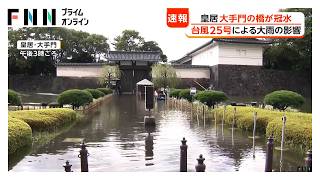
The road leading to Otemon Gate at Tokyo's Imperial Palace was flooded on September 22 after heavy rain from a typhoon caused water in the surrounding moat to overflow.

Japan came within two runs of producing one of international cricket's biggest upsets on September 22, pushing reigning T20 world champion India to the final ball before losing a rain-shortened match at Sano International Cricket Ground in Tochigi Prefecture.

MEDIA CHANNELS
         

MORE Food NEWS

For more than six decades, Sanyuken Fukasawa Branch in Tokyo's Setagaya Ward has served generations of customers with familiar Chinese dishes, as its 72-year-old second-generation owner and his wife continue to run the 14-seat neighborhood restaurant largely by themselves.

Authorities are warning people not to rely on artificial intelligence, guidebooks or internet searches to decide whether wild mushrooms are safe to eat after food poisoning cases involving toxic species, including one in which AI mistakenly identified a poisonous mushroom as edible.

Tokyo's Fuchu Prison is adapting its meals and living arrangements to a growing foreign inmate population, with about one in four prisoners coming from overseas and staff balancing religious, cultural and dietary needs against tight budgets and the demands of running one of Japan's largest prisons.

The cost of making a serving of curry rice at home in Japan fell below 350 yen in July for the first time in 11 months, helped by declining rice prices, according to Teikoku Databank.

Grape-picking season has reached its peak at tourist farms in Kashiwara, Osaka Prefecture, where hot weather from spring through summer has produced particularly sweet, richly flavored fruit this year, although prolonged rain has reduced visitor numbers and could shorten the season.

The autumn red snow crab season has opened on the Sea of Japan coast, with the first auction at Kasumi Fishing Port in Kami, Hyogo Prefecture, recording a top price of 300,000 yen for a single crab on September 4.

Japan's Environment Ministry will conduct its first survey of animal cafes, where customers can interact with animals including exotic species, as concerns grow over infection risks, injuries and the welfare burden placed on animals.

Japan byFood and Shizuka are back with Worth The Trip the series where we will discover food spots in Japan that are actually worth traveling for! This time we are going to award-winning eats around Tokyo under one rule – we can only eat for $10 or around ¥1,600 yen.