News On Japan

Revolutionizing Street Food: The Rise of Gourmet Kitchen Cars in Japan

TOKYO - In the wake of the pandemic, the number of kitchen cars has surged, with unique cuisine and quality becoming crucial for survival. A 25-year-old man ventured into this market with Edo-style sushi, using wasabi from his family's farm. However, on the opening day, unexpected troubles arose.

Culinary Battles in Kitchen Cars

A regular customer says, "With food trucks changing daily, I always try different ones."

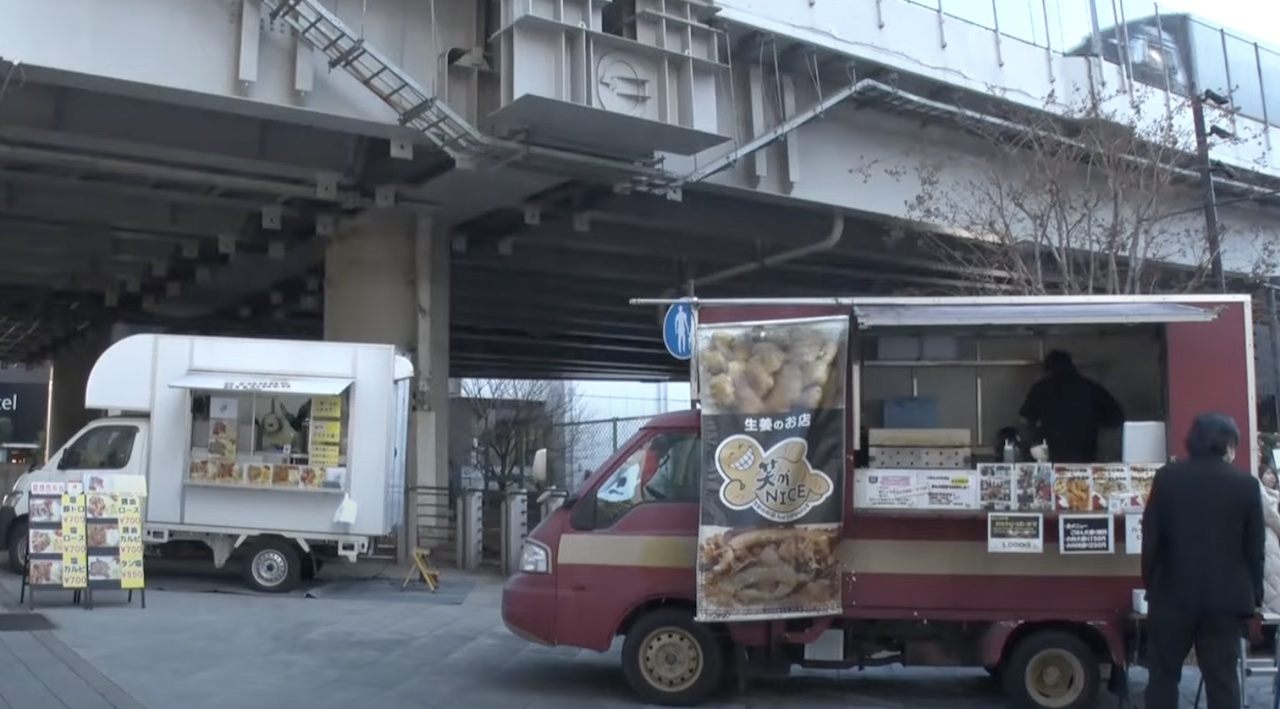
At Otemachi Kawabata Food Garden in Chiyoda, Tokyo, about 10 kitchen cars rotate daily, offering a variety of international cuisines. The kebab kitchen car, in particular, had a long queue.

Customers express their willingness to wait in line for their favorite chicken kebab, priced reasonably at 750 yen.

A Taiwanese food truck offers authentic flavors of 'Lu Rou Fan' at 800 yen, and the New York staple 'Chicken Over Rice' is available at 880 yen, featuring spiced chicken and tangy sauce over turmeric rice.

Gourmet Pizza Battles

Mellow, which introduces kitchen car locations, reports a fourfold increase in registrations since the pandemic.

Mellow's CEO Masayoshi Ishizawa notes, "The low startup cost has attracted many new entrants. To be chosen by customers, it's not just about taste, but also service quality."

As the number increases, only those offering restaurant-quality dishes can survive.

Among them, a transformed truck parked in front of an office building in Tokyo is worth further investigation. Offering gourmet pizza, this kitchen car has gone to the next level.

TJK PIZZA's owner, Mr. Light Elbe (54), a French national, installed a top-of-the-line Italian pizza oven inside the truck. This 850,000 yen oven enables him to bake authentic pizzas.

Elbe says, "Quality is key. Customers won't be satisfied with price alone."

The Challenge of a Sushi Kitchen Car

An unusual kitchen car targeting sushi-lovers has social media tongues melting. The young owner, 25-year-old Sakai Kobayashi, from a fishing town in Shizuoka, sought to use his family's wasabi in his venture.

As a cost-cutting measure, his mother, Takara, helped him modify the kitchen car. Even though she worries for her son, she supports his ambition.

After training in a famous sushi restaurant in Tokyo, Kobayashi decided to use his family's wasabi to promote their business.

On the opening day, he rushed to Toyosu Market for fresh ingredients. But he was late due to the preparation time.

His first order was a 1,500 yen 'Bara Chirashi,' followed by more customers, but the service was slower than expected. The day ended with just five customers and 15,000 yen in sales.

Kobayashi realized the need to streamline his operation. Despite a tough start, his journey with the family-dream kitchen car had just begun.

Source: ANN
Revolutionizing Street Food: The Rise of Gourmet Kitchen Cars in Japan
News On Japan
POPULAR NEWS

Strong Typhoon No. 18 was gradually moving away from Okinawa and the Amami Islands on August 26 after disrupting flights and bringing violent winds, rough seas and heavy rain, although Okinawa's main island and Amami Oshima remained at risk of sudden downpours, powerful gusts and waves exceeding 6 meters through around midday. As of 4 a.m. on August 26, the typhoon was located about 80 kilometers west-northwest of Okinoerabu Island and was moving west-northwest at 15 kilometers per hour.

A series of mysterious illegal dumping incidents involving about 39 kilograms of sliced bread has been reported around Mount Daisen and other parts of Tottori Prefecture in August, with officials investigating whether the food may have been deliberately placed to attract wild animals.

An 85-year-old couple have donated a combined 400 million yen to Osaka City with a request that the money be used to create a giant Myaku-Myaku statue about 20 meters tall at the former site of the Osaka-Kansai Expo, envisioning a landmark that could become a lasting symbol of the event and of renewed prosperity for Kansai and Japan.

Lawson plans to cut prices on its main line of onigiri rice balls by 10 yen from September 29 as falling rice prices begin to feed through to retail costs.

Police have established a temporary police post in the whaling town of Taiji, Wakayama Prefecture, ahead of the September 1 opening of the annual drive hunt for whales and dolphins.

MEDIA CHANNELS
         

MORE Food NEWS

Production of Asahi Ponzu, a popular seasoning that has been a fixture on Kansai dining tables for decades, has been suspended for the first time in the product's roughly 60-year history as a severe shortage of sudachi citrus exposes a deepening crisis in Tokushima Prefecture, which accounts for 98% of Japan's shipments.

Gutsu Grill Shinjuku has been serving hearty, affordable steak in Nishi-Shinjuku since 1999, attracting crowds with generous portions and a menu built around value for money. The 44-seat restaurant regularly fills up at lunchtime, with customers praising its tender meat, large servings and reasonable prices.

Lawson plans to cut prices on its main line of onigiri rice balls by 10 yen from September 29 as falling rice prices begin to feed through to retail costs.

Athletes competing in the Asian Games will be served around 370 dishes ranging from Asian-style curries and chicken dishes to Nagoya specialties such as chicken wings and kishimen noodles, with menus also designed to accommodate religious and dietary requirements.

A new type of fraud in which scammers pose as real farmers and advertise seasonal fruit at unusually low prices has been detected in the Kansai region, with police warning consumers to verify sellers through official websites before making purchases.

Shizuoka Prefecture has regained its position as Japan's leading producer of first-flush tea, overtaking Kagoshima Prefecture for the first time in two years as favorable weather and growing demand for matcha helped boost production.

Skylark Holdings is preparing to introduce "ghost restaurants" that operate without dining areas and specialize in delivery and takeout as Japan moves toward lowering the consumption tax rate on food.

Climate change is reshaping Hokkaido's fishing and agricultural industries, contributing to declining salmon and pink salmon catches while allowing crops such as sweet potatoes, once considered unsuitable for large-scale production in Japan's far north, to take root.