News On Japan

Japan's Defense Debate: Exporting the Next-Generation Fighter Jet

TOKYO - The first-ever discussion between the executives of the Liberal Democratic Party (LDP) and Komeito has been held on whether to allow the export of defense equipment, including the "next-generation fighter jet" being developed by Japan, the United Kingdom, and Italy, to third countries.

The next-generation fighter jet is aimed to succeed the Air Self-Defense Force's F2 fighter in the mid-2030s.

In the initial discussion held on February 21st by the executives of the LDP and Komeito, the point of contention is whether to permit the export of the finished products of this next-generation fighter jet to third countries unrelated to its development.

Komeito Leader Natsuo Yamaguchi: "If we allow the export of the next-generation fighter jet to third countries without any limitations, it means we are distributing weapons with high killing capabilities all over the world. It could lead to allowing the export of all kinds of weapons."

Komeito insists on the necessity of "restraints" for direct exports to third countries, which are currently not permitted under the existing system, while the government and the LDP are taking a proactive stance.

A government official: "If we can't export to third countries, we won't be able to take the lead in development. This is a line we cannot cross."

Prime Minister Fumio Kishida also stated: "I believe that taking a broad and smooth approach to international joint development and production, including the transfer (export) of finished products to third countries, is in our national interest."

The government and the LDP are considering a plan that would limit export destinations to countries that have signed agreements on defense equipment and exclude countries engaged in combat.

The rush to discuss is because discussions on the development framework among the three countries will intensify from next month.

Although the discussion on Wednesday aimed for a conclusion within this month, it remains to be seen whether an agreement will be reached.

Source: ANN

News On Japan
POPULAR NEWS

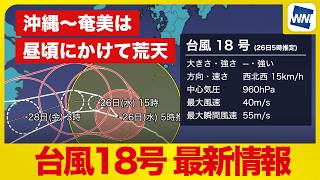
Strong Typhoon No. 18 was gradually moving away from Okinawa and the Amami Islands on August 26 after disrupting flights and bringing violent winds, rough seas and heavy rain, although Okinawa's main island and Amami Oshima remained at risk of sudden downpours, powerful gusts and waves exceeding 6 meters through around midday. As of 4 a.m. on August 26, the typhoon was located about 80 kilometers west-northwest of Okinoerabu Island and was moving west-northwest at 15 kilometers per hour.

A series of mysterious illegal dumping incidents involving about 39 kilograms of sliced bread has been reported around Mount Daisen and other parts of Tottori Prefecture in August, with officials investigating whether the food may have been deliberately placed to attract wild animals.

An 85-year-old couple have donated a combined 400 million yen to Osaka City with a request that the money be used to create a giant Myaku-Myaku statue about 20 meters tall at the former site of the Osaka-Kansai Expo, envisioning a landmark that could become a lasting symbol of the event and of renewed prosperity for Kansai and Japan.

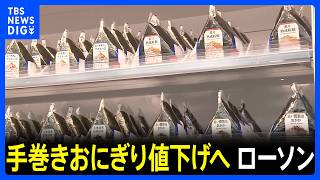
Lawson plans to cut prices on its main line of onigiri rice balls by 10 yen from September 29 as falling rice prices begin to feed through to retail costs.

Police have established a temporary police post in the whaling town of Taiji, Wakayama Prefecture, ahead of the September 1 opening of the annual drive hunt for whales and dolphins.

MEDIA CHANNELS
         

MORE Politics NEWS

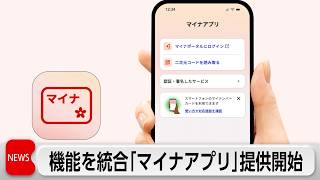
Japan's Digital Agency launched a new smartphone app on August 25 that combines identity verification and administrative procedures, allowing users to access both government and participating private-sector services through a single application.

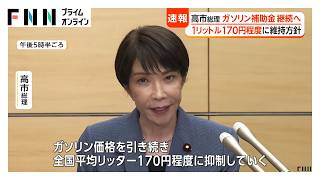
Prime Minister Takaichi said the government will continue using subsidies to keep the nationwide average gasoline price at around 170 yen per liter, drawing on reserve funds set aside to respond to developments in the Middle East.

The Japanese government plans to reuse low-radioactivity soil generated by decontamination work after the Fukushima nuclear accident at government office complexes in Saitama and Sendai, marking the first such reuse outside Tokyo.

Japan's GX Promotion Organization has invested about 3 billion yen in two startups developing nuclear fusion and plastic recycling technologies, with combined public and private investment expected to reach around 20 billion yen as the government seeks to accelerate the commercialization of advanced decarbonization technologies.

Japan's Internal Affairs and Communications Ministry has begun considering reductions in postal services, including fewer mailboxes and less frequent deliveries, as the country's postal business continues to suffer losses following a prolonged decline in letters and New Year's cards.

Russia has conducted missile exercises around the Northern Territories, including what appears to have been a launch from one of the disputed islands, prompting Japan's foreign minister to call Russia's growing military presence there unacceptable.

Japan's government is moving toward abolishing the Cool Japan Fund, a public-private investment vehicle created to support the overseas expansion of Japanese anime, food culture and other industries, after its cumulative losses reached 54 billion yen.

Japan strongly protested and condemned North Korea after it launched a ballistic missile at around 5:04 p.m. on August 20, with the projectile believed to have fallen outside Japan's exclusive economic zone, Defense Minister Shinjiro Koizumi said.