News On Japan

Japan Compiles Dietary Guidelines

TOKYO - Japan's Ministry of Health, Labour and Welfare compiled a draft of the "Japanese Dietary Reference Intakes," which sets standards for the amount of energy and nutrients that should be consumed in a diet to maintain health, during a review meeting held on Wednesday.
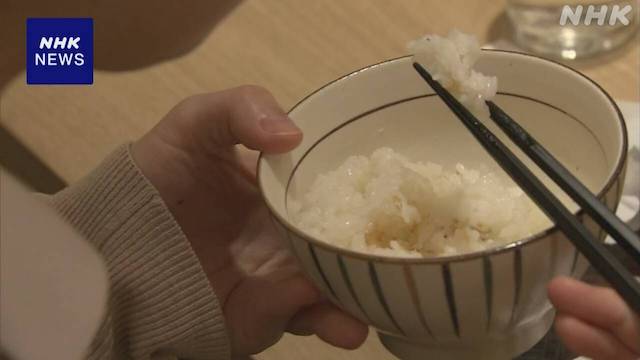
Japan Compiles Dietary Guidelines

These dietary reference intakes are compiled to ensure a healthy lifestyle and are revised every five years. On March 6th, the Ministry's review committee put together a draft of the standards to be applied from the next fiscal year.

According to the draft, the daily energy requirement for an adult with a moderate level of physical activity is set at 2,600 to 2,750 kilocalories for men aged 18 to 64, and 1,950 to 2,050 kilocalories for women of the same age group.

The "ideal intake" of dietary fiber has been set at 25 grams per day for adults, one gram higher than before, based on the latest research showing that higher consumption of dietary fiber reduces the incidence of lifestyle-related diseases such as cancer and diabetes. However, the median intake of dietary fiber among Japanese adults aged 18 and over was approximately 13.3 grams per day in 2018 and 2019, significantly lower than the ideal intake. The Ministry has set "target amounts" for adults to aim for, with men consuming 20 to 22 grams and women 17 to 18 grams or more per day depending on their age.

Regarding salt intake, which increases the risk of hypertension as the amount consumed increases, the target amount for adults has been set at less than 7.5 grams per day for men and 6.5 grams per day for women. The Ministry plans to formally compile and publish these standards, which will be used for nutritional management in school meals and medical care facilities from the next fiscal year onwards.

Professor Katsushi Yoda from the Graduate School of Osaka Public University, an expert in nutrition, commented on the intake of dietary fiber, saying, "It's difficult to consume vegetables all at once. Since the intake of dietary fiber by Japanese people is not at a high level, it's important first not to skip meals.

For those who skip breakfast, it's impractical to compensate by eating more vegetables at lunch or dinner. So, I'd like them to make up for the deficiency by not skipping breakfast." He also suggested that "eating food that has been pre-cooked and can be easily reheated in the microwave in the morning, or eating easily consumable items like bananas, rather than relying on a single type of food, would be beneficial. Eating a little bit of staple foods, vegetables, and fruits each would be ideal."

Professor Yoda mentioned that changing the type of staple food can also increase the intake of dietary fiber. For example, a bowl of 150 grams of white rice contains 2 grams of dietary fiber, but if replaced with germinated brown rice, the content increases to 2.5 grams. In the case of a bread roll, it contains 1 gram, but switching to French bread increases the intake to 1.3 grams.

Professor Yoda stated, "Although the difference may seem small, since staple foods are consumed frequently, it's important to pay attention to the types of foods eaten. I hope that the revision of these standards will serve as an opportunity to re-evaluate one's diet."


News On Japan
POPULAR NEWS

Typhoon No. 25 had left four people dead and six others missing in Chiba and Kanagawa prefectures by September 22, as the storm moved away from Japan and the extent of flooding and landslide damage across the Kanto region became clearer.

Transport disruption from Typhoon No. 25 continued across Chiba Prefecture on September 22 even as flights and major highways returned toward normal, with entire sections of the JR network remaining suspended for the day and all Narita Express services canceled because of flooding, landslides and damage to railway infrastructure.

Japan came within two runs of producing one of international cricket's biggest upsets on September 22, pushing reigning T20 world champion India to the final ball before losing a rain-shortened match at Sano International Cricket Ground in Tochigi Prefecture.

Japan's Asian Games campaign continued across a packed Day 4 schedule on September 22, with the women's badminton team securing another medal, the women's basketball team completing an unbeaten group stage, and Japan adding a historic bronze medal in mixed air rifle shooting as several of the host nation's biggest medal opportunities moved into the evening.

Japan collected another 12 medals on Day 3 of the Aichi-Nagoya Asian Games on September 21, with 17-year-old swimmer Shin Ohashi and karateka Kakeru Nishiyama winning gold, while the host nation also advanced strongly in women's volleyball, baseball, soccer, handball and hockey.

MEDIA CHANNELS
         

MORE Food NEWS

For more than six decades, Sanyuken Fukasawa Branch in Tokyo's Setagaya Ward has served generations of customers with familiar Chinese dishes, as its 72-year-old second-generation owner and his wife continue to run the 14-seat neighborhood restaurant largely by themselves.

Authorities are warning people not to rely on artificial intelligence, guidebooks or internet searches to decide whether wild mushrooms are safe to eat after food poisoning cases involving toxic species, including one in which AI mistakenly identified a poisonous mushroom as edible.

Tokyo's Fuchu Prison is adapting its meals and living arrangements to a growing foreign inmate population, with about one in four prisoners coming from overseas and staff balancing religious, cultural and dietary needs against tight budgets and the demands of running one of Japan's largest prisons.

The cost of making a serving of curry rice at home in Japan fell below 350 yen in July for the first time in 11 months, helped by declining rice prices, according to Teikoku Databank.

Grape-picking season has reached its peak at tourist farms in Kashiwara, Osaka Prefecture, where hot weather from spring through summer has produced particularly sweet, richly flavored fruit this year, although prolonged rain has reduced visitor numbers and could shorten the season.

The autumn red snow crab season has opened on the Sea of Japan coast, with the first auction at Kasumi Fishing Port in Kami, Hyogo Prefecture, recording a top price of 300,000 yen for a single crab on September 4.

Japan's Environment Ministry will conduct its first survey of animal cafes, where customers can interact with animals including exotic species, as concerns grow over infection risks, injuries and the welfare burden placed on animals.

Japan byFood and Shizuka are back with Worth The Trip the series where we will discover food spots in Japan that are actually worth traveling for! This time we are going to award-winning eats around Tokyo under one rule – we can only eat for $10 or around ¥1,600 yen.