News On Japan

Kyoto Reveals Hidden Treasures of 'The Tale of Genji'

Kyoto Reveals Hidden Treasures of 'The Tale of Genji'

KYOTO - Kyoto, the ancient capital bustling with tourists, has commenced a special exhibition of cultural properties at 15 temples and shrines, allowing visitors a rare glimpse into normally private cultural assets, deepening the appreciation of their historical significance.

This year, the exhibition at the Rozanji Temple, located near the Kyoto Imperial Palace, has garnered particular attention. Rozanji is reputed to be built on the former residence of Murasaki Shikibu, a Heian period writer known for composing "The Tale of Genji," considered the world's first novel and a masterpiece of romantic fiction. Visitors to the exhibition can immerse themselves in the world of "The Tale of Genji" and experience the romance of history.

Rozanji is reputedly the location of one of the 54 chapters, specifically the 'Wakamurasaki' scroll, which depicts the scene where Hikaru Genji first meets Wakamurasaki, and where Wakamurasaki accidentally lets a sparrow escape, and is grieving over it, and Hikaru Genji watches her from behind a fence.

Works vividly expressing scenes from Murasaki Shikibu herself or 'The Tale of Genji' are also on display. This time at Rozanji, artifacts related to Akechi Mitsuhide's era have also been unveiled. At that time, since the temple was considered to be on the same frequency as other temples, Rozanji was also a target of suppression, but according to one theory, some actions by Mitsuhide, who had some relationship with the mountain temple, requested that women be spared, and it is said to have escaped destruction. In Mitsuhide's influence, it is reported that he always carried a Jizo Bodhisattva into battle, showing compassion by saving children and women and other vulnerable people.

"The Tale of Genji" is a masterpiece that offers a vivid portrayal of the aristocratic life in ancient Japan.

Genji, the son of an emperor and a low-ranking concubine, was born under the shadow of this minor status, yet he shone with an unmatched brilliance. Blessed with breathtaking beauty and keen intelligence, Genji's life was one of both passionate adventures and reflective sorrows.

As a young man, Genji's allure drew many women into his life, each love affair leaving an indelible mark on his soul. Among these were his forbidden love for Fujitsubo, his father’s wife, who resembled his own mother; and the tragic tale of Lady Rokujo, whose jealous spirit became a vengeful ghost haunting Genji's loved ones.

But it was with Murasaki, a woman who shared not only the name of Genji’s creator but also her complex depth, that Genji found a kindred spirit. They shared a love rich in both tenderness and turmoil, marred by the societal constraints and personal tragedies that enveloped their world.

Throughout Genji’s life, the political landscape of the Heian court shifted like the slow, stylized dances of the nobility. His journey through the aesthetic seasons of his existence was marked by his ascent to power, his fall from grace, and his ultimate redemption in the contemplative seclusion of the countryside.

In his later years, Genji reflected on the ephemeral nature of life and love, as the world around him echoed his introspections with the fleeting beauty of the seasons—sakura petals falling like snow, the plaintive calls of autumn insects, and the silent resilience of winter pines.

The tale did not conclude with Genji’s last breath but continued with the story of his descendants and the ongoing dance of court intrigue, the quest for spiritual understanding, and the enduring search for love’s consolation.

Source: YOMIURI

News On Japan
POPULAR NEWS

A state of heightened alert remained in place in Utsunomiya, Tochigi Prefecture, on June 9th after a series of bear sightings continued across the city, with authorities warning that as many as two bears may be moving through residential neighborhoods. All 94 municipal elementary and junior high schools remained closed for a second day as officials searched for the animals.

A prolonged eruption at Sakurajima on June 7th blanketed parts of Kagoshima City in volcanic ash, turning roads gray and prompting long lines of vehicles seeking car washes after a plume of smoke rose 1,300 meters above the crater.

A powerful earthquake struck off Mindanao Island in the southern Philippines at 8:38 a.m. (Japan time) on June 8th, generating tsunami waves across parts of the Pacific, causing building collapses and casualties near the epicenter, and prompting the Japan Meteorological Agency to issue tsunami advisories along a wide stretch of Japan's Pacific coastline before lifting all of them at 4:50 p.m.

A clinic director and a former Peruvian staff member have been referred to prosecutors after the man allegedly performed medical procedures without a license, including an external cephalic version—a procedure used to manually turn a baby into the correct position before birth—at an obstetrics and gynecology clinic in Fukuoka City, raising concerns about patient safety and oversight in maternity care.

A large bear was captured on security camera footage running through a shopping arcade in central Utsunomiya, Tochigi Prefecture, in the early hours of June 7th, as authorities stepped up warnings following a series of bear sightings across the city.

MEDIA CHANNELS
         

MORE Travel NEWS

A slope collapse alongside the JR Dosan Line between Tsubojiri and Hashikura stations in Tokushima Prefecture, detected after a rockfall warning system was activated in the early hours of June 8th, has forced the suspension of train services with no timetable yet established for the restoration of operations.

Japan Airlines will once again operate seasonal flights between Chubu Centrair International Airport and the Hokkaido cities of Obihiro and Kushiro throughout August, offering travelers from hot Nagoya a chance to enjoy the region's cooler summer climate.

A large bear was captured on security camera footage running through a shopping arcade in central Utsunomiya, Tochigi Prefecture, in the early hours of June 7th, as authorities stepped up warnings following a series of bear sightings across the city.

Japan's Meteorological Agency announced on June 7th that the rainy season is believed to have begun in the Tokai and Kanto-Koshin regions, marking the seasonal shift to wetter weather across a broad area of the country.

Yakushima, a world natural heritage island in Kagoshima Prefecture, is marking 60 years since the discovery of Jomon Sugi, the island's iconic cedar tree estimated to be more than 2,000 years old, as concerns grow over the future of the ancient forests that have long supported both tourism and local life.

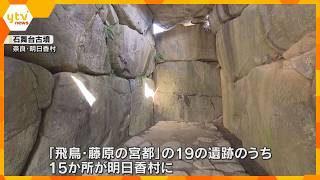
Residents in Nara Prefecture are celebrating after UNESCO's advisory body recommended the archaeological complex known as the Asuka-Fujiwara Ancient Capitals for inscription as a World Heritage site, bringing the historic birthplace of Japan's ancient state one step closer to international recognition.

Japan could face a more active typhoon season than usual in 2026, with private weather forecaster Weathernews predicting around 28 typhoons to form during the year—above the long-term average of 25.1—and warning that approximately 14 could approach Japan, increasing the risk of weather-related disruptions across the country.

Tourists are once again taking to the waters of the Kitayama River along the borders of Wakayama, Mie, and Nara prefectures, where a popular traditional rafting experience recreates the historic practice of transporting mountain timber by raft from Kitayama Village downstream to Shingu City.