News On Japan

Udon Revolution in Tokyo: New Trends Stir Excitement in the Culinary Scene

TOKYO - Japan's beloved soul food, udon, is experiencing a new wave of innovation. In the fiercely competitive "udon battleground" of Tokyo, where renowned eateries from across Japan converge, a fresh movement is reshaping the traditional noodle scene. New udon creations are being churned out as part of a spirited battle for survival among these establishments.
Udon Revolution in Tokyo: New Trends Stir Excitement in the Culinary Scene

Starting just a short walk from Aoyama-itchome Station in Tokyo, the evolving Tokyo udon scene is prominently featured in a restaurant nestled in the underground food district of a building right in front of the station. Here lies Iwaya Saki Udon, a staple for locals and a testament to the ongoing udon evolution.

For Daigo Ohu, a reporter hailing from Shikoku and a self-proclaimed udon aficionado, the restaurant's standard cold udon topped with a raw egg and dashi soy sauce is a soul-soothing favorite. "The real test of a noodle shop's mettle is in its udon," Ohu notes, savoring the noodles' perfect firmness and delicate throat feel. The dashi, sweetened slightly, wraps around the udon, softened by the egg, creating a gentle, enveloping taste.

The restaurant manager, Sato, shared insights into their meticulous noodle-making process. "Our noodles are made from carefully selected wheat, kneaded into dough, and then left to rest for two days to enhance the wheat's aroma," explained Sato. The noodles are then hand-pressed and machine-stretched to achieve the ideal thickness and length, ensuring a satisfying gulp.

What sets this Tokyo outlet apart is its unique offering of Hormone Udon, not available at the main branch in Nishinomiya, Hyogo Prefecture. This dish features a generous amount of Wagyu beef offal, a rare find in traditional udon servings. "The umami seeps into your body, different from the usual plant-based broth, adding a savory complexity to the warm, chewy noodles," commented Ohu.

This evolution of Tokyo's udon is also witnessed in other districts such as Shinjuku, where the Uozen front station restaurant serves up a limited number of rich shellfish broth udon dishes each day. The broth, enhanced by two large clams, pairs magnificently with the noodles, making each bite a harmonious blend of flavors and textures.

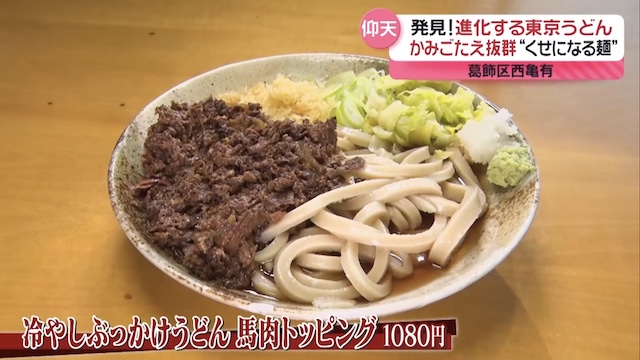
In the residential area near Kami Station, another trendsetter in the evolving udon landscape is the Fujikawa shop, known for its Yoshida-style udon topped with cabbage and horse meat. "The robust flavor of the wheat becomes more pronounced with each chew, and the rich soy-based broth complements the firm noodles perfectly," Ohu describes the experience.

The evolving udon scene in Tokyo continues to surprise and delight, with innovative recipes that push the boundaries of traditional Japanese cuisine. As these establishments carve out their niches, they not only survive but thrive, proving that even the most classic dishes can be reinvented for modern palates.

Source: 日テレNEWS

News On Japan
POPULAR NEWS

Japan’s World Cup campaign ended in the cruelest possible fashion on June 29, as Gabriel Martinelli scored in the fifth minute of stoppage time to give Brazil a 2-1 victory over the Samurai Blue in their knockout match in Houston. Japan had led in the first half and were still level at 1-1 in the final moments, but Martinelli’s late strike sent Brazil into the Round of 16 and eliminated Japan from the tournament.

Strong earthquakes have continued to shake parts of Japan in recent weeks, with 11 temblors measuring lower 5 or above on the Japanese seismic intensity scale recorded across the country since April 2026.

A Kintetsu Railway train derailed inside Kyoto Station on the morning of June 29, forcing partial suspensions on the Kintetsu Kyoto Line for the rest of the day and causing long delays that hit commuters, students and tourists.

A section of stone wall at Hikone Castle, one of Japan’s few surviving original Edo-period castles and a National Treasure whose main keep remains intact more than 400 years after its construction, collapsed after heavy rain caused by Typhoons No. 7 and No. 8, Hikone city officials said.

Japan advanced to the knockout stage of the World Cup after a 1-1 draw with Sweden on June 25, finishing second in Group F and setting up a Round of 32 clash with Brazil in Houston.

MEDIA CHANNELS
         

MORE Food NEWS

A Nepalese manager of a busy Indian restaurant in Kodaira, Tokyo, says he fears for the future of his business after Japan tightened the requirements for foreign entrepreneurs seeking to stay in the country under the business manager visa.

Sushiro, Japan’s leading conveyor-belt sushi chain, drew heavy crowds to a new outlet near Ayase Station in Tokyo on June 11, with the first day of business revealing both the brand’s strength and the pressure behind running a high-volume sushi restaurant.

Japan Access, Japan's leading general food wholesaler, is expanding the potential of food logistics with frozen-to-chilled processing, a system that stores products frozen and thaws them only when orders arrive before shipping them to retailers as chilled goods.

Seven chefs tasked with developing athlete menus for the Asian Games opening in September visited a long-established Hatcho miso maker in Okazaki on June 22, as organizers look to promote Aichi’s food culture through fermented seasonings such as miso and soy sauce.

The rapid depreciation of the yen is driving up the cost of imported beef and other foods, prompting some restaurants and supermarkets to shift their focus toward domestic products as the price gap narrows.

A snack with the pungent smell and flavor of natto has been developed in Hakodate, Hokkaido, using no natto bacteria but delivering an aroma strong enough to make people react the moment the bag is opened.

Harvesting began on June 18 for Densuke watermelons, a specialty of Toma in Hokkaido known for their glossy black rind, crisp texture and rich sweetness, with the season’s first auctions scheduled for June 19 at markets in Sapporo and Asahikawa.

The harvest of fruit-like sweet corn has reached its peak in Hekinan, Aichi Prefecture, where farmers begin picking before dawn to preserve the crop's high sugar content and freshness.