AKITA, Sep 20, 2024 (News On Japan) - The Tohoku Shinkansen came to a halt for five hours on Thursday due to an unexpected mid-journey separation of the linked Hayabusa and Komachi trains, 30 minutes after passing Furukawa Station with a total of 320 passengers on board.
The Komachi No. 6, departing from Akita, was coupled with the Hayabusa No. 6, which had started from Morioka Station, at 7:37 a.m.
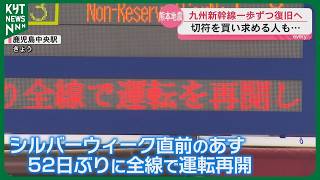
The Hayabusa train resumed operation three and a half hours later, shortly after 11:30 a.m., and the Komachi followed soon after.
However, the impact of the incident was widespread. Operations between Tokyo and Shin-Aomori were temporarily suspended. Not only were the Tohoku and Akita Shinkansen affected, but cancellations also extended to the Yamagata Shinkansen, affecting approximately 45,000 people.
In the past, there have been incidents of couplers detaching on conventional rail lines. A recent example occurred in November last year when the coupling between an electric locomotive and passenger cars on the Oigawa Railway in Shizuoka failed, triggering an emergency stop. This was classified as a serious incident that could have led to an accident.
However, this is the first time such an event has occurred on the nation’s fastest Shinkansen. According to JR East, the trains were traveling at around 315 km/h at the time of the separation.
A Hayabusa passenger stated, "There was no sign of anything unusual; the train came to a quiet stop. I thought it was just a regular temporary stop-and-go situation. Then the driver made an announcement, mentioning a problem with the coupling."
A Komachi passenger noted, "There wasn't much impact. I was wondering why we stopped. The speed just gradually slowed down and we came to a stop."
This incident is the latest in a string of Shinkansen troubles this year. In January, a power outage occurred between Ueno and Omiya, causing a full-day suspension in some sections. The incident was likely due to a catenary wire drooping and making contact with the train. There was also a collision between maintenance vehicles on the Tokaido Shinkansen, resulting in a derailment.
Typically, uncoupling operations are performed at stations, so why did the trains become uncoupled mid-journey?
JR East has stated that there were no visible issues with the coupler, and the cause is still under investigation.
Additional Details on the Incident:
The accident occurred when the Komachi train from Akita was coupled with the Hayabusa at Morioka Station, heading toward Tokyo. The separation happened between Furukawa and Sendai, while the train was traveling at 315 km/h. After the separation, both trains traveled nearly 5 kilometers before coming to a stop, and at that point, they were about 300 meters apart.
The coupling process involves two projections fitting into each other, and so far, JR East has reported no abnormalities with the coupler. Investigations into the cause are ongoing.
Railway journalist Jun Umehara offered insights into the potential causes: "A failure in the electrical system may be to blame. Coupling and uncoupling are typically done with a button, and usually, the trains will not uncouple while moving faster than 5 km/h. It's possible that a malfunction in the electrical system sent a wrong signal."
JR East also explained that, for safety reasons, the automatic braking system is triggered when the coupler disengages, applying brakes to both trains simultaneously. To prevent a collision, the rear train’s brakes are applied more forcefully than those of the front train. Additionally, the conductor on the Komachi was in the car next to the driver's cab and, sensing the problem, rushed to the front of the train to manually apply the emergency brakes.
Umehara warned, "This could have led to a serious accident. If the separation had occurred on a curve or a slope, the front car could have decelerated faster, potentially leading to a collision. A thorough investigation is essential to prevent a recurrence."
Source: ANN