News On Japan

What Are the Kamome and Tsubame Tribes? A 100-Year Transformation in Tenjin

FUKUOKA - This year marks the 100th year of the Showa era. Tenjin, Fukuoka City's central commercial and entertainment district, has transformed remarkably since World War II, evolving into a major shopping hub that continues to attract both locals and foreign visitors.

In front of city hall, rows of new buildings are rising as part of a massive redevelopment initiative. The area continues to be transformed through the ongoing urban renewal project known as the Tenjin Big Bang, which is dramatically reshaping the skyline.

Looking back, Tenjin once had a very different appearance. In the late 1950s, the district had few tall structures. Streetcars ran through the city, including over the main Tenjin intersection, and rail lines crisscrossed above ground. It wasn’t until the early 1960s that landmark buildings began to appear.

As postwar recovery took hold, commercial and service industries started to cluster in the district.

In later years, Tenjin also became a center of civic demonstrations. One notable incident involved public protests over a U.S. military aircraft crash, during which students and citizens clashed with police.

In the 1970s, major changes came with the opening of the underground shopping mall and department stores like Tenjin Core. Residents welcomed the new amenities, praising the calm and modern atmosphere. This marked the beginning of what became known as the Tenjin Distribution War—a period of intense competition among retailers.

As streetcars disappeared and the subway opened, foot traffic grew further. The district became a hub for youth culture and a launching point for new fashion trends.

By the 1980s, during the height of the economic bubble, large-scale commercial facilities such as IMS and Solaria Plaza opened in succession. These new entrants spurred another round of commercial rivalry. Traditional shopping streets struggled to compete and were pushed to reconsider their roles. Some visitors noted a generational divide, with younger shoppers drawn to newer complexes.

Entering the Heisei era, Tenjin began attracting large numbers of weekend visitors from neighboring prefectures. Many of them were young women arriving by express trains, and were nicknamed the "Kamome Tribe" and "Tsubame Tribe" after the train names. With the arrival of high-end retailers like Mitsukoshi, even more visitors poured in from nearby cities.

Now in the Reiwa era, Tenjin is undergoing another wave of renewal. Many older landmarks—including Tenjin Core and IMS—have been torn down, replaced by sleek new office and commercial towers. The transformation continues with the construction of buildings like the One Building, signaling the district’s next chapter.

While some feel energized by the district’s new look, others express a quiet sense of nostalgia.

With each era, Tenjin has adapted to the times. Each transformation has added new appeal, continuing to draw people to the heart of the city.

Source: RKB毎日放送NEWS

News On Japan
POPULAR NEWS

Typhoon No. 15 (Chan-hom) began causing significant disruption to Japan's Obon holiday travel on August 11, with ANA canceling 58 flights serving Haneda and Narita airports, JAL canceling four flights, and JR East suspending some services on the Joban Line as the storm approached eastern Japan.

Typhoon No. 15 (Chan-hom) is expected to make landfall near Ibaraki Prefecture between around 6 p.m. and 9 p.m. on August 11, bringing rapidly strengthening winds, high waves and heavy rain to parts of Kanto and southern Tohoku, with unsettled weather potentially continuing even after the storm moves inland.

Japan's H3 Rocket No. 9 successfully placed the Michibiki No. 7 navigation satellite into its planned orbit after lifting off from the Tanegashima Space Center in Kagoshima Prefecture at 4:23 a.m. on August 11, marking the country's second consecutive successful H3 launch.

The Tokaido Shinkansen operated its first overnight service ahead of the Obon holiday period, offering travelers a 15,000 yen trip from the Tokyo area to Kyoto and Shin-Osaka while allowing them to save on hotel costs and arrive earlier than the first regular morning trains.

Typhoon No. 15 is expected to approach and likely make landfall somewhere in the Kanto region on August 11, bringing strong winds and heavy rain that could disrupt conventional rail services, expressways and flights while also affecting a wider area extending into Tohoku.

MEDIA CHANNELS
         

MORE Society NEWS

Osaka Prefectural Police searched an office linked to the Yamaguchi-gumi crime syndicate in Toyohashi, Aichi Prefecture, on July 29 as part of an investigation into suspected receipt of money obtained through special fraud.

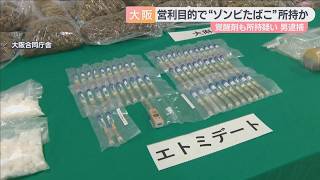
Authorities in Kyoto and Osaka have arrested three men in separate drug cases involving so-called zombie cigarettes containing the designated drug etomidate, as investigators step up efforts against the illegal trade in the Kansai region.

Raccoons are increasingly invading homes across Japan, damaging roofs and wiring, contaminating buildings with large amounts of urine and feces, and raising concerns over agriculture, native wildlife and the spread of disease as their population continues to expand.

Japan marked August 8, 2026, with a wave of weddings, special discounts and commemorative events as the date produced a rare alignment of three eights - the eighth day of the eighth month in Reiwa 8 - a combination regarded as especially auspicious because the character for eight is traditionally associated with expanding prosperity.

A 41-year-old woman has been arrested on suspicion of fatally assaulting her brother-in-law at her home in Shibukawa, Gunma Prefecture, after allegedly telling emergency services that he had fallen from a roof.

The Emperor and his family are spending time at the Nasu Imperial Villa in Tochigi Prefecture as the retreat marks 100 years since its establishment, with the visit coming as debate in the Diet over revisions related to the Imperial House Law enters a critical stage.

Two kappa statues that served as symbols of a bridge in Ebina, Kanagawa Prefecture, have been stolen after being cherished by local residents for 34 years, with police investigating whether the thieves targeted the sculptures for their copper.

A 63-year-old man from Shizuoka Prefecture has been arrested on suspicion of selling 10 stolen metal plaques, including nameplates bearing the names of bridges, to a scrap metal dealer in Ichinomiya, Aichi Prefecture.