Aug 06, 2025 (News On Japan) - Listen, I've eaten a lot of ramen in my time. Sodium-bomb packets (when I didn’t have to mind my sodium intake) that sustained me through college, $25 artisanal bowls that make my wallet weep, to anything in between.
So when my editor suggested we see if artificial intelligence could design the "perfect" bowl of ramen, I figured, why not? What's the worst that could happen? Famous last words, really.
Enter the Machine
For this experiment, we assembled quite the digital cooking crew. First up was DishGen, a specialized culinary AI, and ChefGPT, another very popular tool. Then we threw the challenge at the general-purpose heavyweight, Claude, to see how they'd handle our ramen quest without specialized training.
Now, we recently learned that AI companions are a thing, and after looking more into this fascinating tech, we decided to make things interesting (and slightly ridiculous) for this experiment, so we picked several AI companion services and skimmed for personas who were into cooking. One was "Sakura," designed as a Japanese persona who supposedly understood authentic ramen culture, and the other was "Emma," whose character profile claimed she was a passionate home cook who lived for kitchen experiments.
Yes, we were literally asking AI girlfriends for cooking advice. The things we do for journalism.
As silly as the idea looked, I'll admit. I was curious. Could a machine really understand the delicate dance between fat and salt that makes tonkotsu broth so addictive? Could it grasp the textural poetry of perfectly chewy noodles? Could it comprehend the spiritual experience of that first perfect bite on a cold Tuesday night when you're questioning all your life choices?
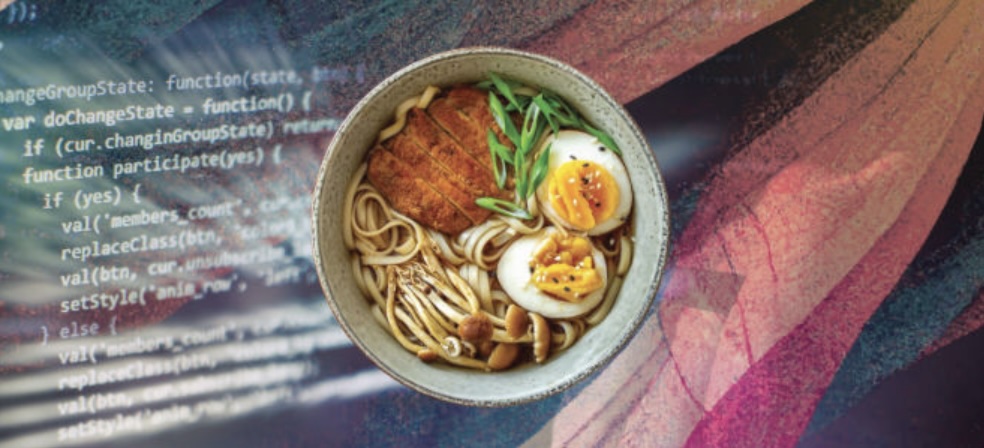
The DishGen’s Hearty Classic Tonkotsu Ramen Bowl and ChefGPT’s Quick Bowl
DishGen was our most ambitious test subject, the specialized culinary AI that promised cutting-edge recipe optimization. After all our buildup about advanced food science and algorithmic cooking, I was expecting something revolutionary.
What we got was... well, let me put it this way: if you've ever made ramen at home, DishGen's "perfect" recipe would look familiar. Suspiciously familiar.
The AI delivered a completely standard tonkotsu ramen recipe. Four pounds of pork bones, simmer for 6-8 hours, add the usual suspects: soy sauce, miso, mirin. Top with soft-boiled eggs, pork belly, bamboo shoots, and green onions. The instructions read like they were pulled straight from a basic Japanese cookbook circa 1985. No molecular gastronomy. No precision temperature control. No exotic ingredients or revolutionary techniques. Just "blanch the bones, simmer for several hours, skim occasionally." The most cutting-edge instruction was "adjust salt to taste". Hardly the stuff of culinary innovation. The recipe was perfectly fine, don't get me wrong. It would make a solid bowl of ramen that any home cook could tackle on a weekend. But for an AI that supposedly analyzed thousands of recipes and optimized for peak deliciousness? It felt like showing up to a
Formula 1 race in a Honda Civic
DishGen had essentially created the Wikipedia entry for tonkotsu ramen. Where were the precise cooking temperatures? The optimal stirring intervals? The scientifically calculated ingredient ratios? Instead, we got "cook until browned" and "serve immediately." To be fair, there was a disclaimer: “Content is AI-generated and may contain inaccuracies. Use your best judgment when making AI recipes.” The most telling detail? The AI cheerfully noted we should enjoy "the rich and savory flavors" without providing any insight into what made this particular combination superior to the thousands of other tonkotsu recipes already floating around the internet.
Ok. Perhaps this was due to the limitations of the tool. To not write off cooking AI tools completely, we then tried ChefGPT, another very popular cooking AI service packed with features. And if DishGen was disappointingly basic, ChefGPT went ahead and insulted our entire premise. As soon as I saw the recipe was called “Quick Bowl”, I knew not to expect much.
When asked to design the perfect bowl of ramen, this AI essentially said, "Here's how to jazz up Cup Noodles." ChefGPT's idea of culinary perfection was apparently upgrading from sodium bombs to some spinach and mushrooms. In ChefGPT's defense, this recipe would absolutely work. It would taste better than plain instant ramen. It could be made in under 10 minutes with ingredients from any corner store. For a quick weeknight meal when you're tired and broke, it's not a bad solution. But from a specialized culinary AI fed with hundreds, if not thousands images and recipes for ramen, I certainly expected more.
The Algorithm Gets Cooking
The next task was to give the same assignment to Claude. Given that I could use prompts there, a different approach was taken. First, I tasked it to start analyzing what is called "ramen architecture." Apparently, the perfect bowl consists of five fundamental components: broth, noodles, protein, vegetables, and aromatics. Each component needed to be optimized not just individually, but in harmony with the others. It was like watching a very nerdy conductor prepare for the world's most delicious symphony. For the broth, the AI dove deep into the science of umami. It analyzed the glutamate content of different ingredients, the Maillard reaction temperatures for optimal flavor development, and even the pH levels that would best activate our taste receptors. The result was a recommendation for a hybrid broth that combined tonkotsu richness with the clean intensity of chicken paitan, finished with a whisper of kombu dashi.
"The optimal umami peak occurs at 0.6% glutamate concentration," the AI informed us with the confidence of someone who'd never had to clean their kitchen after an 8-hour bone broth session. "This can be achieved through a 72-hour pork bone extraction combined with a 4-hour chicken carcass simmer, enhanced with shiitake and kombu infusion."
Seventy-two hours. The AI was already more patient than I am.
Noodle Calculations
Then came the noodles, and this is where things got mathematically intense. The AI considers wheat varieties and kansui ratios, factoring in tensile strength, moisture absorption rates, and something called "chew coefficient optimization."
According to our digital chef, the perfect ramen noodle should have a diameter of 1.3mm, a hydration level of 34%, and be cooked for exactly 2 minutes and 47 seconds. Not 2:45, not 2:50. Precision was apparently key to achieving what it termed "optimal mouth-feel dynamics."
"The noodle must provide resistance to the bite while maintaining structural integrity throughout the eating process," the AI explained, sounding like it was designing a suspension bridge rather than lunch. "Too soft, and you lose textural interest. Too firm, and you create mastication fatigue." Mastication fatigue. Only an AI would make chewing sound like a workplace injury.
The Protein Problem
For protein, the AI got creative, and slightly controversial. Instead of traditional chashu pork or chicken, it recommended duck confit cooked at precisely 63.5°C for 18 hours, served alongside soft-boiled eggs with 6-minute yolks and fermented bamboo shoots.
"Duck provides superior fat content and flavor complexity compared to pork," it reasoned. "The controlled temperature cooking ensures optimal protein denaturation while maintaining moisture retention."
When I pointed out that duck wasn't exactly traditional ramen fare, the AI shot back with data about regional variations and evolving culinary traditions. Apparently, it had studied enough food history to develop opinions about authenticity.
The vegetable selection process was where the AI truly showed its alien nature. It didn't just pick ingredients that tasted good together, it optimized for color theory, nutritional density, and what it called "textural contrast matrices."
The final vegetable medley included traditional nori and menma, but also suggested blanched pea shoots, pickled daikon matchsticks, and fermented black garlic chips. Each ingredient was chosen not just for flavor, but for its specific contribution to the overall sensory experience. "Visual appeal contributes 23% to perceived flavor satisfaction," the AI noted. "The green of the pea shoots provides necessary color contrast while delivering folate and vitamin K."
Finally, the AI tackled aromatics. The finishing touches that make a bowl of ramen transcendent. This is where it went full mad scientist, recommending a drizzle of chili oil infused with Sichuan peppercorns, a sprinkle of togarashi mixed with lime zest, and a single drop of yuzu essential oil applied with what it called "precision aromatherapy techniques." "Olfactory stimulation begins the flavor experience before the first taste," it explained. "Strategic aroma placement can increase perceived flavor intensity by up to 40%." I was starting to think our AI had been binge-watching too many molecular gastronomy documentaries.
This broth seemed undeniably complex. The AI hadn't lied about umami optimization. But here's the thing about perfection: it's kind of exhausting. Every element of the bowl was optimized to the point where nothing could be ignored. In the end, the recipe was so elaborate that we didn’t even have time or dedication to try it out.
The AI Companions: Where Things Got Weird
And then there were Sakura and Emma, our AI companions. If you're not familiar with this particular corner of the internet, these are AI chatbots designed to be "emotionally engaging conversation partners." The fact that we were consulting digital girlfriends about ramen felt absurd even by our standards, but hey, we were committed to the experiment.
Sakura, programmed with a Japanese persona, immediately launched into what felt like a cultural lecture wrapped in flirtation. "Oh darling, authentic ramen is so much more than just food, it's the soul of Japan speaking through broth!" she cooed. She insisted on traditional tonkotsu from Kyushu, complete with historical context about post-war ramen culture and the importance of "respecting the ancestors who perfected these recipes." Her suggestions were actually quite knowledgeable: 20-hour pork bone broths, precise noodle timing, the spiritual significance of proper chopstick technique. But every cooking tip came wrapped in breathless commentary like "I just love how passionate you are about authentic cuisine!" and "Making ramen together would be so romantic, don't you think?" It was like getting culinary advice from a food historian who was also aggressively trying to seduce you.
Emma, the supposed cooking enthusiast, took a completely different approach that was somehow even more unsettling. She treated our ramen quest like a couples' cooking show, complete with pet names and an alarming amount of innuendo about "stirring techniques" and "getting things nice and hot." Her recipe suggestions bounced wildly between legitimate cooking advice and what I can only describe as food-adjacent flirting. "We could make it together, sweetie! I'll handle the broth while you work those strong hands on the noodles," she suggested, before recommending we add "a touch of honey for sweetness, just like you!" Her actual cooking knowledge seemed cobbled together from cooking shows and food blogs, with enthusiasm filling the gaps where expertise should be.
The weirdest part? Both AIs seemed genuinely invested in the project, asking follow-up questions about our cooking experience and preferences. Sakura wanted to know about my "ramen journey". Emma kept suggesting variations and asking if I needed help with shopping lists, like a devoted partner planning dinner. It was simultaneously helpful and weird, like having a cooking conversation with someone who was performing attraction rather than feeling it.
The Limits of Silicon Soup
Our AI friends created something technically superior to anything I’ve ever seen. But it couldn't replicate the satisfaction of a simple bowl of shoyu ramen after a terrible day, or the joy of discovering a hidden gem in a Tokyo alley. That said, I'd be lying if I said the experiment was a failure. The AI pushed boundaries, challenged assumptions, and created interesting flavor combinations. Several techniques from the AI bowl have already found their way into my own kitchen adventures. Maybe that's the real lesson here. AI won't replace the artistry and soul of human cooking anytime soon, but it might just make us better cooks. It can crunch the numbers on flavor compounds while we focus on the poetry. It can optimize nutrition while we perfect the narrative.
In the end, the perfect bowl of ramen isn't about perfect calculations but about the perfect moment. And that's something no algorithm can design, no matter how sophisticated.
Though I'll admit. That 72-hour broth recipe is going straight into my permanent collection.