May 11, 2026 (News On Japan) - Japanese hospitality has a reputation for being almost mystically attentive, but the principles behind it are practical and teachable.
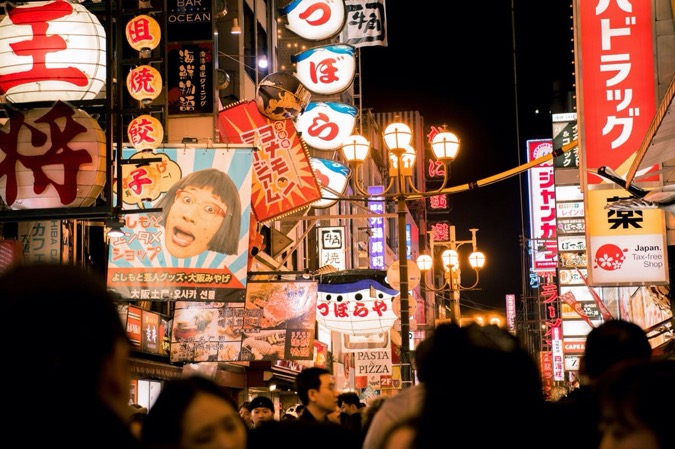
They also travel well into event planning outside Japan, where the standard playbook tends to focus on logistics and budget while quietly neglecting the quality of attention given to guests. Six concepts in particular are worth borrowing, and most of them cost nothing to adopt beyond a shift in how you think about your role and what you owe the room.
Omotenashi: service before being asked
Omotenashi is the principle most people have heard of, often translated as "wholehearted hospitality". The practical version is simpler: anticipate what your guests will need before they realise they need it. A glass refilled before it's empty. A coat held without being requested. A seat offered to whoever is standing while others sit. Event planners who internalise this stop running events as a series of scheduled boxes to tick and start watching the room for what isn't being said. The shift is small but immediately obvious to guests, who often can't quite articulate why one event felt better than another.
Ichigo ichie: this gathering will not happen again
Loosely translated as "one time, one meeting", ichigo ichie is the idea that every gathering is unrepeatable and deserves to be treated that way. The reason this matters for event planners is that it pushes back against the natural tendency to template events. Two weddings with the same venue, the same caterer and the same playlist are still two completely different occasions, and treating them identically shortchanges both. Pay attention to what's specific about this particular gathering: who's in the room, what brought them together, what they'll still be talking about in ten years. Plan around that, not your past events.
Kuuki wo yomu: reading the air
Roughly translated as "reading the air", kuuki wo yomu covers the ability to sense the mood of a room and adjust accordingly. In Japanese hospitality this is expected of every staff member, not just the host. Applied to events, it means training (or hiring) people who can tell when the energy is dipping, when a speech has gone on too long, when the dance floor needs a different song, or when one guest is quietly having a bad time. Most of the things that go wrong at events go wrong because nobody was reading the air; the timeline kept moving while the room didn't.
Shokunin: the artisan's pride in the work
Shokunin is the spirit of mastery, the idea that any work worth doing is worth taking seriously enough to become genuinely good at. For event planners, this matters most in how you choose suppliers. A florist with shokunin spends ten years getting better at arrangement. A photographer with shokunin re-edits their portfolio every season. A bartender with shokunin treats drink-making as a craft rather than a holding job. Booking a Deluxe bartending service over a generalist option is essentially this principle in practice: you're choosing people who have spent the time to become good at the specific thing your event needs, rather than people who happened to be available.
Mottainai: don't waste anything
Mottainai expresses regret over waste, whether material, temporal, or emotional. In an events context, this is partly the sustainability angle (food waste, single-use décor, transport choices), but it's also about not wasting your guests' time. Long empty stretches between programmed moments are mottainai. So is overprogramming, which wastes the energy of the room before the main moment arrives. Plan with respect for what you're asking of guests: their time on a Saturday evening is finite, and they've spent it coming to your event rather than doing something else.
Kaizen: keep getting slightly better
Kaizen is continuous, incremental improvement, and in Japan it's applied to almost everything. For event planners, the practical translation is a proper post-event review: what worked, what didn't, what would have made it better. Most planners do a version of this informally; the kaizen version is structured, written down, and applied to the next event in concrete ways. Over enough events, the compound effect is significant. Planners who run a deliberate kaizen process tend to be running noticeably better events two or three years in than peers who don't.
None of these principles requires a trip to Tokyo to apply. They're useful precisely because they make explicit a set of habits the best event planners already practise instinctively, and they give the rest of us a clearer framework for getting there faster.