A forgotten umbrella once began a chain of calls. Its owner had to identify the railway company, find the correct station office and describe an object resembling hundreds of others.

Staff still collect, label and store physical belongings. Photographs, timestamps and descriptive fields can now turn each item into a searchable record before its owner travels to inspect it.
A Photograph Gives the Object an Identity
Registers work best when an item carries a name or serial number. Plain umbrellas, gloves and shopping bags are harder to distinguish through a short description.
Staff can photograph an item and record its location, time, colour, category and visible features. Someone reporting a loss can then use ordinary language, such as a white handkerchief with a heart pattern.
Precise records also matter when a digital casino transaction is questioned. If a game opened through online pokies Australia produces an interrupted or disputed round, support staff can search the account history by time, slot title and round identifier. This isolates the correct casino operation, while the response depends on the operator’s procedures and available evidence.
A Large Network Needs Common Records
Transport hubs and shops receive large quantities of visually repetitive property. Searchable information helps staff compare enquiries with stored objects.
A report by News On Japan on the AI-powered find service stated that it operated across approximately 3,500 locations, mainly in transport networks, and registered about 10,000 items daily. The figures were supplied by the company providing the service.
This makes a single record useful even when the owner contacts a different participating organisation from the one holding the item.
A photograph does not remove manual work. Someone still tags the object and places it in storage. Digital indexing allows that work to support many enquiries instead of one call at a time.
Description Becomes Structured Evidence
People describe belongings differently. A passenger may report a “navy shoulder bag,” while a staff member records it as a “bag.” Search technology must recognise that both phrases could identify one object.
Lighting can make navy fabric appear black, while a folded item looks different when opened. Strong records combine photographs with structured details:
- the place where the item was found;
- the approximate collection time and date;
- colour, material, size and category;
- patterns, damage or attached accessories;
- identifying contents hidden from public search;
- the organisation holding the item.
These fields stop the system prioritising an umbrella found in Osaka when the passenger lost one on a Tokyo train that morning. Staff still decide whether a suggested match is credible, while the claimant must know details not displayed publicly.
One Journey Can Involve Several Operators
A journey may include a JR service, private railway, subway and taxi. Someone noticing a missing bag at the destination may not know where it disappeared.
Separate databases force passengers to contact several organisations. Shared search reduces that effort, but operators may use different categories, retention periods and handover procedures. A “small electronic device” in one system may be an “audio accessory” elsewhere.
Privacy limits what can be displayed. Search should locate an item without exposing passport details, addresses, card numbers or private documents. Public descriptions can remain broad while authorised staff retain evidence for verification.
A Match Is Not Proof of Ownership
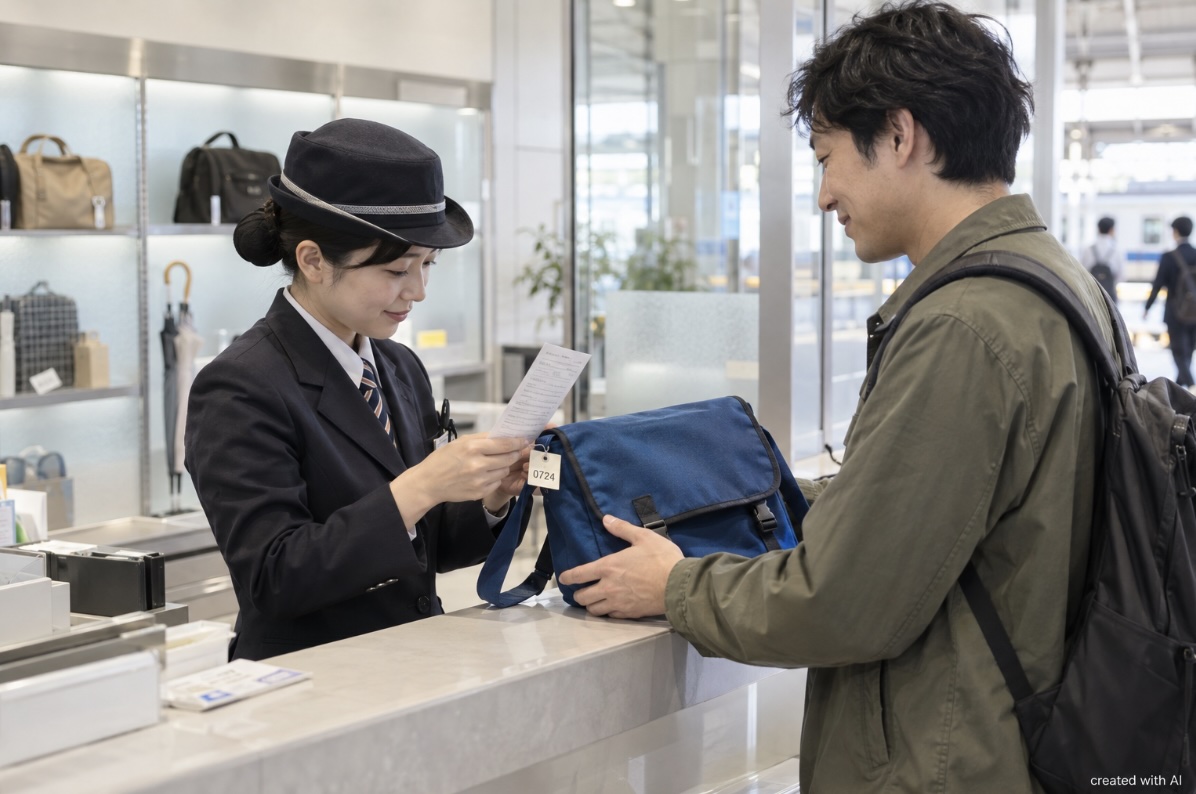
A black backpack may attract several plausible claims. Its owner should be able to identify a concealed feature, such as a broken interior zip, a particular key ring or an object in a closed pocket.
Collection may require identification and a reference number. Valuable property should not be delivered to an unverified address based only on a convincing description.
The process can eventually involve police. The National Police Agency’s overview of Japanese policing lists handling lost and found property among the duties of community police officers. Stations and businesses may therefore transfer unclaimed items to police custody.
Better Search Reduces Repeated Work
Searchable records reduce repeated calls, unnecessary visits and manual comparisons. Staff still collect property and confirm ownership; technology makes the middle of the process faster.
Japan’s system relies on careful handling and public cooperation. Searchable images add another layer, turning an umbrella on a shelf into a record capable of finding its owner.