



As Japan sees a record surge in foreign visitors, tourist information centers across the country have become essential stopovers for international travelers, often serving as their last resort when plans go awry. A recent report took a closer look at how these centers, flooded daily with tourists, respond to the increasingly bold and spontaneous demands of visitors eager to make the most of their trip—especially when it comes to catching a glimpse of Mt. Fuji.
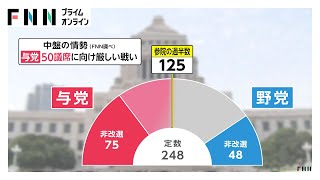
The ruling coalition is facing an increasingly difficult battle to retain its majority in Japan’s House of Councillors, according to a mid-campaign opinion poll by FNN ahead of the July 20th election. Meanwhile, the minor party Sanseitō is showing strong momentum and could see a significant boost in its number of seats.

With Japan’s junior high school entrance season in full swing, attention is turning not just to test content, but to how students and parents should prepare. At Seikou Gakuin Junior High, for example, the Japanese language exam tests precise word usage, with questions such as the correct usage of similar-sounding words like “setsujoku” (to fulfill a humiliation) versus “kutsujoku” (to clear a disgrace). Such nuanced questions demand a refined linguistic sense, often beyond elementary-level knowledge.

A Tokyo court has sentenced Manabu Wakui to 15 years in prison for the fatal stabbing of a woman on the grounds of a high-rise condominium in Shinjuku Ward in May 2024. The Tokyo District Court ruled that Wakui carried out the attack to satisfy a personal grudge without first exhausting legal channels, stating that his actions could not be justified as revenge.

In Tokyo’s Shibuya district, the issue of people drinking alcohol outside convenience stores—known as “konbini drinking”—has already erupted into a full-fledged summer spectacle. Foreign visitors have begun gathering in Center Gai, bottles in hand, despite a ban on nighttime street drinking in place since October 2024.

Artificial intelligence may pose both opportunities and threats to democracy, says Yutaka Matsuo, a leading AI researcher at the University of Tokyo, who warns that voters must remain vigilant about the influence of AI-generated content in political campaigns.

Suzuki has announced plans to release its first-ever electric vehicle, the e-Vitara, in Japan within the current fiscal year. The model will also be introduced in Europe and India.

The video game industry is undergoing a major transformation, moving beyond its traditional image as a pastime for children and enthusiasts to become a vast, multifaceted entertainment business. The global gaming market was estimated at 33 trillion yen in 2023, highlighting its explosive growth.

The National Police Agency has announced a plan to tighten regulations on converting foreign driver's licenses to Japanese licenses—a process known as "gaimen kirikae"—by no longer allowing short-term visitors such as tourists to apply.

Rakuten Group has filed a lawsuit against the Japanese government, claiming that the Ministry of Internal Affairs and Communications' decision to effectively ban reward points from the furusato nozei (hometown tax donation program) starting in October is unlawful.
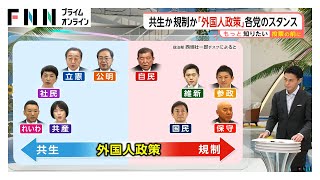
With Japan facing a labor shortage due to its aging population, immigration policy has emerged as a key issue in the upcoming Upper House election in July. On July 9th, the topic was discussed in depth by news program “It!”, which highlighted public concerns and political stances regarding the role of foreign nationals in Japanese society.

Japan Post’s improper vehicle safety checks have sparked wider concerns, with more than 30,000 vehicles now potentially subject to suspension—raising fears that Yu-Pack deliveries could also be affected.

Nissan Motor, which has been grappling with sluggish business performance, is set to delay the production of two electric vehicle models it had planned to launch in the United States. The affected models are sport utility vehicles originally scheduled to be produced at the company’s Mississippi plant starting in 2028. The company did not disclose a new timeline for the start of production.

According to Teikoku Databank, the number of corporate bankruptcies across Japan in the first half of this year reached 5,003 cases, surpassing the previous year's total for the third consecutive year.

Japan’s current account surplus for May reached a record 3.4364 trillion yen, up 16.5% from a year earlier, according to preliminary data released by the Ministry of Finance. This marked the fourth consecutive month of surplus.

As rice prices across Japan continue to remain high, major convenience store chain Lawson has begun selling rice balls made exclusively with aged rice for the first time, starting on July 9th.
An incident involving a Chinese national attempting to take the TOEIC exam on behalf of someone else has led to revelations that over 800 people were involved in similar cheating schemes.
Two women have been arrested by the Tokyo Metropolitan Police on suspicion of stealing 130,000 yen in cash by using a drunken man's bank card at an ATM in Tokyo's Taito Ward.

The announcement by U.S. President Donald Trump that a 25% tariff will be imposed on imports from Japan has drawn strong reaction from Prime Minister Ishiba, who said during a government task force meeting that the move is "deeply regrettable."
The Tokyo Regional Taxation Bureau has pointed out that an asset management company wholly owned by Yusaku Maezawa, founder of online fashion retailer ZOZO, failed to report approximately 400 million yen in income.
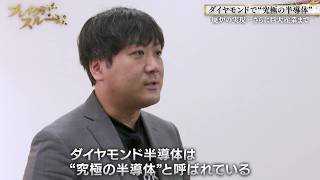
Aiming to revive Japan's status as a semiconductor powerhouse, Hoshikawa Naohisa, CEO of Okuma Diamond Devices, is leading the development of what is being called the "ultimate semiconductor"—a diamond-based device capable of withstanding extreme heat and radiation.

Familiar with the grand Tokyo Station entrance? That is Marunouchi. Placed in the heart of Tokyo, it is the town’s finest financial district. Think about the infamous New York’s Wall Street… but in Tokyo. So, what’s good there? (Japan by Food)

Police crackdowns are intensifying in Tokyo’s entertainment districts as more people fall victim to so-called "petty overcharging" scams, where customers lured into bars and izakayas by street solicitors end up paying unexplained charges far beyond what was promised.

This video is about 4 trains I took on the way to Sasebo and the city stoll in the city. (Tokyo Kenchan)

As Japan's labor shortage worsens due to a declining birthrate and aging population, companies are grappling with how to manage employment for older workers.
Pages: [<<] ... 93 94 95 96 97 98 99 100 101 102 103 104 105 106 107 ... [>>]