


Businesses worldwide are grappling with a growing concern: will artificial intelligence take away human jobs? Yet in the United States, recent developments suggest a more complex reality. Job openings for software developers have been rising since around November 2025, according to U.S. employment site Indeed.
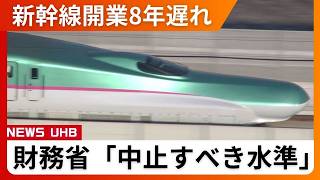
The planned extension of the Hokkaido Shinkansen to Sapporo has come under renewed scrutiny after Japan's Finance Ministry said the project had reached a level at which it should, in principle, be canceled.

Japan has enacted a revised Passport Act that will sharply reduce passport application fees from July 1, as the government seeks to encourage more citizens to obtain passports.

All Nippon Airways is considering introducing a fuel surcharge on domestic flights as early as the next fiscal year, amid surging fuel costs driven by tensions in the Middle East.
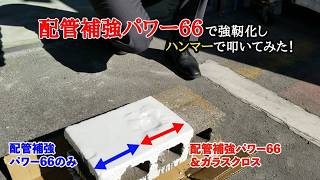
Road cave-ins are occurring one after another across Japan. According to a survey released on April 22 by the Ministry of Land, Infrastructure, Transport and Tourism, so-called dangerous sewer lines requiring urgent countermeasures now total 748 kilometers nationwide.

Brawl Stars has grown well beyond its humble roots as a mere mobile brawler over the years to become a true competitive phenomenon with a huge global presence.
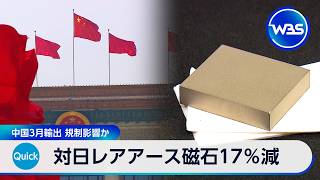
China's exports of rare-earth magnets to Japan in March fell 17.3% from the previous month to 184 tons, China's General Administration of Customs said on April 20.

Japan is often viewed abroad as a country with an unusually visible sexual culture, shaped by adult videos, erotic manga and a wide range of related subcultures. (Japanese Comedian Meshida)

The city of Nara is preparing to search for geothermal sources, hoping onsen facilities can help increase overnight stays in the ancient capital, where the city has long struggled to turn day-trippers into hotel guests despite being one of Japan's best-known sightseeing destinations, ranking last nationwide in annual overnight visitors in 2021 and underscoring weak tourism spending.

As tensions in the Middle East continue, 42 vessels linked to Japan remain stranded in the Persian Gulf, raising concerns over supply chains for naphtha, a key raw material used in plastics and coatings, with manufacturers warning that prolonged disruptions could drive up prices for everyday goods and housing materials.

TOTO has suspended new orders for some unit bath systems due to difficulties securing petroleum-based materials, highlighting how prolonged high crude oil prices are beginning to disrupt supply chains and feed into broader inflation risks in Japan.

The body discovered in a forested area of Nantan, Kyoto Prefecture, on April 12th has been identified as that of Adachi Yuki, an 11-year-old elementary school student who had been missing since March 23rd, with authorities saying the cause of death remains unknown.

Crude oil futures surged sharply as concerns over supply disruptions intensified amid renewed uncertainty surrounding the situation in Iran, pushing prices above $105 per barrel on April 12th and driving Japan long-term interest rates—represented by the benchmark 10-year government bond yield—to their highest levels in nearly three decades.

As the Iran conflict shows signs of prolonged escalation, Japan’s heavy reliance on Middle Eastern oil is driving a sharp surge in naphtha prices—an essential raw material for plastics—forcing manufacturers to implement unprecedented price hikes of over 30% while raising concerns that widespread cost increases and potential shortages across food packaging, medical supplies, and daily goods could intensify from May onward if supply disruptions persist.

Natto, a traditional Japanese staple often eaten with rice, is gaining popularity not only in Japan but increasingly overseas, with exports rising sharply as global consumers embrace its health benefits.

An unseasonal heavy snowfall struck Hokkaido, with Kushiro City recording a record 21 centimeters of snow for April, while rising temperatures on April 3rd prompted warnings over falling snow from rooftops.
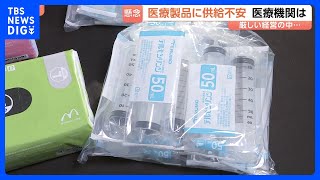
Prolonged tensions involving Iran are beginning to affect medical sites, while in South Korea, the spread of misinformation has triggered panic buying and shortages of garbage bags, highlighting the broader ripple effects of global instability.

From April 1, broccoli has been newly designated as a “specified vegetable” by Japan’s Ministry of Agriculture, Forestry and Fisheries, marking the first addition to the category in years as authorities move to stabilize supply and prices of a staple increasingly central to Japanese diets.

Japan’s divorce system is undergoing a major transformation from April 1st, introducing optional joint custody and a new legal framework that allows child support to be claimed without prior agreement between parents, sparking both support and concern among divorcees and legal professionals as the country adapts to a new era of family law.
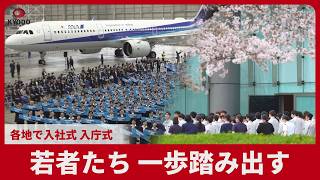
As the new fiscal year began on April 1st, companies across Japan welcomed fresh employees with distinctive entrance ceremonies while some firms drew attention by offering sharply increased starting salaries.

A large bear, its massive body swaying as it walked sluggishly, was recently spotted just after emerging from hibernation, already showing signs of hunger as it devoured food in early spring.

A month has passed since the United States and Israel launched attacks on Iran, and while Japan holds oil reserves equivalent to roughly eight months of domestic consumption, concerns are growing that rising crude prices and supply disruptions could begin to affect everything from plastic bottles to medical IV tubes.

Japan’s benchmark stock index plunged sharply at the start of the week, at one point dropping more than 2,800 points, as surging crude oil prices driven by tensions surrounding Iran rattled markets and raised fresh concerns over the stability of alternative energy supply routes.

A growing private credit market tied to the AI boom is emerging as a hidden source of concern for investors, with commentators on TV Tokyo's financial program Morning Satellite warning that the risk may be receiving less attention than it deserves as markets focus instead on Middle East tensions and rising crude oil prices.

Fuel prices have surged to levels that could begin to impact transportation infrastructure, as industry groups warn of worsening supply constraints and mounting financial pressure.